Optical brightener for acrylic fiber
Published 28 Jul 2025 by the technical desk at Shandong Grand Chemical Co., Ltd..
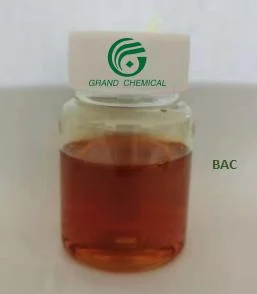
The best choice of optical brightener for acrylic fiber is BAC-L . It is a cationic dye with a transparent brown liquid appearance. Here is a brief introduction to its chemical properties:
| Appearance | Transparent brown liquid |
|---|---|
| Main ingredient | Benzimidazol derivatives |
| Benzimidazole derivatives | Cationic |
| Shade | Neutral to slightly blue |
| Counter quality | Uvitex BAC-L, Ultraphor ACK , Hostlux ACK |
The common method of using optical brightener for acrylic fiber
1. Whitening of pure acrylic fiber
(1) Pure acrylic fiber whitening in separate bath
Process flow: Acrylic fiber → whitening → cooling → softening → washing → drying → finished product (formula based on fiber weight)
| Components | Dosage/ Data |
|---|---|
| Optical brightener BAC-L | 0.25%-1.5% |
| Irgasol NA (dispersant) | 0.5mL/L |
| Sapamine OC (softer) | 2% |
| Formic acid (adjust pH) | 3-4 |
| Bath Ratio | 1:(10-40) |
(2)Pure acrylic fiber with bleaching and whitening in one bath
Bleaching and whitening of acrylic fiber in one bath can achieve the best whiteness. Optical brightener BAC-L performs excellently in chlorinate bleaching. It is suitable for bleaching and whitening in one bath.
Process flow: Acrylic fiber → bleaching, whitening → washing → dechlorination → softening → washing → drying → finished product (formula based on fiber weight)
| Component | Dosage / Data |
|---|---|
| Sodium hypochlorite (80%) | 1-2g/L |
| Optical brightener BAC-L | 0.25%-1.5% |
| Irgasol NA (dispersant) | 0.5-1mL/L |
| Sapamine OC (softener) | 2% |
| Sodium nitrate | 1-3g/L |
| Formic acid or oxalic acid to adjust pH | 3-4 |
| Bath ratio | 1:(10-40) |
2. Whitening of acrylic and wool blended (50:50) fabrics
Regarding acrylic and wool blended fabrics (including yarn and wool), wool has poor whiteness and must be bleached before fluorescent whitening. There are two treatment methods: the same bath method and the separate bath method, and the separate bath method is more commonly used .
Process flow: wool/acrylic blended fabric → pre-bleaching treatment → oxidative bleaching → whitening → washing → drying → finished product (formula based on fiber weight)
(1) Pre-bleaching treatment
| components | Dosage/Data |
|---|---|
| Non-ionic detergent | 0.5g/L |
(2) Oxidative bleaching
| Component | Dosage/Data |
|---|---|
| Hydrogen peroxide (35%) | 10-15mL/L |
| Tetrasodium pyrophosphate | 1g/L |
| Bath ratio | 1:(20-40) |
| pH value | 9 |
(3) Acrylic whitening (based on fiber weight)
| Component | Dosage/Data |
|---|---|
| Optical Brightener BAC-L | 0.2-0.75% |
| Sapamine OC (dispersant) | 2% |
| Irgasol NA (softer) | 0.5-1mL/L |
| Oxalic acid pH value | 3-4 |
| Bath Ratio | 1:(20-40) |
(4) Wool whitening (based on fiber weight)
| Component | Dosage/Data |
|---|---|
| Hydroxysulfite (sodium dithionite) | 2-3g/L |
| Optical brightener NFW-L | 0.25-0.75% |
| Acetic acid pH value | 4 |
| Bath ratio | 1:(20-40) |
3. Whitening of acrylic and polyester blended fabrics
Whitening of acrylic and polyester blended fabrics can be done by the same-bath method and the separate-bath method.
(1) Same-bath method
Same-bath method is a new process that combines the three processes of bleaching, acrylic whitening, and polyester whitening into one, and has the characteristics of a simple process, high productivity, and low cost.
Process flow: Acrylic/polyester blended fabric → bleaching → whitening → dechlorination → washing → drying → finished product (Formula based on fiber weight)
| Component | Dosage |
|---|---|
| Optical brightener BAC-L | 0.5-2% |
| Optical brightener ER | 0.5-1% |
| Sodium hypochlorite | 1-2g/L |
| Formic acid or acetic acid pH value | 3 |
| Bath Ratio | 1:(40-50) |
Note: In the above formula, adding polyester dyeing carriers, such as methyl salicylate, can increase the amount of dispersed whitening agent absorbed by the fiber.
(2) Separate-bath method
Separate-bath bleaching and whitening processes generally have higher whiteness than the same-bath process Process flow: Acrylic/polyester blended fabric → bleaching → whitening → washing → whitening → washing → drying → finished product ① Bleaching, acrylic whitening Formula (based on fiber weight)
| Component | Dosage/Data |
|---|---|
| Optical brightener BAC-L | 0.5-2% |
| Sodium hypochlorite | 1-2g/L |
| Sodium nitrate | 1-2g/L |
| Acetic acid to adjust pH | 3-4 |
| Bath ratio | 1:(20-40) |
② Polyester whitening Formula (based on fiber mass)
| Component | Dosage/Data |
|---|---|
| Optical brightener ER | 0.5-1% |
| Acetic acid to adjust pH | 3-4 |
| Bath ratio | 1:(20-40) |
4. Whitening of acrylic and cellulose fiber (cotton, viscose, etc.) blended fabrics
Acrylic and cellulose fiber (cotton, viscose, etc.) blended fabrics are generally refined before bleaching. Since cotton fibers generally contain cotton scraps, wax, etc., pure cotton fabrics are often smelted at high temperatures with strong alkalis such as sodium hydroxide to remove these impurities. However, this treatment method will damage acrylic fibers and cause yellowing, so it is not suitable for acrylic/cotton and blended fabrics. Generally, the refining of acrylic/cotton blended fabrics is often done by washing with non-ionic detergents and treating with sodium hypochlorite. Since sodium hypochlorite has a bleaching effect, it is not necessary to bleach after such treatment, and fluorescent brighteners can be used directly for whitening.
Process flow: Acrylic/cotton blended fabric → refining → dechlorination → whitening → washing → drying → finished product
Formula (based on fiber mass)
| Component | Dosage/Data |
|---|---|
| Non-ionic detergent | 2g/L |
| Sodium hypochlorite | 2-3g/L |
| Sodium sulfite | 1-2g/L |
| Optical brightener BAC-L | 0.5-2% |
| Optical brightener MST | 0.5-2% |
| Acetic acid adjust pH value | 3 |
| Bath ratio | 1:(20-40) |
Note: In order to increase the whiteness of the fabric, after dechlorination treatment, anionic whitening agents can be used at a temperature of 30-40℃ for 20-30min to whiten the cotton fibers.
Talk it through with someone who ships the drums
Grand Chemical manufactures and exports the grades discussed above. Send the substrate, the process temperature and the whiteness target and we will name a grade and a dosage window.
Where this fits
Keep reading
How to whiten Acrylic fiber
whiten acrylic fiber
FP-127 for PVC Foam Board: High-Efficiency Optical Brightening Solution
oba for pvc foam board
OB for Ink: Enhancing Whiteness, Brightness, and Color Performance
Ink appearance plays a decisive role in product perception and end-use quality. To meet increasingly high visual standards, ink manufacturers
Optical Brighteners for Polyester Fiber: High-Performance Whitening Solutions
Optical brighteners for polyester fiber play a critical role in improving fabric whiteness, brightness, and visual appeal. Due to the
Optical Brighteners for Paints: Improving Whiteness, Brightness, and Visual Appeal
Optical brighteners for paints play a vital role in enhancing the visual quality of modern coatings. Also known as fluorescent