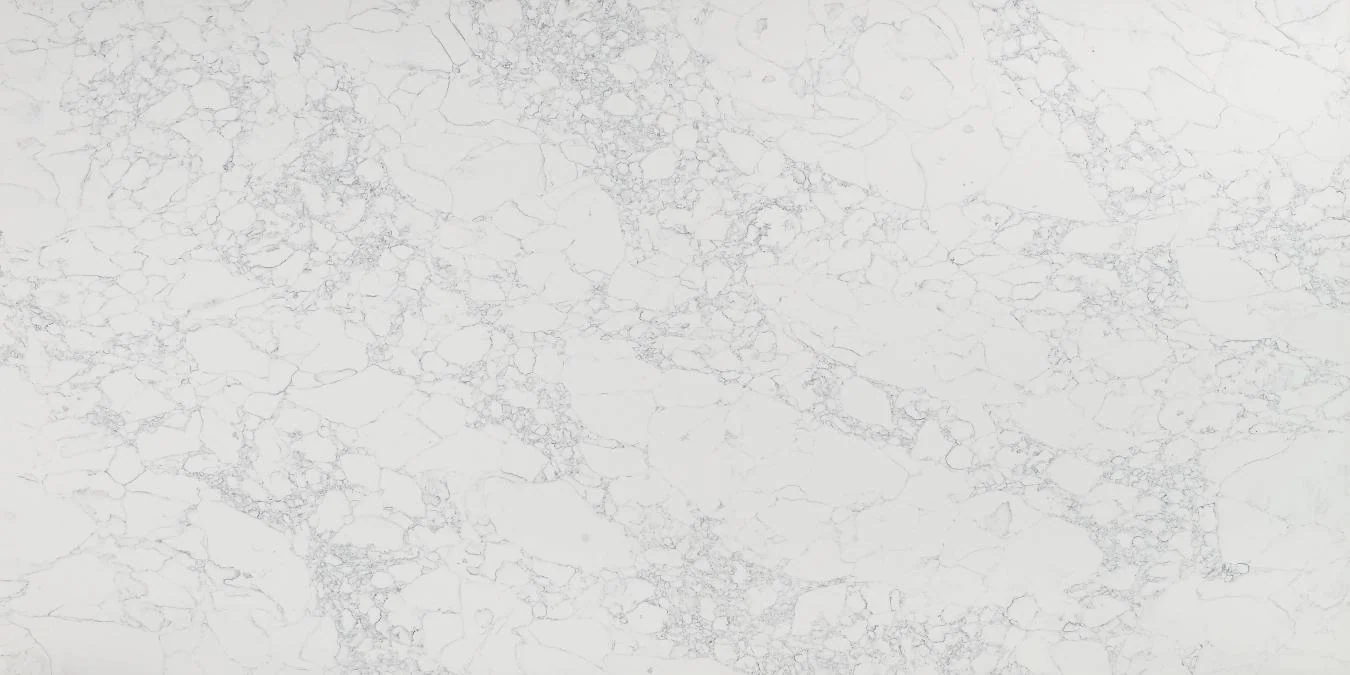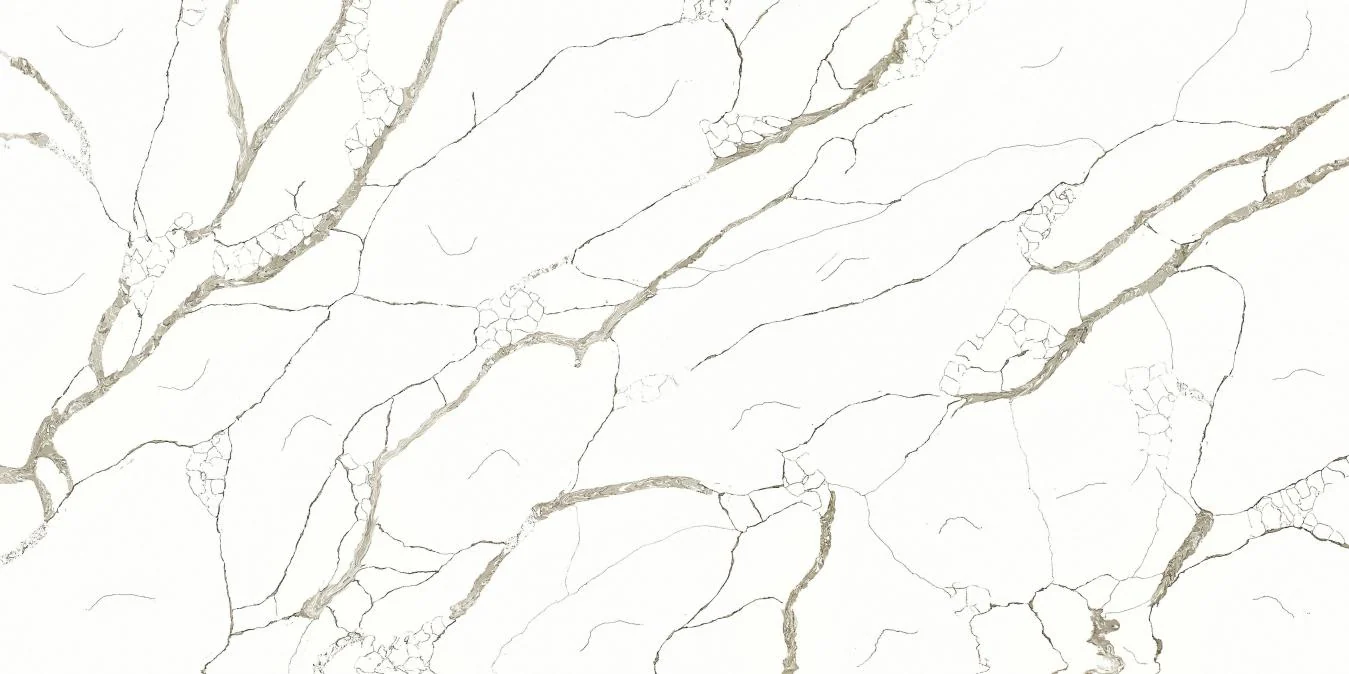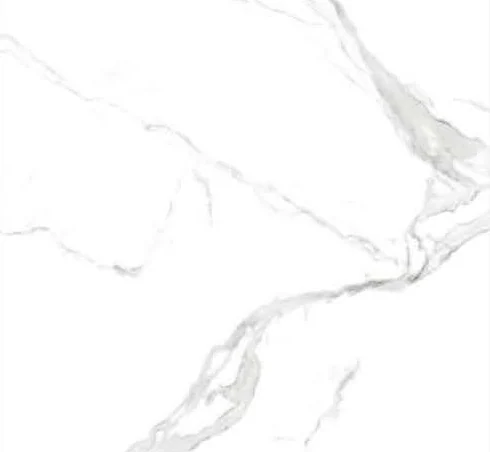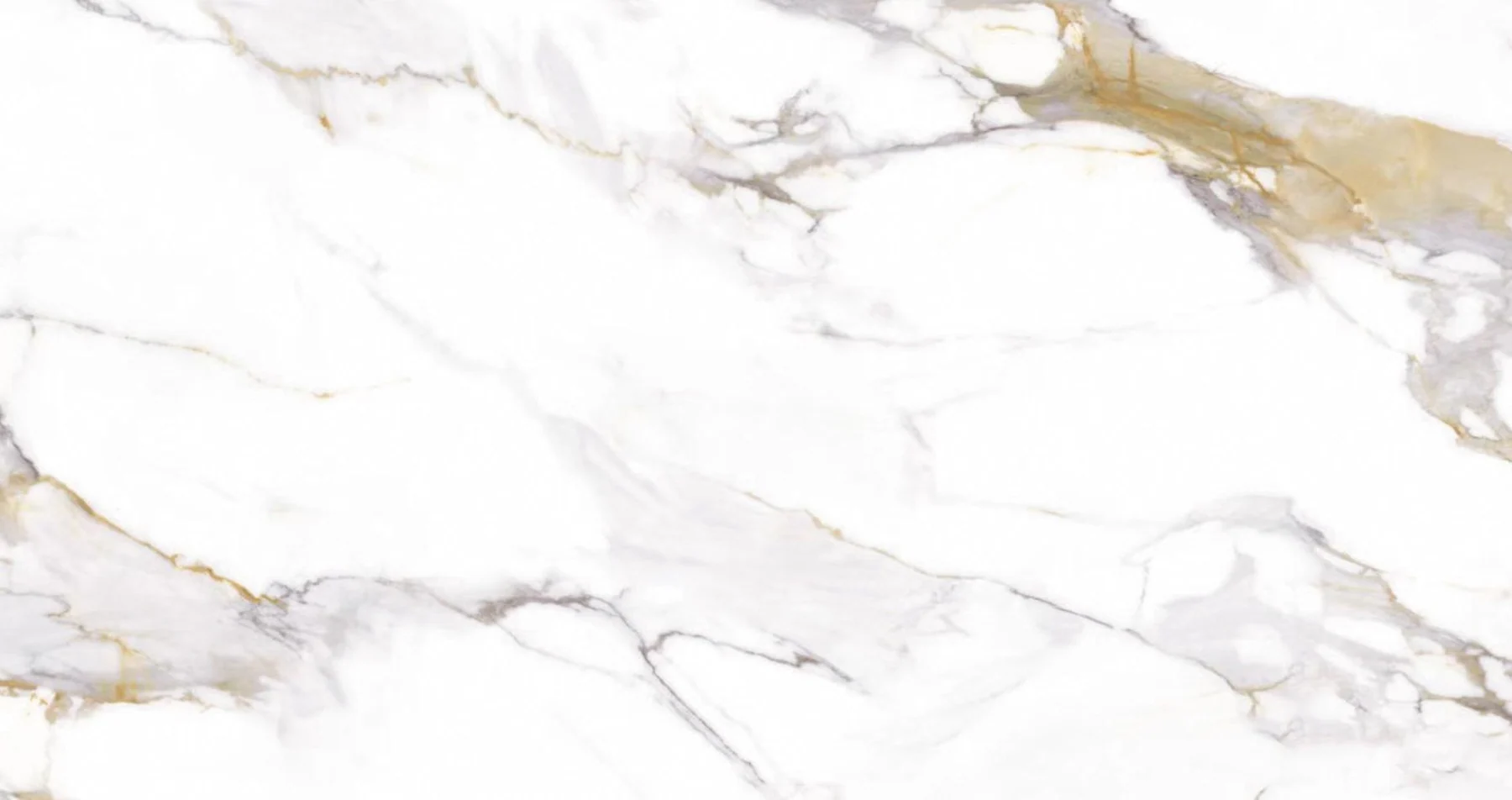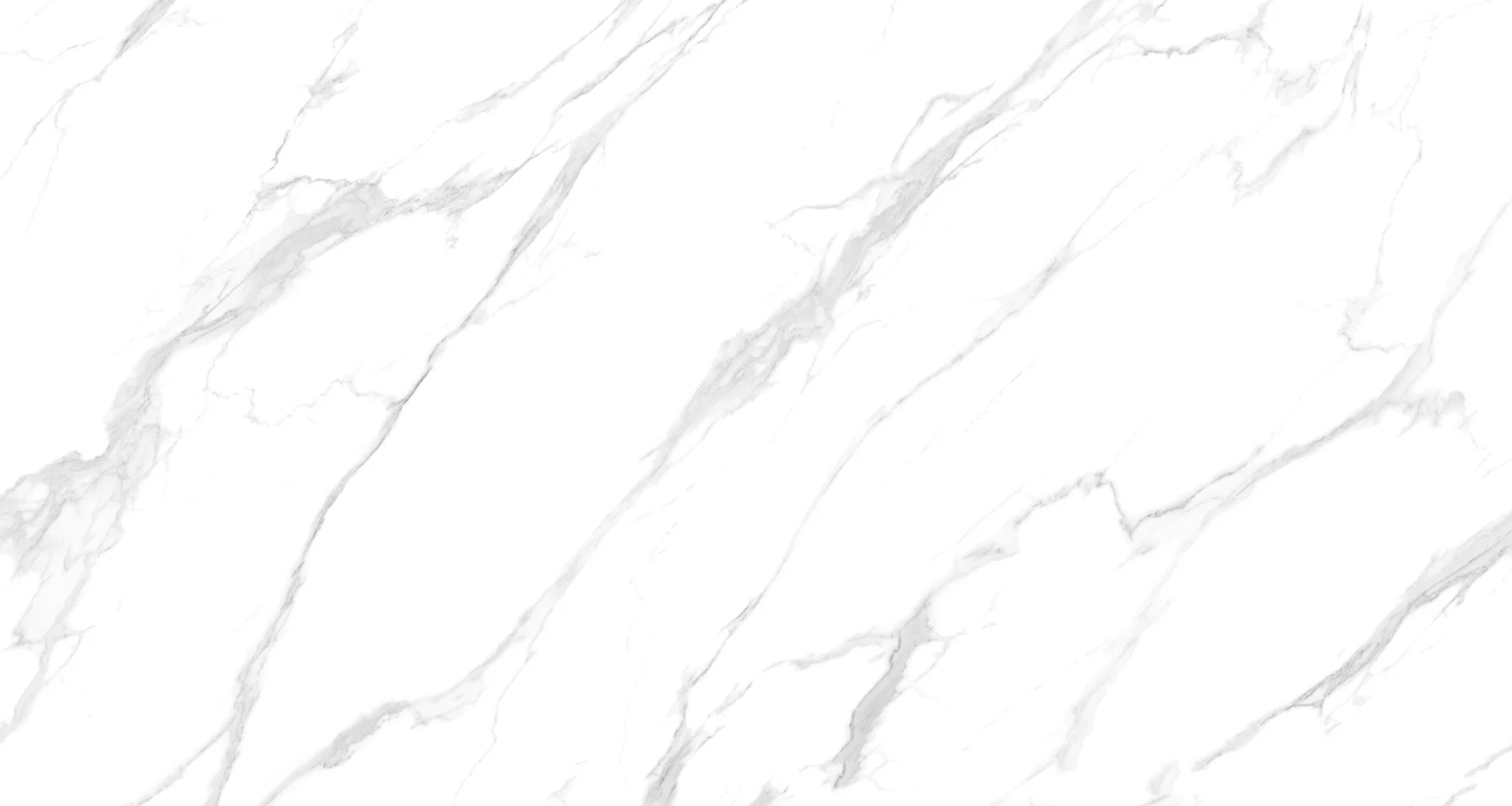
How the three engineered surfaces differ in body, heat behaviour and where each one belongs in a project.
Engineered quartz is natural quartz aggregate, at 93% content in our slabs, bound with a polymer resin and pigment, then pressed and cured. The resin is what makes it non-porous and what limits its heat tolerance.
Porcelain is clay and mineral powder fired at high temperature. There is no resin, so heat and UV are not a problem, and slabs can be produced thin enough to clad a facade.
Sintered stone is mineral powder compacted under pressure and fired. Like porcelain it has no binder, and it is the densest of the three.
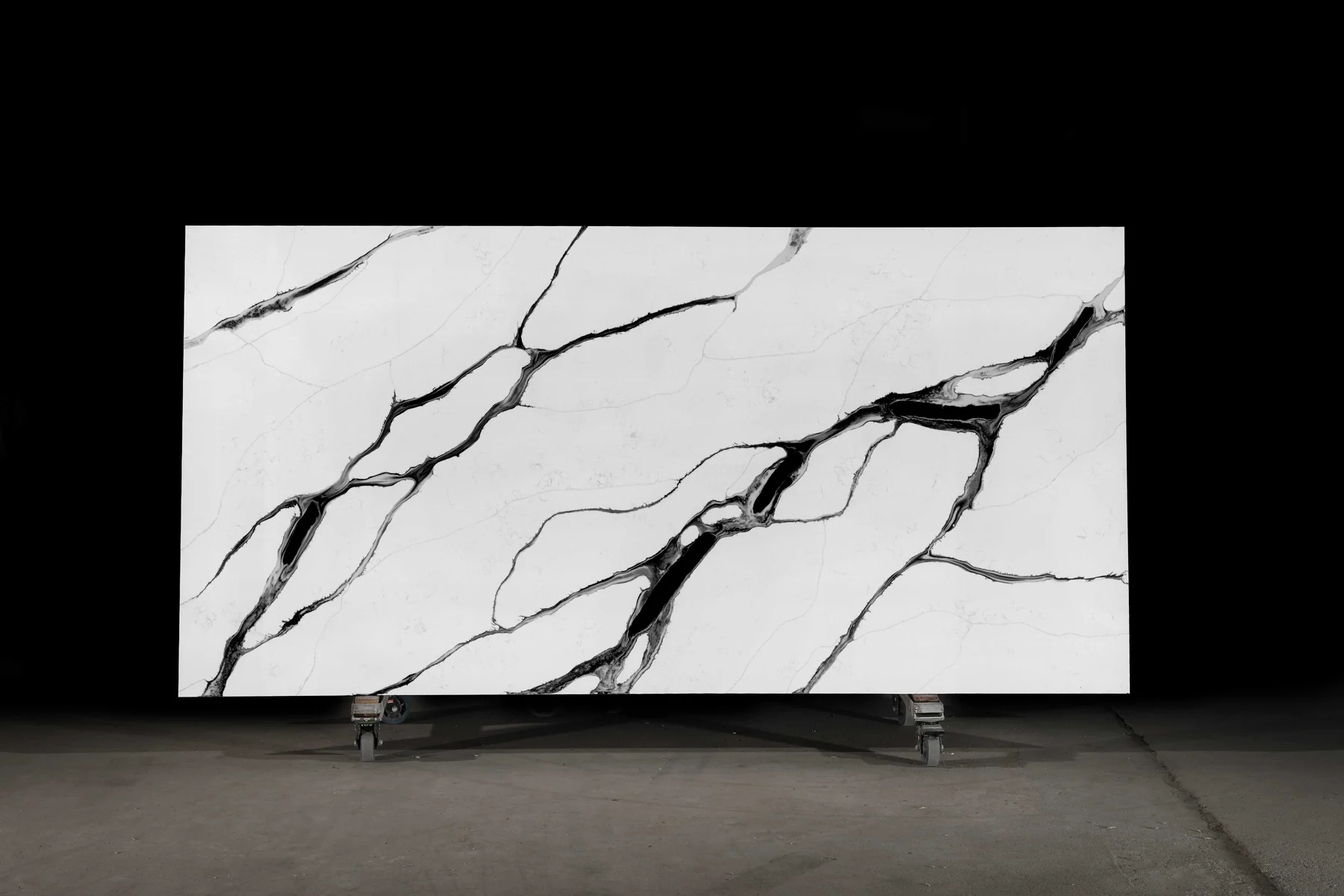
Quartz Series from our own production. See the Quartz Series range.
This is the difference that shows up in complaints. A hot pan placed directly on a resin-bound quartz surface can mark it. Porcelain and sintered stone do not have that failure mode.
If the kitchen is open plan and the client cooks seriously, specify sintered stone at the hob run and quartz elsewhere if budget matters.
Resin-bound surfaces are not the right choice for permanent direct sunlight. Porcelain and sintered stone hold colour outdoors, which is why outdoor kitchens and terraces are specified in those materials.
Quartz is the most forgiving to cut and polish, and most fabricators already run it daily.
Porcelain and sintered stone need the right tooling and careful handling on large formats. Fabricators new to them should plan for higher breakage on the first jobs.
Indoor kitchens, vanities and volume programmes: engineered quartz.
Outdoor, facade and high heat: porcelain or sintered stone.
Flat pure white across large areas: nano glass.
93% quartz engineered slabs for countertops, vanities and high-traffic surfaces
Large-format porcelain slabs for cladding, floors and outdoor surfaces
Sintered stone slabs for heat, scratch and UV exposed applications
Crystallised nano glass with a dense pure-white body and no visible pores
Thickness decides edge detail, handling weight and support requirements. Both are standard in our production.
The three textures we produce, and what each one does to colour, fingerprints and maintenance.
The order sequence we use, from first sample through to a loaded container.
What to tell an end client after installation, and what to keep away from the surface.
Two ways to get the same look, with very different programme and cost profiles.
Three ways to specify white, and how to avoid the warm-cast problem on large areas.
Codes exist so the same slab can be produced twice. Here is how to use them properly.
What arrives at your yard, and what to confirm before the container is packed.
Yes. Email [email protected] with the application, the exposure conditions and the look you are after.
Free samples go to distributors, builders and countertop factories. Testing a physical sample beats any article, including this one.
Engineered quartz at 93% quartz content, artificial marble, terrazzo, porcelain, sintered stone and nano glass, all on our own site in Nanyang.
Send the application and the exposure conditions and we will tell you which surface fits.