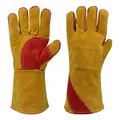







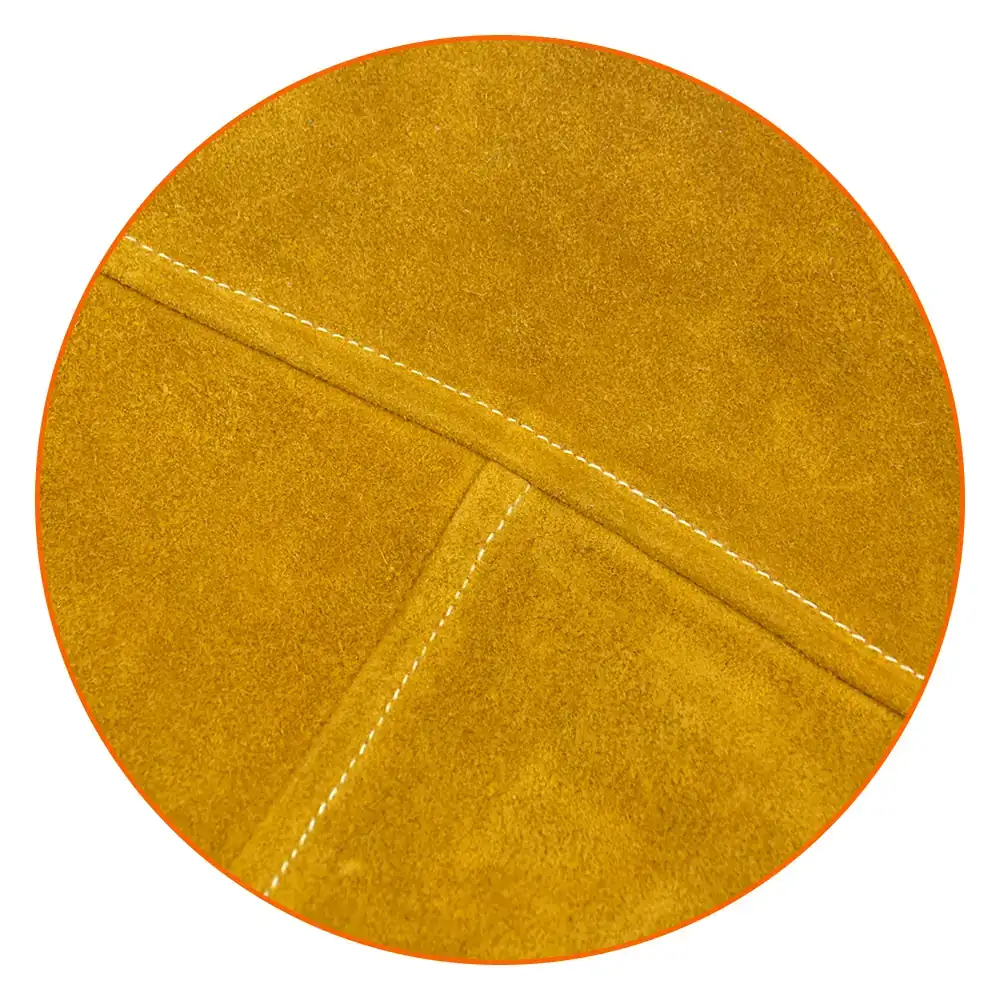
Leather Grade
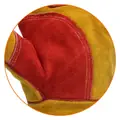
Low-grade leather degrades quickly under spark and heat exposure, and it is the most common reason an apron is replaced within months. Premium cowhide and pigskin hold up far longer, and raw material inspection before cutting is what keeps grade consistent between shipments.
Coverage
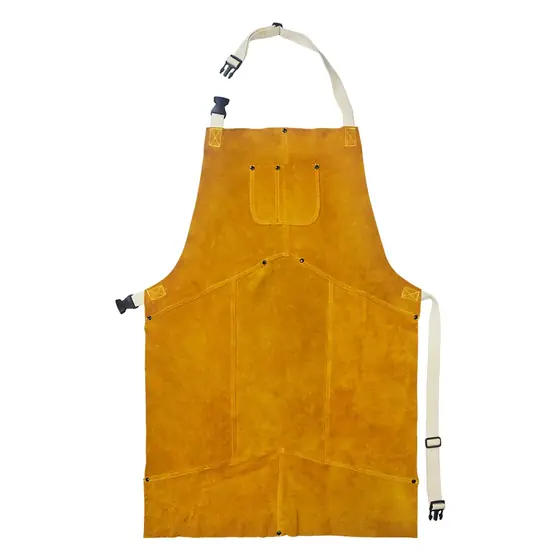
Insufficient protective area leaves the thighs or shins exposed depending on how the welder works. The practical rule is 36 inch for seated bench work and 42 inch where welders stand at a bench or jig all day.
See the MS-480 42 inch Leather Welding Apron
Fit And Straps
Poor fit during extended use is a comfort problem that becomes a safety problem, because uncomfortable aprons come off. Adjustable straps that let the bib sit high on the chest without pulling at the neck are worth specifying, and cross-back straps can be arranged on bulk orders.
Reinforcement
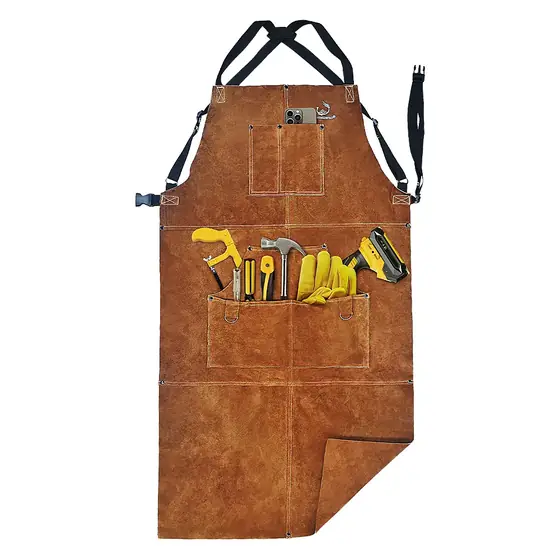
Accelerated wear usually starts at the stress points where straps meet the panel. Reinforced stitching and rivets at those points extend the life of the apron well beyond the leather's own durability.
See the MS-360 Split Cowhide Welding Apron
Heat Protection And Material Choice
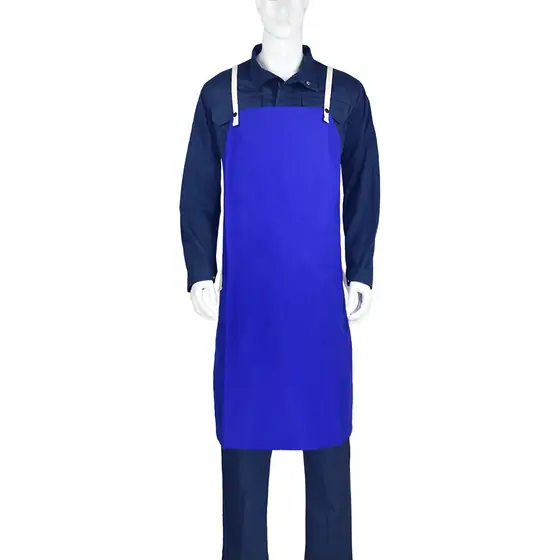
Insufficient heat defence during prolonged welding is the final complaint. Leather is the answer where spatter volume is high; where the work is light duty, a 9 oz FR cotton bib apron is lighter and easier to launder with the rest of the FR kit.
See the MS-483 Flame-Resistant Cotton Bib Apron, 36″ Length
Aprons With Sleeves
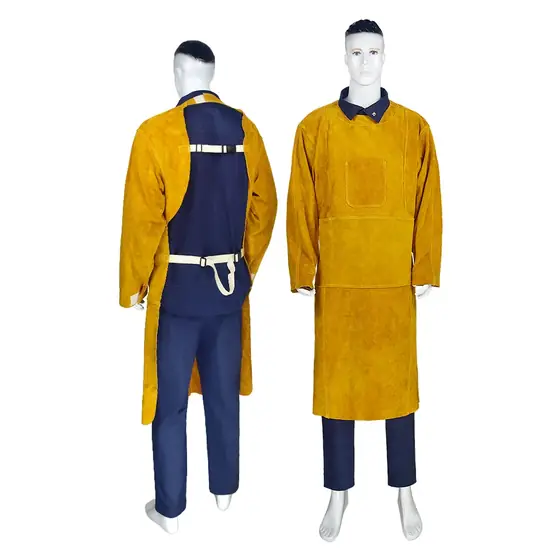
For welders who work without a jacket, an apron with sleeves covers the chest, thighs and forearms in one garment while leaving the back open for airflow. It is the usual choice in hot shops where a full jacket would be removed.
See the MS-383 Leather Bib Apron with Sleeves
Care
Brush off slag after each shift, hang the apron flat rather than folding it over a hook, and keep it dry. Do not machine wash leather. Replace the apron when the leather is pierced or the straps have failed.