
Buying Guide
How to Choose a Metal Lathe for Your Shop
Swing, centre distance, spindle bore and drive type decide whether a lathe fits your work. Here is how to read those four figures before you compare prices.
Start From the Largest Part You Actually Turn
Every lathe specification opens with swing over bed and distance between centres. Swing is twice the centre height, so a machine listed at 660 mm swing takes a workpiece up to 660 mm in diameter over the bed, and considerably less over the cross slide. That second figure, swing over cross slide, is the one people forget, and it is the one that stops a job.
Take the largest diameter and the longest shaft you have turned in the last year, add the chuck and the tailstock allowance, and compare that against both swing figures and the centre distance. Buying for the occasional oversize job is expensive; a gap bed that can be opened for a short large diameter part is usually the cheaper answer.
Spindle Bore Decides What You Can Feed Through
If you machine tube, bar stock or long shafts, spindle bore matters more than swing. A 105 mm bore takes bar you can feed through the headstock; a 52 mm bore means the same job has to be cut short and reset, which doubles the handling and introduces a second setup error.
Check the spindle nose type as well. Camlock and A type noses change how quickly chucks and faceplates come off, which matters in a repair shop where the machine changes job several times a day.
Bench Gap Bed or Heavy Duty
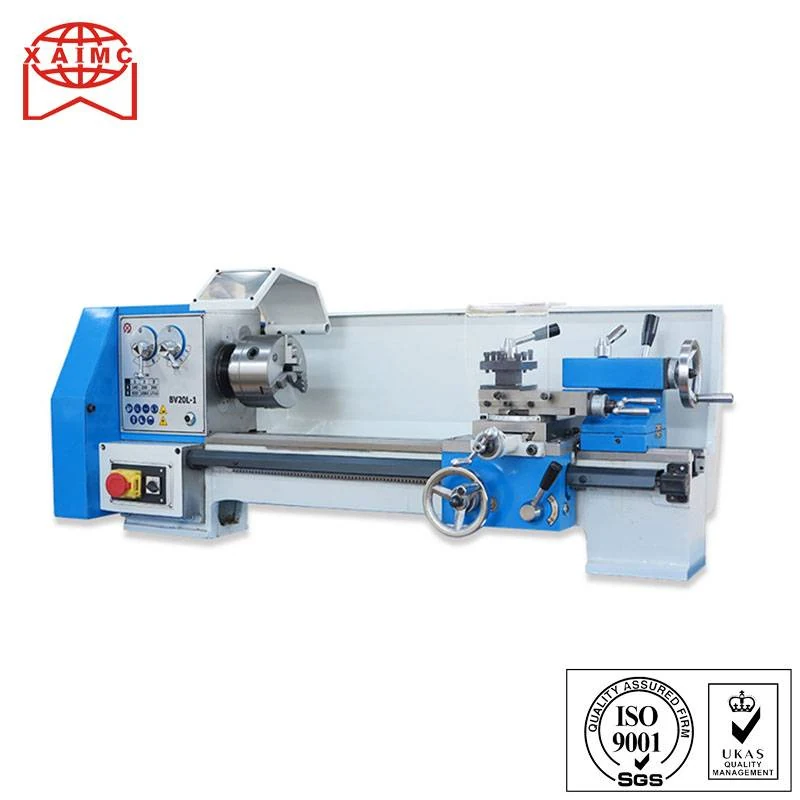
Bench lathes suit small parts, instrument work and training, and they fit where floor space is scarce. Gap bed lathes give you a large diameter capacity for short flanges without paying for a full heavy machine. Heavy duty horizontal lathes are for continuous work on shafts, rolls and axles where rigidity, not capacity, sets the finish.
Vertical turret lathes are a different answer again. When the part is short, large and heavy, standing it on a table is safer and more accurate than hanging it in a chuck.
Feeds Threads and Controls
A gearbox that covers metric, inch, module and diametral pitch threads without change gears saves hours in a repair shop. Count the number of speeds and check the range, because a low bottom speed matters for large diameters and a high top speed matters for small ones.
Manual, variable speed and CNC versions solve different problems. CNC pays back on repeat batches; for single repair parts a well specified manual lathe with a good thread gearbox is often faster, because there is nothing to program.
Installation Power and What to Budget Around
Add the motor rating, the floor loading and the footprint to your comparison before you decide. A machine that will not fit through the workshop door or that trips your supply is not a bargain.
Budget for workholding at the same time. A lathe with no steady rest, no four jaw chuck and no faceplate cannot do the jobs you bought it for, and sourcing those separately later always costs more than adding them to the original order.
Machines Referenced in This Guide
Related Machines
Models That Match This Guide
Answers
Questions About How to Choose a Metal Lathe for Your Shop
What size lathe do most repair shops buy first?
A gap bed machine in the 400 to 660 mm swing class covers most general repair work, because it handles shafts of ordinary length and still takes an occasional large flange in the gap.
Is spindle bore more important than swing?
It is if you feed bar or tube through the headstock. If everything you turn is held in the chuck and supported by the tailstock, swing and centre distance matter more.
Should I buy CNC or manual?
CNC for repeat batches, manual for one off repair parts. Many shops end up with both, and buy the manual machine first because it earns from day one without programming.
What accessories should I order with the lathe?
Three jaw and four jaw chucks, a steady rest, a follow rest for long shafts and a faceplate. Add measuring equipment so the finished part can be proven.
How much floor space do I need?
Machine footprint plus at least one metre at each end for bar and tailstock access, and clear space behind for the chip and coolant side. The parameter sheet gives the machine dimensions; the access is your layout.
Still Choosing Between Models
Send the part drawing and the output you need. We answer with a model and a reason, not a catalogue.