
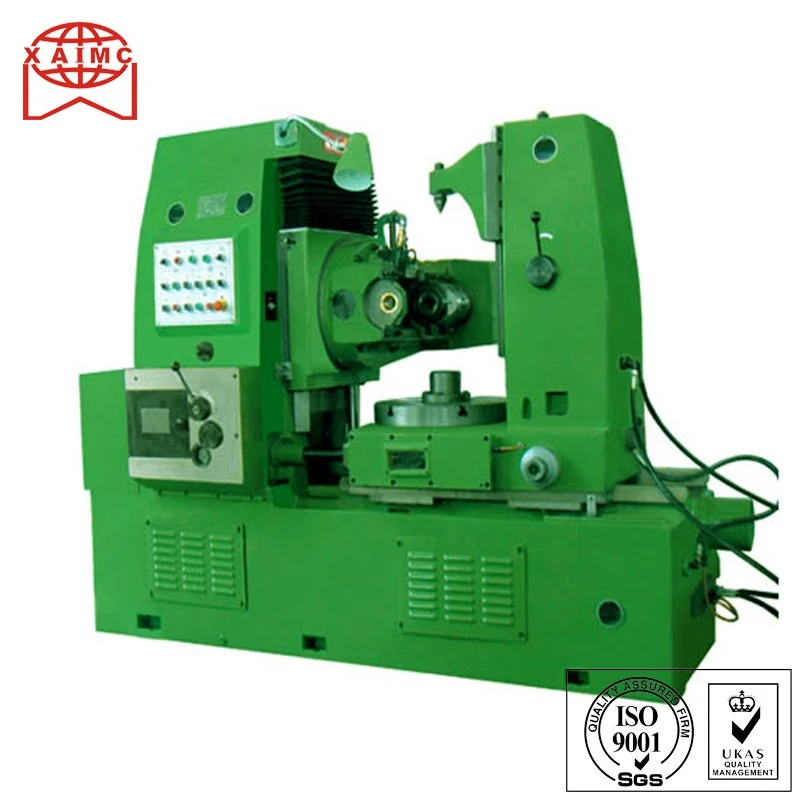
Process Guide
Gear Hobbing Basics for Repair Shops
Hobbing is a generating process: the hob and the blank roll together while the hob feeds along the face. Understanding that ratio explains most of what the machine specification is telling you.
How Generation Works
A hob is a worm shaped cutter with cutting teeth. As it rotates, the blank rotates in a fixed ratio to it, and the tooth form is generated by the envelope of successive cuts rather than being copied from the cutter shape.
This is why one hob of a given module and pressure angle cuts any tooth count in that module. It is also why the machine's index train, not the cutter, controls accuracy.
Reading the Machine Specification
Maximum module and maximum diameter are the headline figures. Face width capacity and the maximum hob swivel angle decide whether helical gears of your helix angle can be cut, and to what width.
Table diameter, bore and the fixturing available decide how the blank is held. Holding a blank badly produces runout that no amount of machine accuracy will correct.
Spur Helical and Worm Wheels
Spur gears are the simplest case, with the hob swivelled only by its own lead angle. Helical gears need the hob swivelled by the helix angle plus or minus the lead angle, and need a differential or an equivalent electronic function.
Worm wheels are cut by radial or tangential feed with a hob matching the mating worm. Get the centre distance and the hob specification right or the pair will never run quietly.
Blanks Feeds and Cutting Data
Blank accuracy sets the ceiling for gear accuracy. The bore and the face used for location should be machined in one setup and should run true before hobbing starts.
Feed per revolution of the blank controls surface finish on the flank and cycle time. Climb hobbing gives a better finish on rigid setups; conventional hobbing is more forgiving on lighter machines.
Checking the Gear
Over pin or over ball measurement gives tooth thickness without special instruments and is what most repair shops use. Runout is checked in the same setup.
For replacement gears, measure the old gear before cutting and record module, pressure angle, tooth count, helix angle and hand. Half the failed replacement jobs are a hand or a pressure angle taken as assumed.
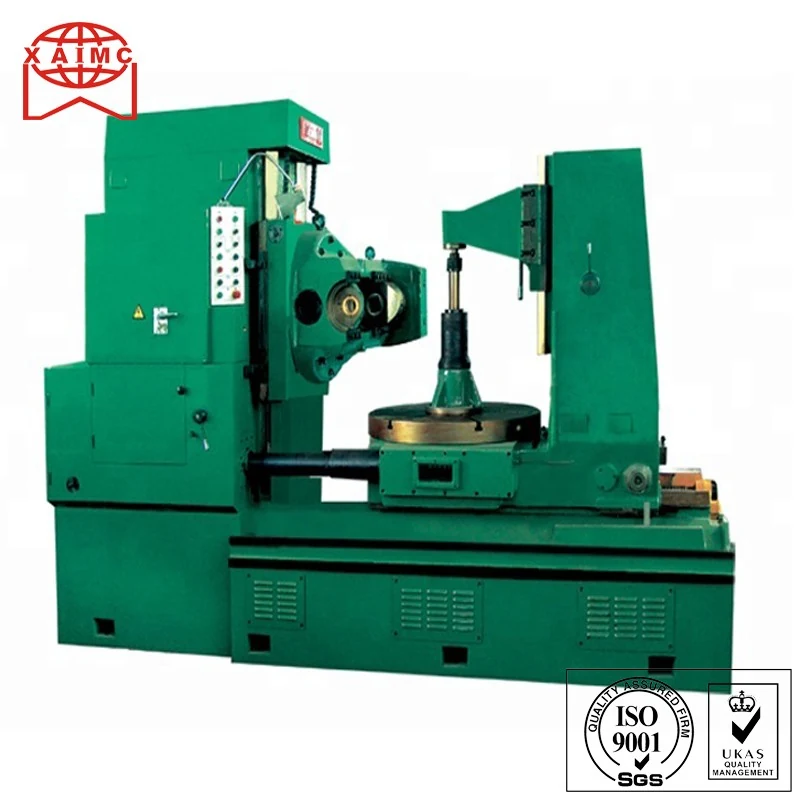
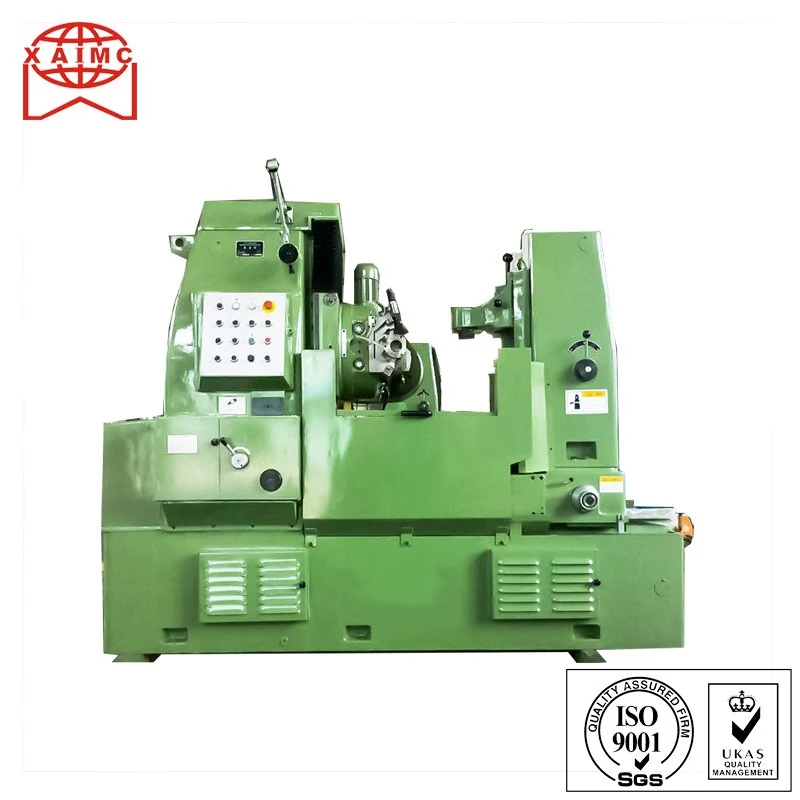
Machines Referenced in This Guide
Related Machines
Models That Match This Guide
Answers
Questions About Gear Hobbing Basics for Repair Shops
Can one hob cut different tooth counts?
Yes, within the same module and pressure angle. That is the advantage of a generating process.
What do I need to copy an existing gear?
Module or diametral pitch, pressure angle, tooth count, face width, helix angle and hand, plus the bore and any keyway.
Can I cut helical gears on any hobbing machine?
Only on a machine with a differential or equivalent control and enough hob swivel for your helix angle.
Is hobbing suitable for hardened gears?
No. Hobbing is done before hardening; hardened gears are ground or skived.
How is gear quality checked without a gear tester?
Over pin measurement for tooth thickness, runout in the fixture and a rolling check against a master or against the mating gear.
Still Choosing Between Models
Send the part drawing and the output you need. We answer with a model and a reason, not a catalogue.