
Process Guide
Cylinder Boring and Honing Explained
Boring sets the diameter, honing sets the surface. A rebuild that skips the distinction ends up with a bore that measures right and still burns oil.
Two Operations With Two Jobs
Boring removes the worn material and establishes a round, straight, correctly sized bore at the oversize you have chosen. It is a cutting operation with a single point tool and it leaves a turned finish.
Honing follows boring. It corrects the small geometric errors boring leaves, brings the bore to final size, and produces the crosshatch pattern the piston rings need to seat and to hold oil. Neither operation does the other one's work.
Choosing the Oversize
Piston oversizes are fixed by the piston manufacturer, not by the machine. Measure the worn bore at several heights and in two axes, decide the smallest oversize that cleans up the worst wear, then bore to that size minus the honing allowance.
Leaving too little for honing means the bore is finished by the boring tool, and the surface will not hold oil. Leaving too much means a long hone cycle and a bell mouthed bore.
Crosshatch Angle and Surface Finish
The crosshatch is produced by the ratio of stone rotation to stroke speed. Too shallow an angle and oil does not distribute; too steep and oil consumption rises. Most engine builders work to the ring manufacturer's recommendation rather than to a habit.
Plateau honing, a final pass with a fine stone, removes the torn peaks left by the coarse stones and shortens the running in period. Machines with stepless spindle and stroke adjustment make this repeatable rather than lucky.
Holding the Block
Fixturing matters as much as the machine. A block clamped without torque plates bores round and then goes oval when the head bolts are tightened. For performance work, torque plates during boring and honing are standard practice.
Deck reference is the other half. Boring square to the crankshaft axis, not to the deck face, is what keeps the piston square in the bore.
Measuring the Result
A dial bore gauge set against a micrometer is the basic tool. Measure top, middle and bottom in two axes and record the figures, because taper and ovality are what a customer complaint will be about later.
Keep the measuring equipment in the same temperature environment as the block. A block straight off a hot wash measures differently from the same block an hour later.
Machines Referenced in This Guide
Related Machines
Models That Match This Guide
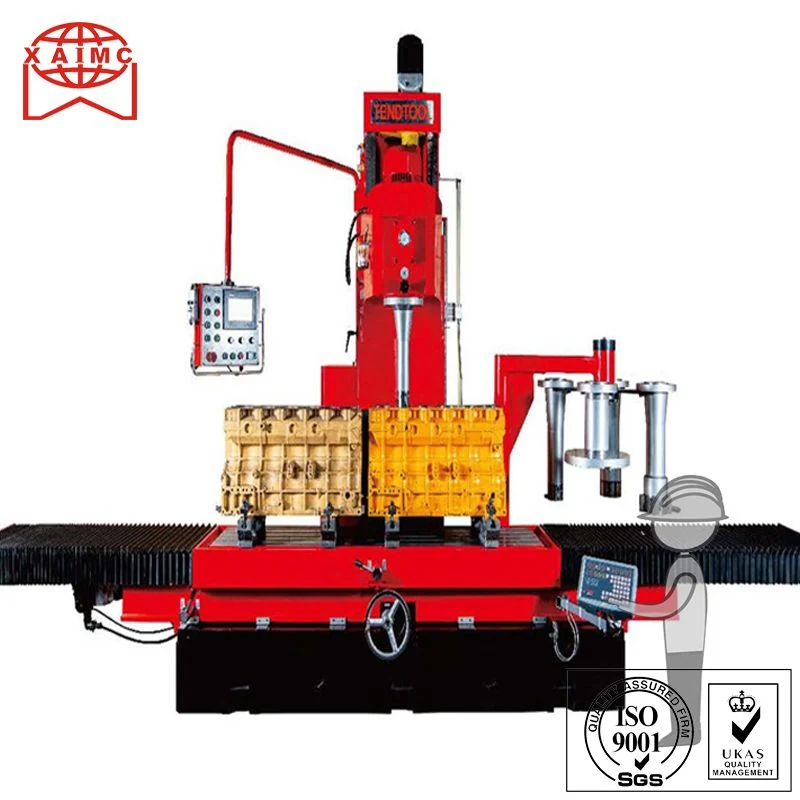
Engine Rebuilding Machine
Vertical fine boring & milling machine TX1500/TX2150/TX2500
View specifications →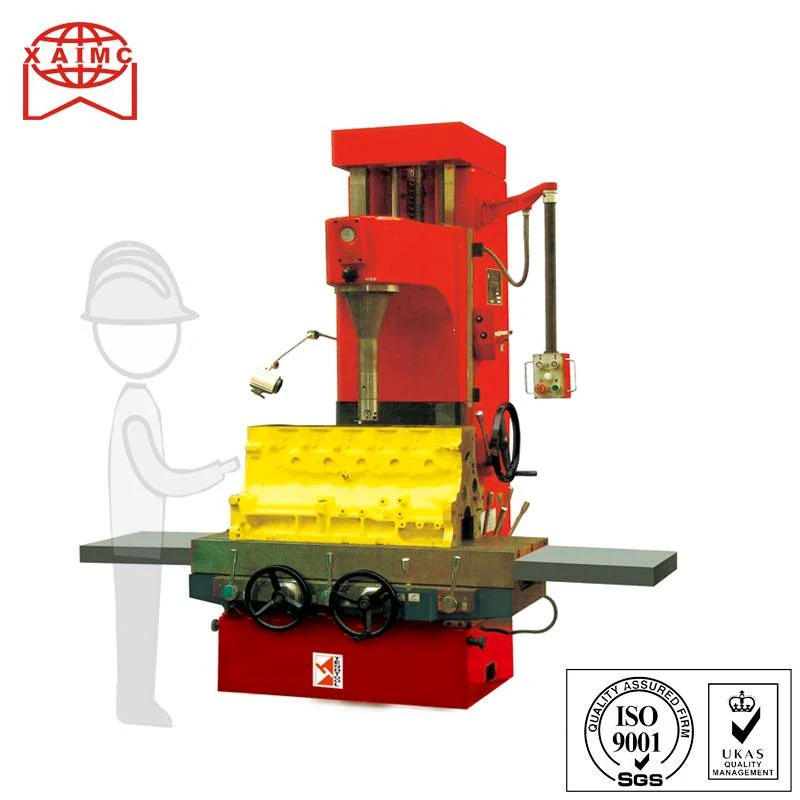
Answers
Questions About Cylinder Boring and Honing Explained
Can I hone a bore without boring it first?
Only if the wear is very light and the bore stays within the original size tolerance. Honing removes little material and will not correct taper.
How much material should be left for honing?
Follow the hone manufacturer's recommendation for the stone set in use. Leaving a small, consistent allowance is more important than the exact figure.
Does crosshatch angle really matter?
Yes. It controls oil retention and ring seating, and it is the usual cause of high oil consumption after an otherwise correct rebuild.
Do I need torque plates?
For performance engines and for thin walled modern blocks, yes. For older heavy blocks at standard oversize many shops work without them.
Which machines does a rebuilding shop need first?
A boring machine and a honing machine, then surfacing for heads and blocks, then crankshaft grinding as volume justifies it.
Still Choosing Between Models
Send the part drawing and the output you need. We answer with a model and a reason, not a catalogue.