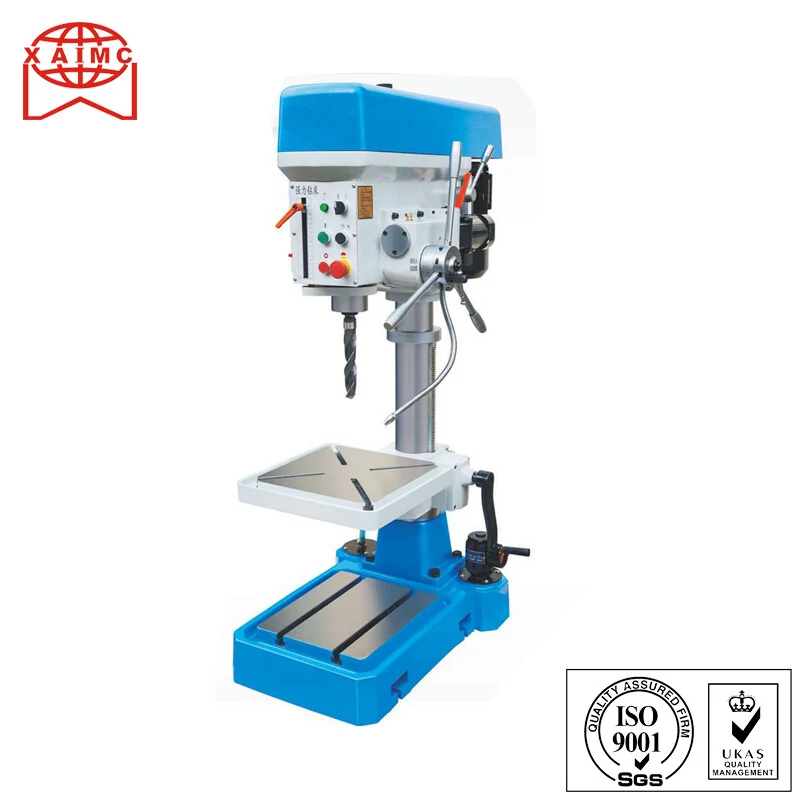
Drilling

Comparison
Bench, upright, gear head and radial drilling machines differ by how the work gets under the spindle. That single question usually settles the choice.
On a bench or upright drill the workpiece moves to the spindle. On a radial drilling machine the spindle moves to the workpiece along an arm that swings over a fixed table. For small parts the first is faster. For anything you cannot lift and reposition accurately, the second is the only practical answer.
This is why fabrication shops end up with a radial machine even when their hole diameters are small. It is not drilling capacity they are buying, it is reach over a heavy plate.
Maximum drilling diameter is quoted in steel of a stated strength. Drilling stainless, tool steel or thick plate reduces it, so leave margin rather than buying exactly to your largest hole.
Spindle travel, throat depth and the distance from spindle nose to table decide whether a tall part fits at all. A machine with ample drilling capacity and short spindle travel will still not reach the bottom of a deep bracket.
Belt driven machines are cheaper and quieter but speed changes mean opening a cover. Gear head machines change speed on a lever, which matters when the operator swaps between a 6 mm drill and a 40 mm one through the day.
Automatic feed makes a real difference for larger diameters and deep holes. It keeps the chip load even, protects the drill and produces a straighter hole than hand pressure does.
Many upright and radial machines offer reverse for tapping. If most of your holes are tapped, compare that against a dedicated tapping machine, which will be faster and will protect thread quality in batch work.
Mixing drilling and tapping on one machine is a fair compromise for a maintenance shop. In production it becomes the bottleneck.
Column diameter and base mass tell you more about hole quality than motor power does. A light machine flexes, the drill wanders and the hole ends up oversize and out of square.
Bolt the machine down, use a proper vice or clamps rather than holding the work, and check that the table slots match the clamping kit you own before delivery.
Related Machines
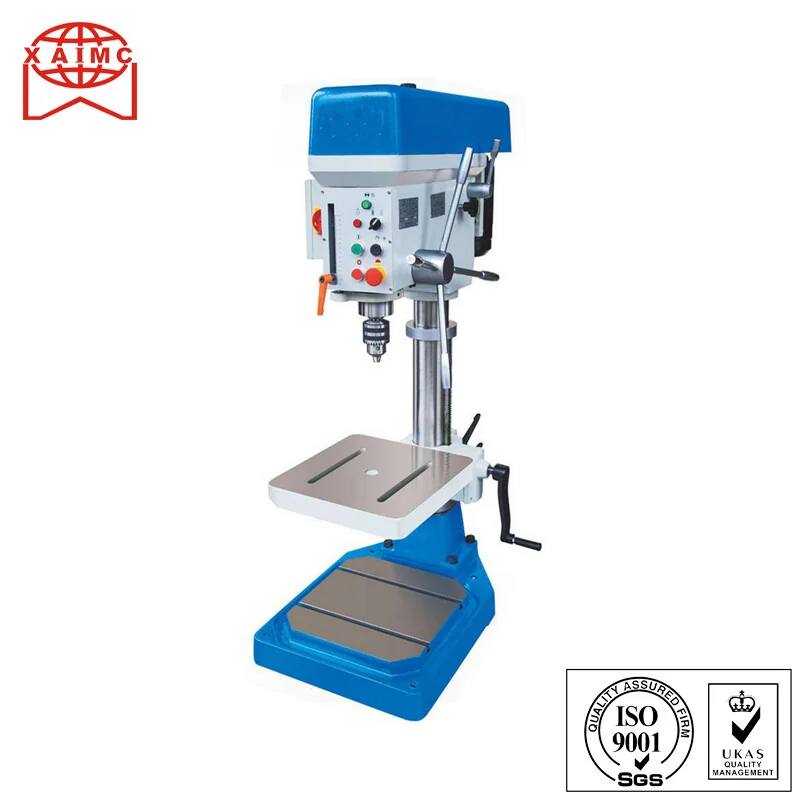
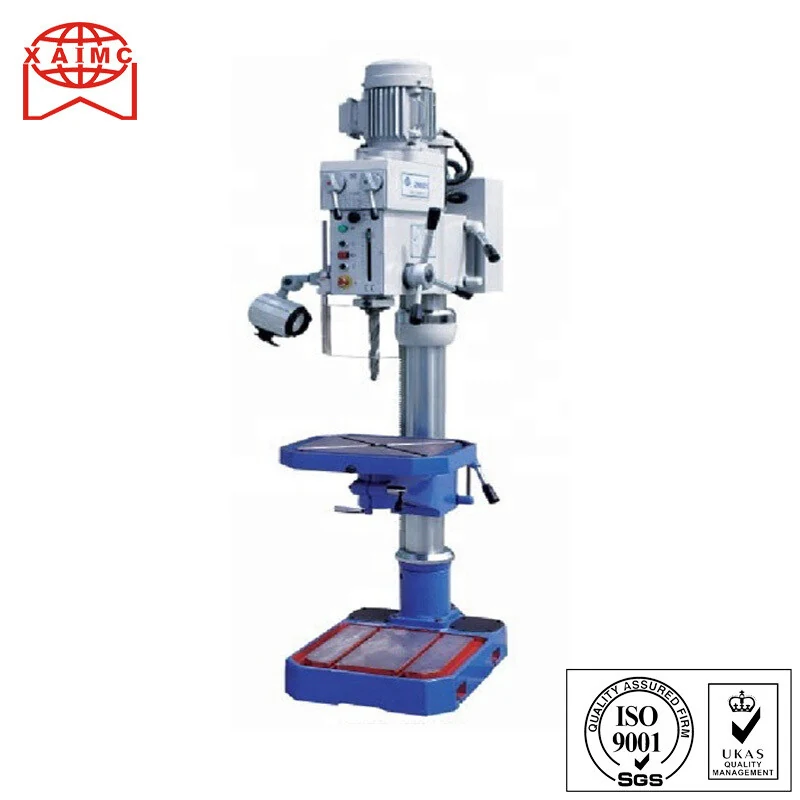
Answers
As soon as parts are too heavy to reposition by hand, or when several holes are spread across a large fabrication and you do not want to re clamp for each one.
Occasionally, in thin mild steel, with a slow speed and a sharp drill. As routine work it will overload the machine and produce poor holes.
For holes above roughly 20 mm and for deep holes it pays for itself quickly in drill life and hole quality.
Belt machines change speed by moving a belt on stepped pulleys; gear head machines change speed with levers. Gear head is faster to change and usually more rigid.
Models with a reversing spindle can. For volume thread work a dedicated tapping machine is a better tool.
Send the part drawing and the output you need. We answer with a model and a reason, not a catalogue.