How to choose Optical brighteners for polymers
Published 29 Apr 2024 by the technical desk at Shandong Grand Chemical Co., Ltd..
There are many varieties of optical brighteners in the market, and the optical brighteners for polymers are powders that are easily dispersed in these raw materials. During the production, they can either be added directly to the monomer (before or during the polymerization reaction), or they can be added before the molding (e.g., injection molding or spinning) process (after the polymerization reaction). There are so many different optical brighteners. Do you know how to choose suitable optical brighteners for your plastics? Here below are 6 basic performances.
(1) Processing temperature resistance
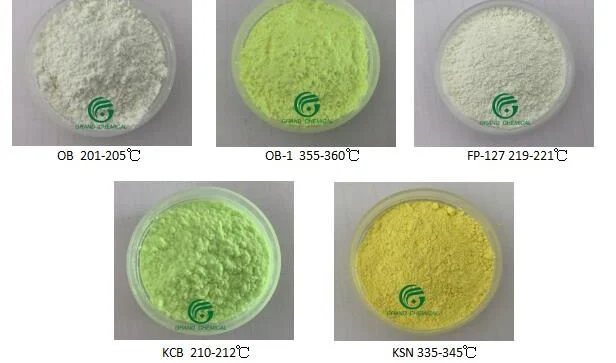
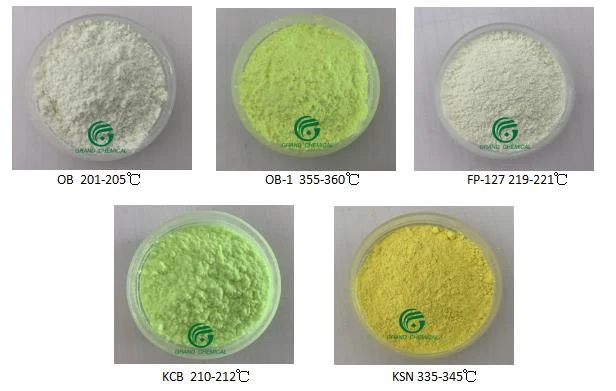
Some polymers (such as polystyrene, ABS, polycarbonate, etc.) have processing temperatures as high as 300°C. Therefore, the optical brighteners used for processing these substrates must be able to withstand temperatures of 300°C or higher. Here below are the main optical brighteners for polymers and their melting point.
(2) Sunlight and climate resistance performance
Many plastic products or synthetic fiber products are commonly used on outdoor occasions. In order to maintain the brilliant color of these products, the optical brighteners for these polymers must have good performance in sunlight and climate resistance.
(3) Migration properties
Many optical brighteners will be partially dissolved in the polymer at the polymer's processing temperature. At this time, the optical brightener is prone to migrate in these substrates. Therefore, it is required that the optical brightener used will not migrate to the surface of the substrate or penetrate into other material layers under appropriate formulation conditions.
(4) Good compatibility with other additives.
When polymers are processed, many additives are inevitably added, such as titanium dioxide, plasticizers, pigments, fillers, etc.
Among them, titanium dioxide also has strong absorption in the UV absorption region of the optical brightener, so this will interfere with the light absorption of the optical brighteners and eventually reduce the whiteness effect. Therefore, When the two must be used at the same time, we should consider the matching of their absorption behaviors. Besides, Other additives, such as hindered amine light stabilizers, will also affect the whiteness of optical brighteners.
(5) High purity
High purity means a high fluorescent whitening rate. Sometimes, even a small amount of impurity will reduce the fluorescence efficiency of the optical brightener.
(6) Non-toxic and environmentally friendly
Plastic products are often in direct contact with food or human skin, the optical brightener used in such products must be non-toxic and meet certain health standards, such as the U.S. FDA, Japan's MITI, and the European Union's health regulations. In addition, it is also very important to be environmentally friendly during use and even at the time of disposal.
If you would like to know the most commonly used optical brighteners for polymers, please check:
The mainly optical brighteners for polymers
It is environmentally friendly and safe for food packing materials under the instructed dosage.
Talk it through with someone who ships the drums
Grand Chemical manufactures and exports the grades discussed above. Send the substrate, the process temperature and the whiteness target and we will name a grade and a dosage window.
Where this fits
Keep reading
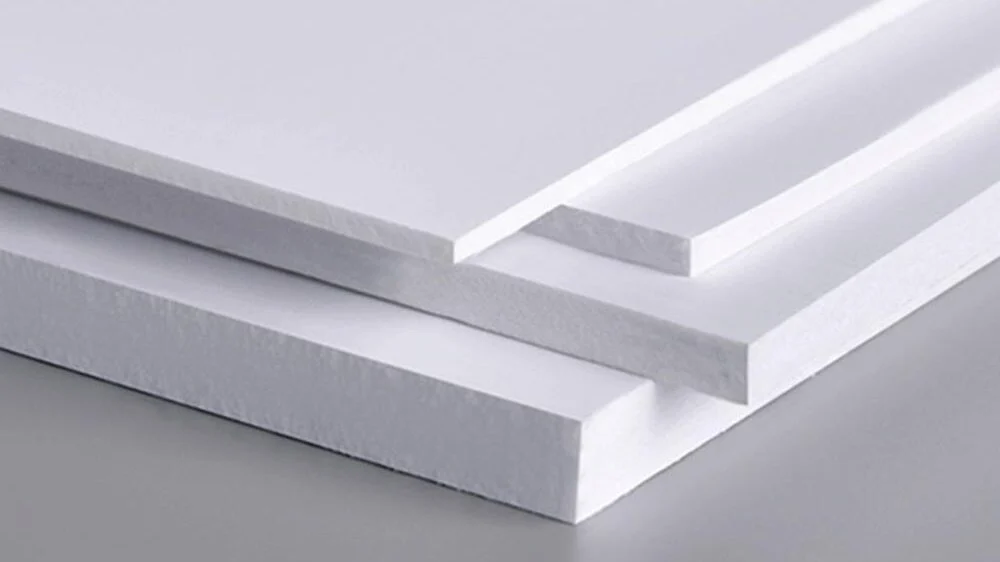
FP-127 for PVC Foam Board: High-Efficiency Optical Brightening Solution
oba for pvc foam board
OB for Ink: Enhancing Whiteness, Brightness, and Color Performance
Ink appearance plays a decisive role in product perception and end-use quality. To meet increasingly high visual standards, ink manufacturers
Optical Brighteners for Polyester Fiber: High-Performance Whitening Solutions
Optical brighteners for polyester fiber play a critical role in improving fabric whiteness, brightness, and visual appeal. Due to the
Optical Brighteners for Paints: Improving Whiteness, Brightness, and Visual Appeal
Optical brighteners for paints play a vital role in enhancing the visual quality of modern coatings. Also known as fluorescent
Optical Brighteners in Paper: Principles, Functions, and Applications in Papermaking
Optical brighteners play a critical role in modern papermaking by significantly improving whiteness, brightness, and visual appeal. Originally developed for