Optical Brightener for Filler Masterbatches
Published 20 Nov 2025 by the technical desk at Shandong Grand Chemical Co., Ltd..
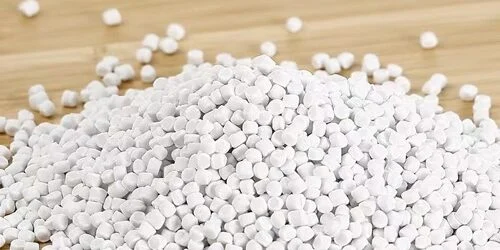
Filler masterbatches may not be widely recognized by consumers, but they play a critical role in the plastics processing industry. These granular materials are typically produced from a combination of fillers, additives, and a small amount of carrier resin. Among plastic manufacturers, filler masterbatches are valued for their cost-effectiveness and their ability to improve product performance.
Most filler masterbatches appear white and are manufactured in high volumes. To enhance whiteness, brightness, and weather resistance, manufacturers commonly add an optical brightener for filler masterbatches during production. Below, we explore how optical brighteners work and how they work to improve the quality of filler masterbatches.
Why Filler Masterbatches Are Widely Used
Although not commonly seen directly by consumers, filler masterbatches are widely used in many plastic products. When added to plastics, they improve properties such as toughness and cost efficiency. Everyday examples include:
- Shopping bags
- Garbage bags
- Packaging films
- Injection-molded household items
One of the biggest advantages of using filler masterbatch is the significant reduction in production costs , thanks to low raw material prices and efficient processing. For plastic manufacturers seeking economical solutions, filler masterbatch offers an ideal balance between performance and affordability.
Why Optical Brightener Is Essential for Filler Masterbatches
Even though filler masterbatch is a low-cost material, downstream customers still expect products to look clean, bright, and visually appealing. Therefore, adding an optical brightener for filler masterbatches is crucial.
Optical brighteners work by:
- Absorbing ultraviolet (UV) light
- Emitting blue-violet fluorescence
- Counteracting yellow tones
- Enhancing overall whiteness and luminosity
As a result, the filler masterbatch achieves a white, bright, and premium appearance without significantly increasing production costs.
How to Use Optical Brightener in Filler Masterbatch Production
The process of applying optical brightener is simple and highly effective.
- Mixing ratio: Add 0.02%-0.05% optical brightener to the filler material.
- Processing: Feed the mixture into a co-rotating twin-screw extruder for granulation.
- Result: The final filler masterbatch becomes visibly whiter, brighter, and more stable in outdoor environments.
This small addition delivers a noticeable improvement in product appearance, helping manufacturers meet customer quality standards and boost competitiveness.
Summary
Choosing the right optical brightener for filler masterbatches allows manufacturers to:
- Improve whiteness and brightness
- Enhance product appearance
- Maintain low production costs
- Increase weather resistance
- Meet customer expectations for quality
Talk it through with someone who ships the drums
Grand Chemical manufactures and exports the grades discussed above. Send the substrate, the process temperature and the whiteness target and we will name a grade and a dosage window.
Where this fits
Keep reading
FP-127 for PVC Foam Board: High-Efficiency Optical Brightening Solution
oba for pvc foam board
OB for Ink: Enhancing Whiteness, Brightness, and Color Performance
Ink appearance plays a decisive role in product perception and end-use quality. To meet increasingly high visual standards, ink manufacturers
Optical Brighteners for Polyester Fiber: High-Performance Whitening Solutions
Optical brighteners for polyester fiber play a critical role in improving fabric whiteness, brightness, and visual appeal. Due to the
Optical Brighteners for Paints: Improving Whiteness, Brightness, and Visual Appeal
Optical brighteners for paints play a vital role in enhancing the visual quality of modern coatings. Also known as fluorescent

Optical Brighteners in Paper: Principles, Functions, and Applications in Papermaking
Optical brighteners play a critical role in modern papermaking by significantly improving whiteness, brightness, and visual appeal. Originally developed for