Fluorescent Brightener General Proerties in textiles
Published 5 Jun 2025 by the technical desk at Shandong Grand Chemical Co., Ltd..
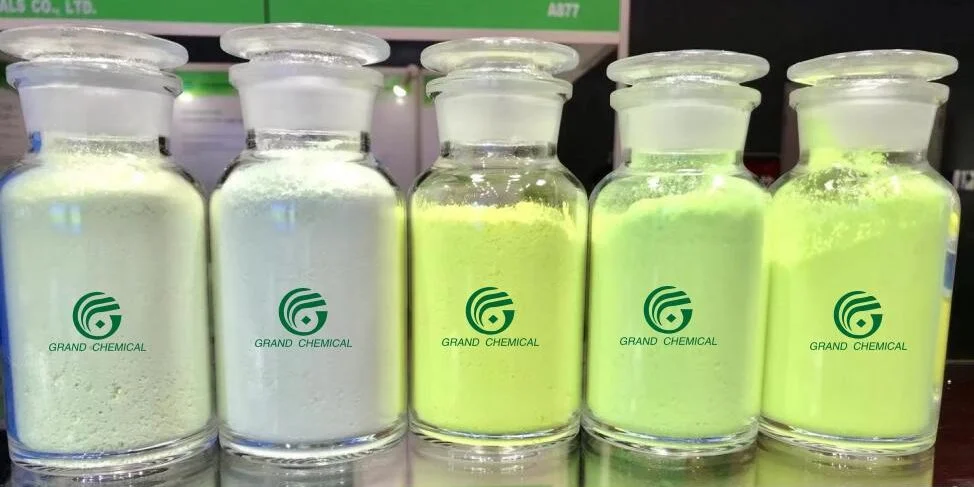
The difference between fluorescent brightener and dyestuffs:
Fluorescent brightener or fluorescent whitening agent on the fabric treatment is similar to dyes, but it is different from the general nature of dyes. The main differences are as follows.
① The amount of color given by dyestuff to fabric dyeing is directly proportional to the dosage of dyestuff. While for fluorescent brightener, when it is used in low dosage, its whiteness is directly proportional to the dosage. When the dosage exceeds a certain limit, the increasing dosage will not give improvement in whiteness, instead, it will make the fabrics yellow. This "certain limit" is called the peak point or the yellowing point.
② The deeper the dye is, the more it can cover the fabric stains. The better the whitening effect of the fluorescent brightener is, the more obvious the stains will be.
③ Fluorescent brightener itself and its aqueous solution in daylight fluorescence effect is not obvious. It shows a strong whitening effect only when it is dyed on the fiber.
The classification of fluorescent brighteners according to ionic type
According to their different properties and performance, the fluorescent brighteners can be divided into cationic type, anionic type, and non-ionic type.
Cationic and anionic type fluorescent brightener is generally a yellowish solid powder, easily soluble in water, in water is a slightly yellow fluorescent solution and can be adsorbed by the fiber. They have excellent directness and leveling properties to fibers, and are more convenient to use. Ionic whitening agent can not be applied in the same bath with dyes or auxiliaries of the opposite ionic type, otherwise it will reduce the whitening effect or even lose the whitening effect completely. In addition, the pH of the medium has a great influence on the whitening effect of the ionic whitening agent.
Non-ionic t ype fluorescent brightener is a class of insoluble in water or slightly soluble in water compounds, its commercial dosage forms are dispersed suspension, organic solution, and ultra-fine powder. It can not only be used for the whitening of fabrics, but can also be directly added to the synthetic fiber resin in the original liquid, becoming a "permanent whitening agent".
The main applications of fluorescent brightener
Fluorescent brightener has a wide range of applications, the demand is also increasing. It has penetrated various industrial sectors and is closely related to our lives. Their main uses are as follows:
- Used for whitening and brightening various textile products .
- Used for synthetic detergents to increase the washing effect of detergents .
- Used for whitening paper to improve the whiteness and commodity value of paper .
- Used for whitening plastics to increase their aesthetics .
- Used for whitening paints or coatings to increase the whiteness and vividness.
Talk it through with someone who ships the drums
Grand Chemical manufactures and exports the grades discussed above. Send the substrate, the process temperature and the whiteness target and we will name a grade and a dosage window.
Where this fits
Keep reading
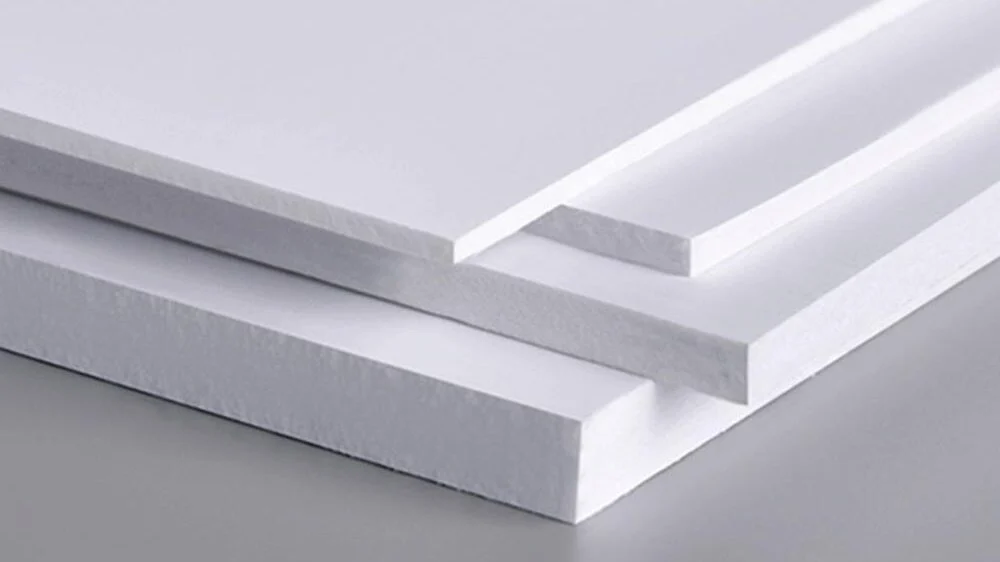
FP-127 for PVC Foam Board: High-Efficiency Optical Brightening Solution
oba for pvc foam board
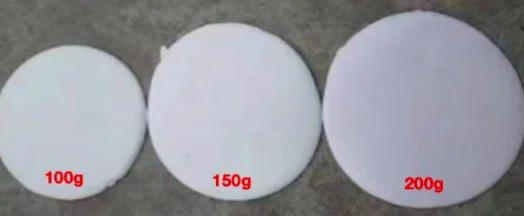
OB for Ink: Enhancing Whiteness, Brightness, and Color Performance
Ink appearance plays a decisive role in product perception and end-use quality. To meet increasingly high visual standards, ink manufacturers
Optical Brighteners for Polyester Fiber: High-Performance Whitening Solutions
Optical brighteners for polyester fiber play a critical role in improving fabric whiteness, brightness, and visual appeal. Due to the
Optical Brighteners for Paints: Improving Whiteness, Brightness, and Visual Appeal
Optical brighteners for paints play a vital role in enhancing the visual quality of modern coatings. Also known as fluorescent

Optical Brighteners in Paper: Principles, Functions, and Applications in Papermaking
Optical brighteners play a critical role in modern papermaking by significantly improving whiteness, brightness, and visual appeal. Originally developed for