Fluorescent Brightener Suitable for Polymer Whitening and Brightening
Published 27 Oct 2025 by the technical desk at Shandong Grand Chemical Co., Ltd..
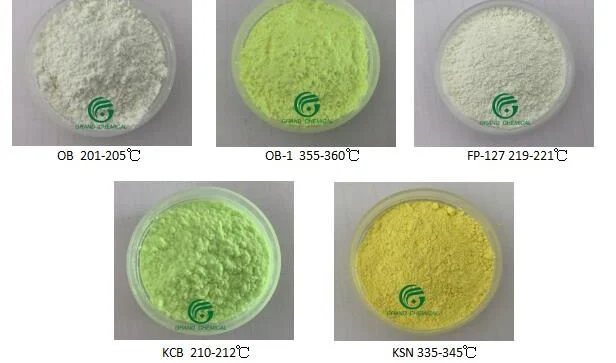
In recent years, China's production and research of fluorescent brightener for polymers have developed rapidly. Currently, eight major varieties are in commercial production. These brighteners mainly fall into three structural categories :
- Bisbenzoxazoles (e.g., C.I. Fluorescent Brighteners 135, 184, 185, 367, 368, 393)
- Distyrylbenzenes (e.g., C.I. Fluorescent Brightener 199)
- Distyrylbiphenyls (e.g., C.I. Fluorescent Brightener 378)
Below are the most widely used fluorescent brighteners for polymer whitening and brightening applications :
1. C .I. Fluorescent Brightener 393 (CAS 1533-45-5)
Trade Name: Optical brightener OB-1 / Eastobrite OB-1
C.I. Fluorescent Brightener 393 is one of the most heat-resistant brighteners , withstanding processing temperatures up to 375°C . It offers excellent whiteness and good compatibility with other polymer additives, making it ideal for high-melting-point engineering plastics such as polysulfone , polyester , nylon , ABS , EVA , rigid PVC , and polycarbonate .
It is widely used for polyester fiber whitening and food-contact plastics , owing to its low toxicity and compliance with safety regulations.
- Appearance: Bright yellowish green powder
- Melting point: 360°C
- Absorption wavelength: 370 nm
- Fluorescence emission: 427 nm
- Dosage: 25-300 mg/kg
2. C.I. Fluorescent Brightener 184 (CAS 7128-64-5)
Trade Name: OB / Uvitex OB / Tinopal OB
A general-purpose brightener suitable for a broad range of plastics including PVC, PS, ABS, PE, PP, PC, PET , as well as varnishes , inks , and synthetic fibers . It produces a pure blue fluorescence and offers high whiteness , excellent fastness , and very low toxicity , making it ideal for children's products and food packaging applications.
- Appearance: Pale yellow to white crystalline powder
- Melting point: 198-203°C
- Absorption wavelength: 375 nm
- Fluorescence emission: 435 nm
- Dosage: 10-50 mg/kg
3. C.I. Fluorescent Brightener 378 (CAS 40470-68-6)
Trade Name: Optical brightener FP-127 / Uvitex FP / Hostalux KVC
C.I. Fluorescent Brightener 378 delivers high whitening performance and excellent heat stability across multiple plastics, including PVC, polyamide, polystyrene, polyurethane , and thermoplastic rubber . It exhibits superior lightfastness in nylon fibers and high migration resistance in soft PVC.
It is also effective for transparent plastics , where it counteracts yellow tones at very low dosages.
- Appearance: Yellow-white powder
- Melting point: 216-222°C
- Absorption wavelength: 364 nm
- Dosage: 0.0005-0.001% for transparent products
- 50-500 mg/kg for colored plastics
4. C.I. Fluorescent Brightener 367 (CAS 5089-22-5)
Trade Name: Optical brightener KCB / Hostalux KCB
C.I. Fluorescent Brightener 367 is a versatile optical brightener suitable for films, injection molding, extrusion materials , EVA foam , rubber , paints , and lacquers . It features excellent migration resistance and good lightfastness across different substrates.
- Appearance: Yellow-green crystalline powder
- Melting point: 210-212°C
- Absorption wavelength: 373 nm
- Fluorescent hue: Blue
- Dosage: 0.01-0.05%
5. C.I. Fluorescent Brightener 368 (CAS 5242-49-9)
Trade Name: Optical brightener KSN
C.I. Fluorescent Brightener 368 provides exceptional whitening power even at low dosages and performs well under high temperatures and outdoor exposure . It is widely used in polyester resins , polyamides , polyacrylonitrile , and other plastics for film extrusion , injection molding , and polymerization whitening .
It offers excellent compatibility , UV resistance , and weather durability .
- Appearance: Yellow powder
- Melting point: 260-310°C
- Dosage: 2-30 g per 100 kg of substrate (general use)
- 0.5-2 g per 100 kg for transparent plastics
- 10-20 g per 100 kg for polyester resins
Conclusion
Fluorescent brighteners play a vital role in enhancing the whiteness, brilliance, and visual appeal of polymer products. Selecting the right brightener - based on thermal stability, substrate compatibility, and safety - is key to achieving optimal whitening performance.
Talk it through with someone who ships the drums
Grand Chemical manufactures and exports the grades discussed above. Send the substrate, the process temperature and the whiteness target and we will name a grade and a dosage window.
Grades discussed in this article
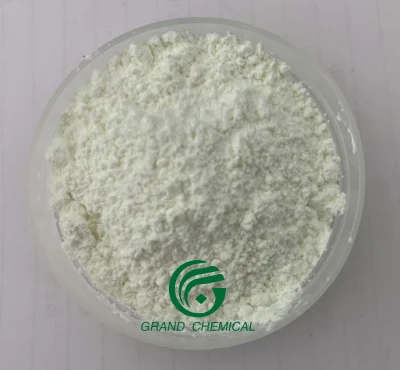
Optical brightener OB
The workhorse of the benzoxazole family and the grade most plastics buyers are matching when their specification says Uvitex OB or Tinopal OB.
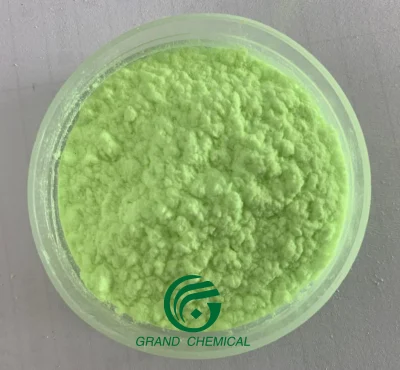
Optical brightener KCB
A naphthalene-bridged bisbenzoxazole developed for EVA foam, and still the first choice for footwear midsoles.
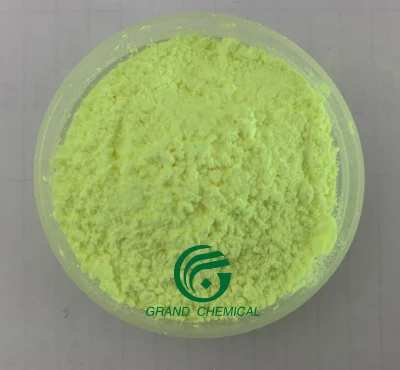
Optical brightener OB-1
The heat-resistance specialist.
Optical brightener 199
The same dispersion chemistry as 199:1 but tuned to a slightly reddish neutral white, and sold against the trade names Blankophor ER, Optical brightener CPS and…
Keep reading
OB for Ink: Enhancing Whiteness, Brightness, and Color Performance
Ink appearance plays a decisive role in product perception and end-use quality. To meet increasingly high visual standards, ink manufacturers
Optical Brighteners for Paints: Improving Whiteness, Brightness, and Visual Appeal
Optical brighteners for paints play a vital role in enhancing the visual quality of modern coatings. Also known as fluorescent
Optical Brighteners for Recycled Plastics: Enhancing Whiteness, Brightness, and Market Competitiveness
In today's highly competitive plastics industry, manufacturers face constant pressure to reduce costs while improving product quality. As a result,
Optical Brightener OB-1: Properties, Specifications, and Industrial Applications
Optical brightener OB-1 is one of the most widely used and highly effective fluorescent whitening agents in the plastics and
A Technical Guide to Selecting the Best Optical Brightener for Polyamide (Nylon) Applications
Polyamide (PA), widely known as nylon, is a high-performance thermoplastic resin characterized by repeating amide linkages -[NHCO]-. As one of