
How to Specify Commercial Gym Equipment
This guide uses the same four numbers published on every machine page: loading format, steel tube section, frame dimensions and weight. They are what you need to compare our lines against each other and against any other quotation on your desk.
It is written for gym owners, fit out contractors and distributors specifying a floor rather than a single machine.
- Machines
- 484
- Product lines
- 12
- Frame sections
- Four
- Building since
- 2007
Frame Sections Across the Strength Lines
Steel tube section is published on every strength machine we list. It is the fastest way to compare our lines against each other and against a quotation from another factory.
| Product line | Type | Q235 steel tube | Machines | Weight range |
|---|---|---|---|---|
| D-Line | Pin Loaded Strength | 50 x 100 x 3 mm | 59 | 30–1220 KG |
| R1-Line | Pin Loaded Strength | 76 x 76 x 3 mm | 53 | 23–1375 KG |
| T-Line | Pin Loaded Strength | 60 x 120 x 3 mm | 64 | 23–1521 KG |
| F1-Line | Plate Loaded Strength | 40 x 80 x 3 mm | 135 | 23–405 KG |
| M-Line | Plate Loaded Strength | 60 x 120 x 3 mm | 15 | 190–285 KG |
| R2-Line | Plate Loaded Strength | 76 x 76 x 3 mm | 12 | 89–245 KG |
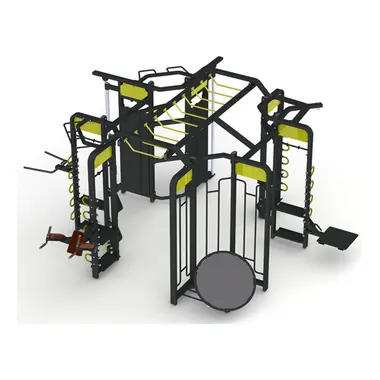
| S-Line | Group Training Rigs | Not published | 10 | 400–1220 KG |
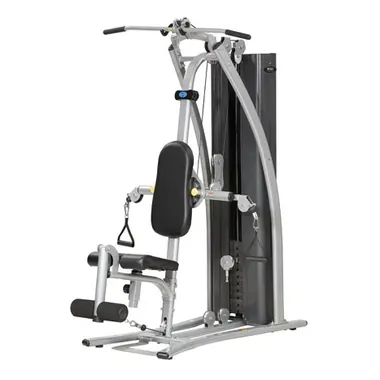
| G-Line | Multi Gym Stations | Not published | 5 | On request |
| H-Line | Hydraulic Circuit Training | 40 x 80 x 3 mm | 10 | 49–60 KG |
| P-Line | Pilates Equipment | Not published | 11 | 5.2–127 KG |
| K-Line | Cardio Machines | Not published | 57 | 27–650 KG |
| A-Line | Accessories and Crossfit | 50 x 100 x 3 mm | 53 | 1.45–60 KG |
Pin Loaded or Plate Loaded
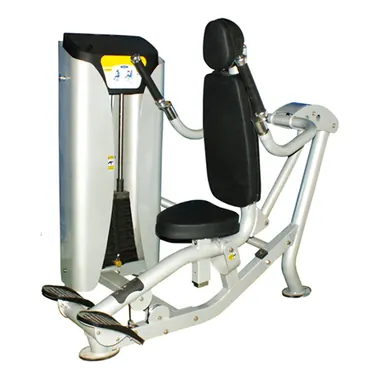
A pin loaded machine carries its own weight stack. The user moves a pin to change resistance, which takes a couple of seconds and needs no handling of loose weight. That makes pin loaded machines the base of most commercial floors with a mixed membership.
A plate loaded machine is loaded with Olympic plates. There is no stack to maintain, the machine is lighter for the same top resistance, and strong lifters can go past the top of a typical stack. The trade off is that plates have to be loaded, unloaded and racked.
On our catalogue the pin loaded lines are D, R1 and T. The plate loaded lines are F1, M and R2. A gym floor usually carries both.
How to Choose
- Mixed membership and circuit use — start with pin loaded
- Free weight area and stronger lifters — plate loaded
- Tight maintenance budget — plate loaded has no stack or cable to service
- Fast changeovers between users — pin loaded
Reading the Frame Section
The steel tube section is the clearest single number for comparing two commercial machines. All our strength frames are Q235 steel tube, TIG welded and powder coated, and the section is published for each machine that carries one.
A 76 x 76 x 3 mm square section is our heaviest and is used on the R1 and R2 lines. The T and M lines use a 60 x 120 x 3 mm rectangular section. The D line uses 50 x 100 x 3 mm. The F1 and H lines use 40 x 80 x 3 mm, with some F1 machines on 50 x 100 x 3 mm.
Heavier sections add stiffness and shipping weight. Lighter sections cost less to ship and suit machines that do not carry a full stack, such as hydraulic circuit stations.
When a Hydraulic Circuit Makes Sense
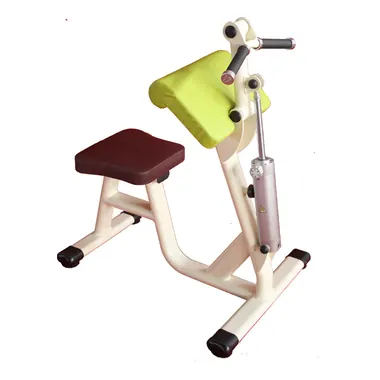
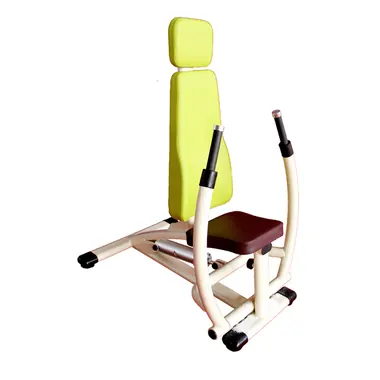
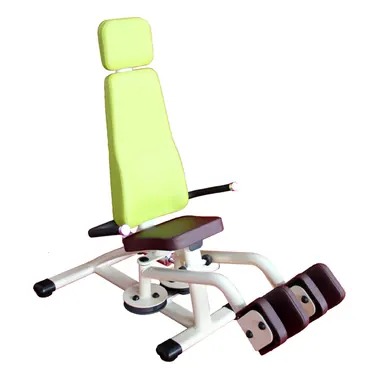
Hydraulic circuit stations replace the weight stack with a double resistance hydraulic cylinder. Resistance rises with the speed of the movement rather than with a fixed load, so there is nothing to set between users and no eccentric load on the joint.
That suits ladies fitness circuits, rehabilitation rooms and senior programmes, where a group moves station to station on a timer. Our H line covers the circuit on a compact 40 x 80 x 3 mm frame, with machines in the 49 to 60 KG range so a circuit fits into a small room.
Signs You Want the H Line
- A timed circuit rather than sets and reps
- Users of very different strength on the same station
- A room too small for a full selectorized floor
- Low impact training for rehabilitation or older members
Working Out What Fits in a Container
Every machine page publishes the frame size and, where the factory gives it, the machine weight. Those two numbers are what a container plan is built from, so they are listed rather than hidden behind an enquiry.
Carton dimensions and gross weight differ from machine dimensions, because most machines ship partly knocked down. We confirm carton size, gross weight and container quantity at quotation, once we know the destination port and the mix of machines in the order.
Send Us These Four Things
- The item numbers you want, for example F1-1001 and T01
- Quantity per item
- Destination port or city
- Any finish, upholstery colour or logo requirement
Frequently Asked Questions
What does Q235 steel mean?
Q235 is a common Chinese structural carbon steel grade. It is what our strength machine frames are made from, in the tube sections listed for each product line.
Why do some machines have no published weight?
Weight is published where the factory gives it for that machine. Where it is not, we send it on request together with carton dimensions, because those are needed for the same purpose.
What upholstery and finish do you use?
Pads and benches are PU leather. Frames are finished in electrostatic powder coating with good adhesive force. Cable driven pin loaded machines use 6 mm diameter cable.
Can I get a machine in a different colour?
Finish and upholstery colour are worth raising when you send your enquiry, along with any logo requirement, so that they are covered in the quotation.
Still Not Sure Which Line You Need?
Describe the space and the membership and we will suggest machines from the catalogue.