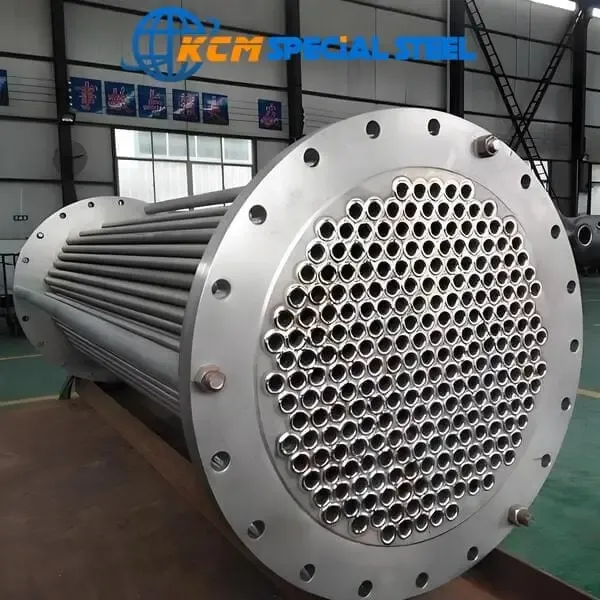
1. Introduction to Dual Grade 316/316L Stainless Steel Pipe
316/316L Stainless Steel Pipe is Dual-grade austenitic stainless steel pipes with near-identical Cr (16-18%), Ni (10-14%), Mo (2-3%), but differ in carbon (316: ≤0.08%, 316L: ≤0.03%). 316 excels in high-temperature strength; 316L prioritizes welding integrity and post-weld corrosion resistance. Used in chloride-rich, acidic, or thermal environments. Density variance: ≤1-2%.
316 and 316L are austenitic stainless steels classified as dual-grade materials, meaning they comply with overlapping standards (e.g., ASTM 316 and 316L) while retaining distinct compositional and functional properties. These alloys are widely used in corrosive and high-temperature environments due to their balanced combination of strength, weldability, and resistance to chlorides, acids, and oxidation.
Dual-Grade 316/316L Stainless Steel Pipe Manufacturing Video
2. Chemical Composition: The Core Divider
The critical distinction between 316 and 316L lies in carbon content, which governs weldability and corrosion resistance.
| Element | 316 (%) | 316L (%) | Functional Impact |
|---|---|---|---|
| Carbon (C) | ≤0.08 | ≤0.03 | 316L resists carbide precipitation during welding. |
| Chromium (Cr) | 16.0–18.0 | 16.0–18.0 | Enhances oxidation resistance. |
| Nickel (Ni) | 10.0–14.0 | 10.0–14.0 | Stabilizes austenitic structure. |
| Molybdenum (Mo) | 2.0–3.0 | 2.0–3.0 | Improves pitting resistance in chlorides. |
3. Dual Grade 316/316L Stainless Steel Pipe Mechanical Properties: Strength vs. Weldability
While both grades share near-identical density (~8.0 g/cm³, with ≤1–2% variance due to alloying fluctuations), their mechanical profiles diverge slightly:
| Property | 316 Stainless Steel | 316L Stainless Steel | Implications |
|---|---|---|---|
| Tensile Strength (MPa) | 515–690 | 485–620 | 316 is stronger for load-bearing applications. |
| Yield Strength (MPa) | 205–310 | 170–310 | 316 suits structural frameworks. |
| Elongation (%) | 40–50 | 40–50 | Both offer excellent ductility. |
| Density Variance | 7.9–8.0 g/cm³ (±1–2%) | 7.9–8.0 g/cm³ (±1–2%) | Negligible impact on performance. |
4. Corrosion Resistance: Performance in Harsh Environments
316L outperforms 316 in welded or chloride-rich environments due to its reduced carbon content:
| Environment | 316 Performance | 316L Performance | Typical Applications |
|---|---|---|---|
| Saltwater/Chlorides | Good | Excellent | Offshore platforms (316L pipes). |
| Sulfuric Acid (≤15%) | Excellent | Excellent | Chemical reactors (both grades). |
| Post-Weld Zones | Moderate | Superior | Pharmaceutical piping (316L). |
| High-Temperature Steam | Good | Moderate | Power plants (316 tubing). |
5. Applications: Tailoring Material to Use Case
316 Stainless Steel Tubing
- High-Temperature Systems: Boilers, heat exchangers, and aerospace hydraulics.
- Structural Components: Marine rigging and architectural supports.
316L Stainless Steel Pipe
- Corrosive Media Transport: Desalination plants and chemical processing.
- Welded Assemblies: Medical devices and food-grade equipment.
6. Global Standards and Interchangeability
The dual-grade compliance ensures alignment with international standards:
| Grade | ASTM | EN | JIS | GB/T (China) |
|---|---|---|---|---|
| 316 | S31600 | 1.4401 | SUS316 | 0Cr17Ni12Mo2 |
| 316L | S31603 | 1.4404 | SUS316L | 00Cr17Ni14Mo2 |
This interoperability simplifies procurement for global projects..
7. Cost and Fabrication Considerations
| Factor | 316 | 316L |
|---|---|---|
| Material Cost | 3,000–3,000–3,500/ton | 3,200–3,200–3,800/ton |
| Welding Complexity | Requires post-weld annealing | No annealing needed |
| Market Dominance | 30% of dual-grade use | 70% of dual-grade use |
316L’s higher upfront cost is offset by reduced maintenance and fabrication expenses.
8. Key Decision Factors
| Criterion | Choose 316 | Choose 316L |
|---|---|---|
| Operating Temperature | >800°F (427°C) | <800°F (427°C) |
| Welding Requirements | Minimal or no welding | Extensive welding |
| Corrosion Exposure | Mild to moderate | Severe (chlorides, acids) |
| Budget Constraints | Lower initial cost | Long-term cost efficiency |
9. FAQ:
Q1: What is the main difference between 316 and 316L?
A: The key difference is carbon content. 316 has ≤0.08% carbon, while 316L has ≤0.03%, making 316L superior for welding and post-weld corrosion resistance.
Q2: Which grade is better for marine environments?
A: 316L is preferred for chloride-rich environments (e.g., seawater) due to its reduced risk of carbide precipitation.
Q3: Does the 1–2% density difference matter?
A: No—the density variance (~8.0 g/cm³) is negligible for most applications but may be critical in aerospace or weight-sensitive designs.
Q4: Can 316 and 316L be used interchangeably?
A: Not always. 316L is ideal for welded structures, while 316 is better for high-temperature, non-welded applications.
Q5: Why is 316L more expensive?
A: Its lower carbon content requires tighter manufacturing controls, but long-term savings arise from reduced welding and maintenance costs.
Q6: Are both grades compliant with global standards?
A: Yes—both align with ASTM, EN, JIS, and GB/T standards, ensuring global interoperability.
10. Conclusion: Optimizing Dual-Grade Advantages
316/316L stainless steel pipes exemplify material versatility, balancing strength (316) with weldability and corrosion resistance (316L). The ≤1–2% density variance between the grades has negligible practical impact but underscores their compositional adaptability. By leveraging dual-grade compliance and global standardization, industries can tailor material selection to project demands, ensuring durability, compliance, and cost-effectiveness.