
Silk Top with Wefts Topper Lace Hairline
A quiet part and a soft forehead edge
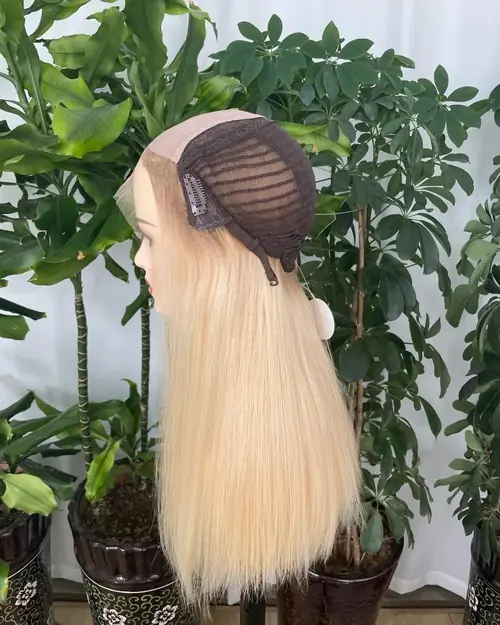
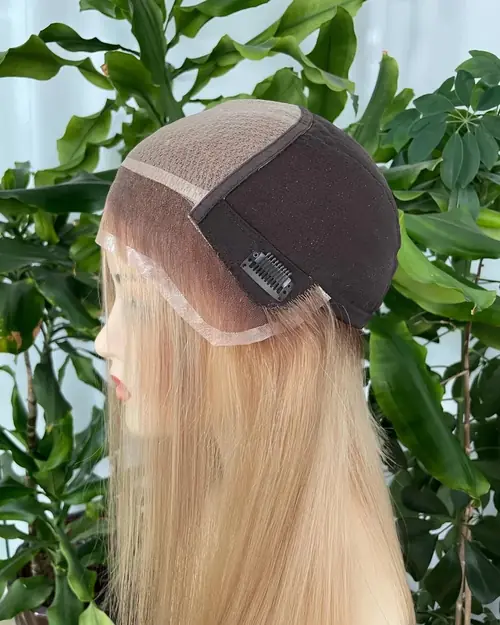
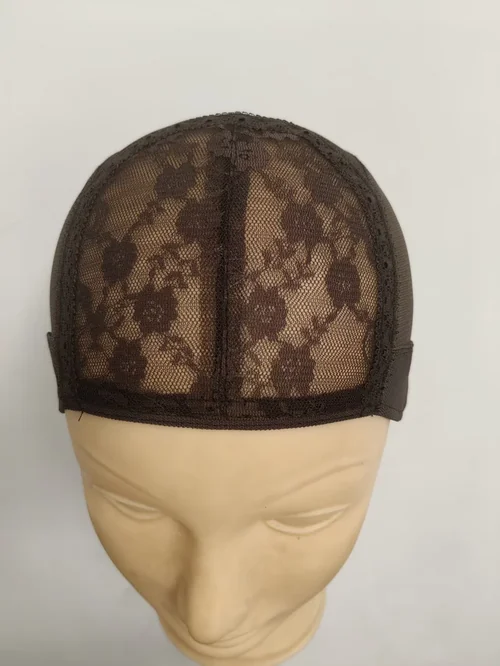
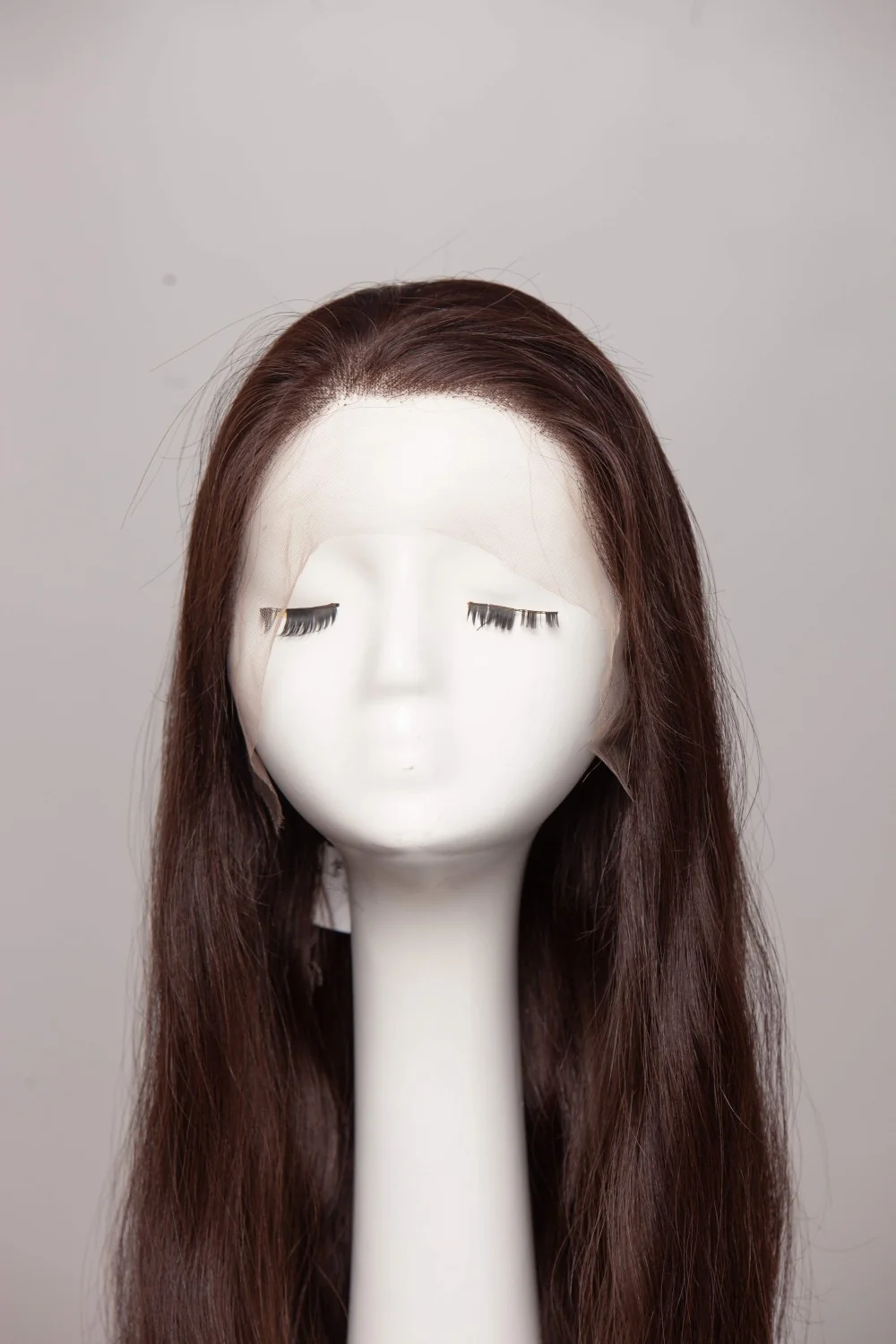
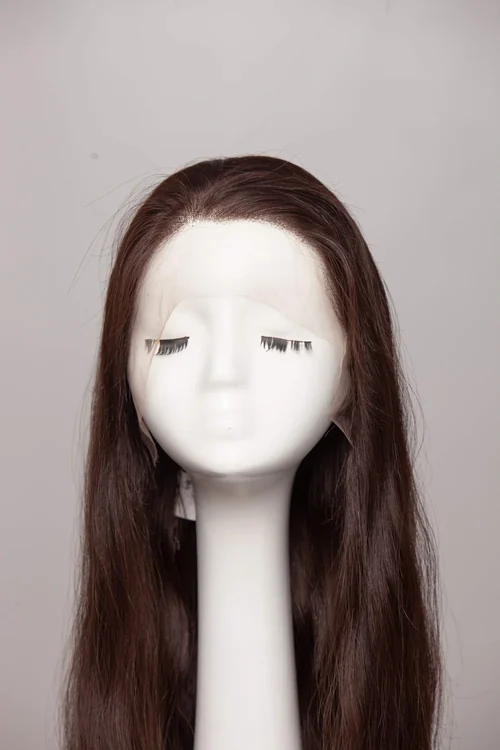
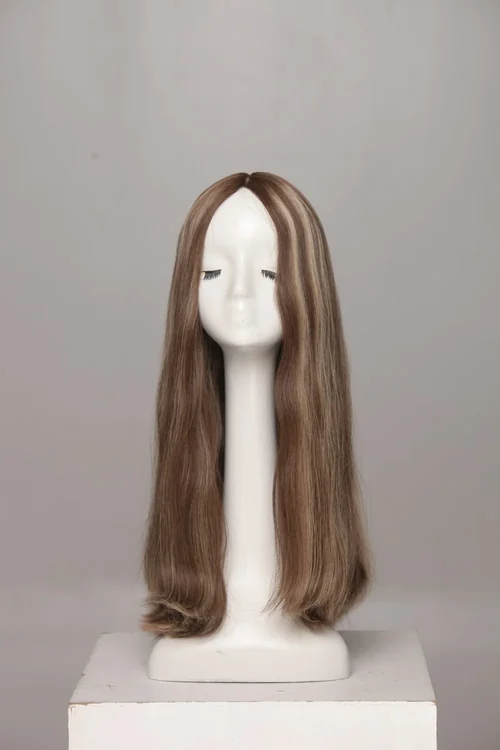
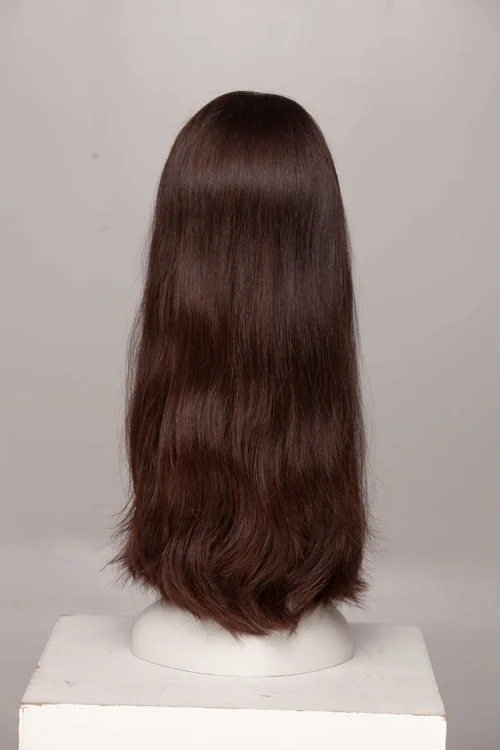
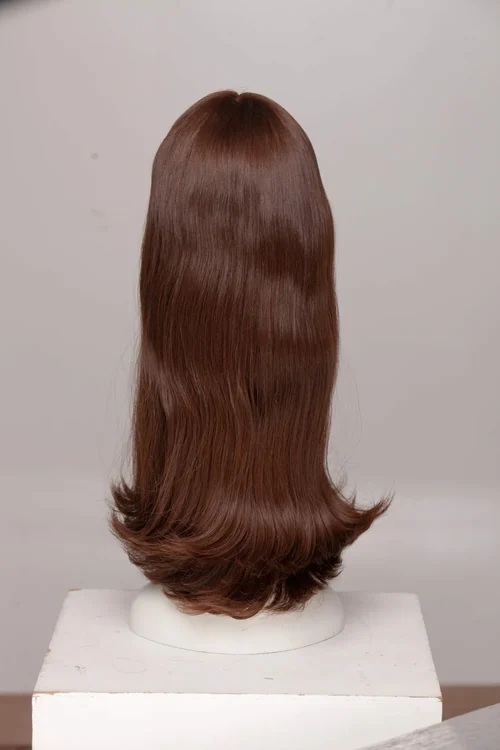
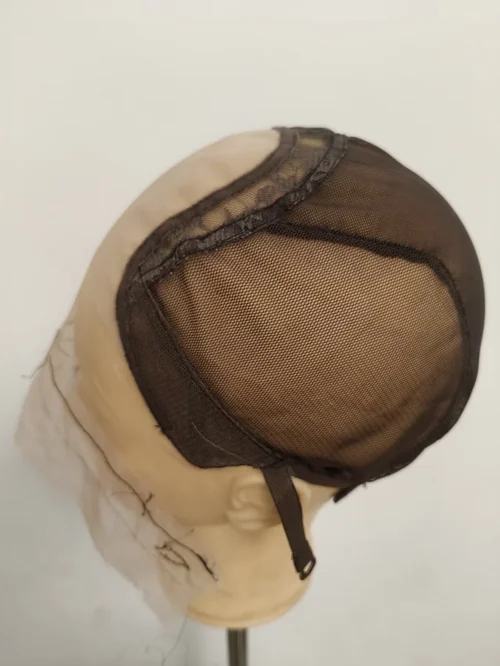
Two materials share the top of this base. The parting area is silk, so the knotting stays out of sight, while the front edge is fine Swiss lace, which ends the piece in something sheerer than a folded hem.
Overview
Two materials share the top of this base. The parting area is silk, so the knotting stays out of sight, while the front edge is fine Swiss lace, which ends the piece in something sheerer than a folded hem.
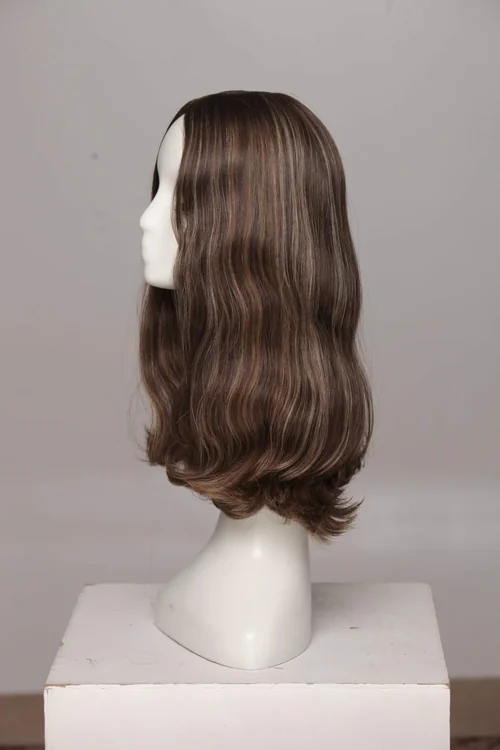
Hairs are tied individually along that lace edge so the front does not begin in a blunt line. Behind the crown the build returns to machine wefts on the pattern.
This combination is not for every buyer. Some communities permit lace at the forehead when it sits away from the woman's own hair and some do not permit it at all, and a salon should settle that before ordering.
Key Benefits
Soft Front Edge
Lace lets the hairline begin gradually instead of announcing where the piece starts.
Silk Where the Part Sits
The material changes at the crown so the knotting is covered exactly where it would be inspected.
Hairs Tied Along the Lace
Fine strands along the front are knotted by hand rather than wefted in.
Custom Stated Openly
We say plainly that this pattern suits some communities and not others, and we do not rule on it.
Who It Is For
- United States salons that ask for front lace as a matter of course.
- Buyers who want a hairline design and a covered part in the same partial base.
- Wholesalers who stock both a lace-fronted and a plain option because their customers differ on custom.
Problems It Solves
A Hard Line at the Forehead
Lace with knotted hairs along it replaces an edge that starts abruptly.
Knots Visible at the Part
Silk at the crown keeps them out of sight while the lace does its work only at the front.
Ordering Against the Wrong Custom
Naming the limitation here lets a buyer choose the plain silk pattern before money moves.
Technical Features
Swiss Lace at the Front
A fine lace section carries the forehead edge of the base.
Silk Parting Section
The crown material covers knot points where the hair separates.
Wefts Behind
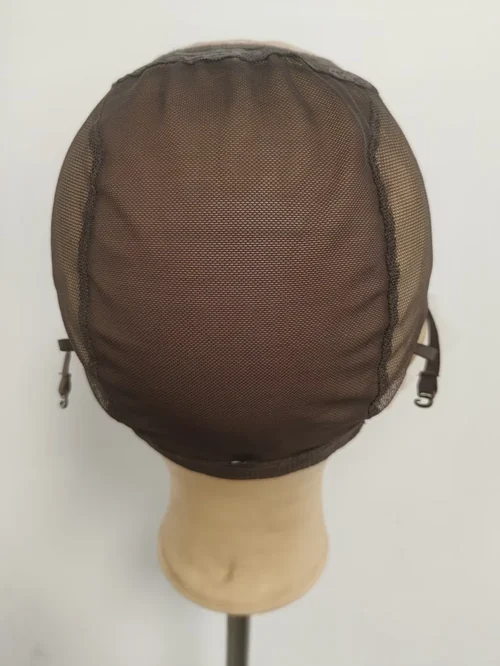
The remaining perimeter is machine wefted and finished with clips.
Specifications
| Base type | Partial topper, mixed materials |
|---|---|
| Front | Swiss lace with knotted hairs |
| Crown | Silk over the parting area |
| Rest of perimeter | Machine wefts |
| Attachment | Clips at the edge |
| Custom note | Front lace is not accepted everywhere |
| Sizes | Not shown anywhere on the site |
Materials
Fine Swiss lace at the forehead section, silk across the parting area, machine wefts behind them and clips at the edge. Virgin or Remy human hair is knotted into the lace and silk and wefted elsewhere. Lining can be specified where a community asks for the hair beneath to be covered.
Customization Options
The depth of the lace section, how densely the front hairs are tied, hair colour and root, clip positions, and whether lining goes behind the silk. Fit is agreed in consulting only.
Manufacturing Process
Section Layout
Lace, silk and weft areas are marked on the partial pattern before anything is cut.
Joining the Materials
Lace and silk are stitched together so the seam falls where hair will cover it.
Hairline Ventilating
Fine hairs are tied into the lace one at a time along the front.
Crown and Wefts
The parting area is knotted through the silk and wefts complete the perimeter.
Quality Control
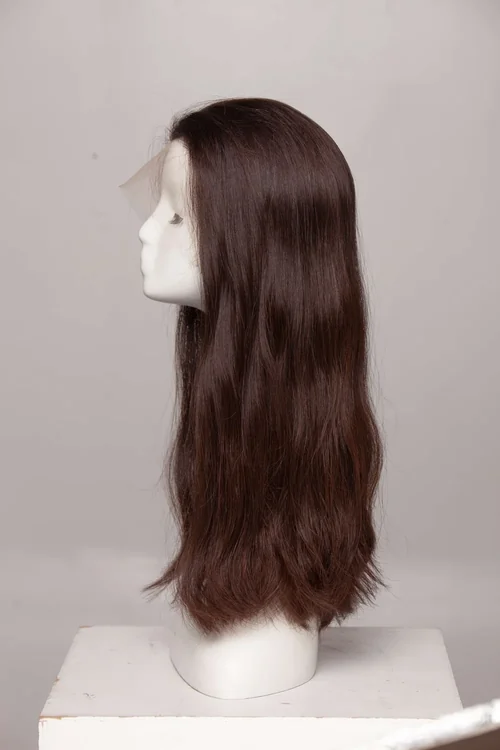
On the stand we look along the lace from the side to see whether the edge lifts, count that no bald gap interrupts the hairline, and confirm the seam between lace and silk is not standing proud.
Kosher-Compliant Construction Notes
Front lace is the part of this pattern that custom argues about. Some communities accept it when it rests off the woman's own hair; others rule it out, and for them the plain silk topper or a fabric band at the front is the honest answer. We build to the salon's instruction and take no position. Nothing in this line is a medical wig.
This page describes construction. It is not a rabbinic ruling.
How It Compares
| With Lace Hairline | Without Lace Hairline | |
|---|---|---|
| Forehead edge | Gradual, hairs tied into lace | A finished edge with no lace |
| Custom | Accepted in some communities only | The safer choice where lace is refused |
| Handling | The lace edge needs care when wet | Less delicate at the front |
This table compares construction only. Which side a community stands on is a question for its rav.
Gallery
Use and Care
Treat the lace section as the fragile part: no tugging while it is wet, and lift from the base rather than from the front hairs. Let it dry before it goes back on the client.
No base measurements are published on this site. Fit is closed in consulting.
Related Products
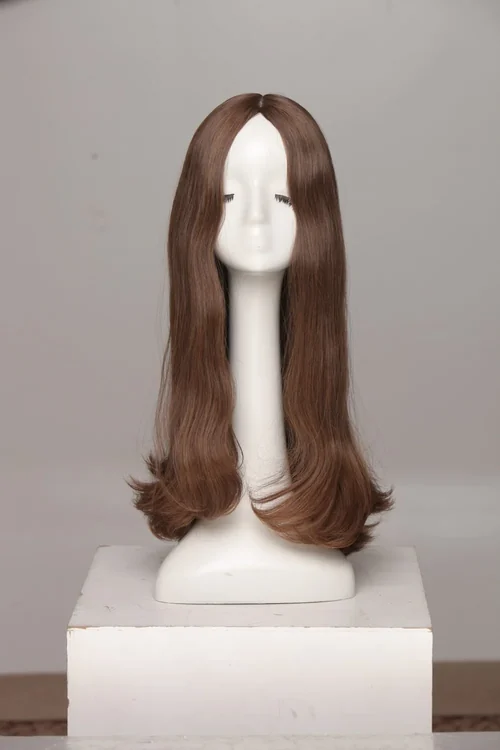 Silk Top with Wefts TopperA silk crown over the client's own hairLearn More
 Full Hand Tied Lace Hairline TopperA Swiss lace front edge on a base tied end to endLearn More
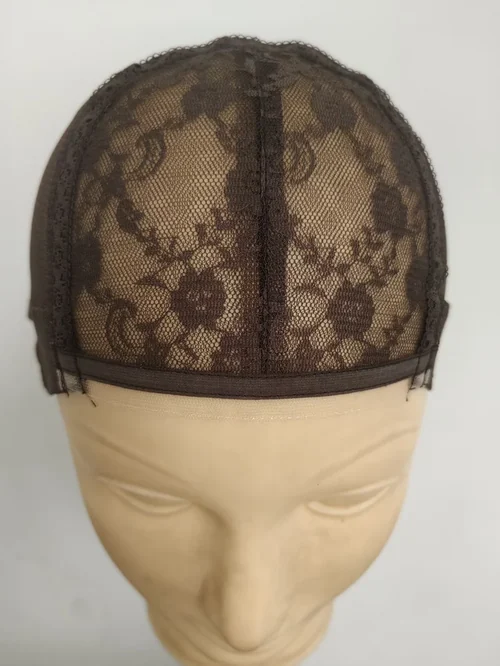 Front Lace Wig Cap for Kosher SheitelSwiss lace across the hairline, baby hair tied by handLearn More
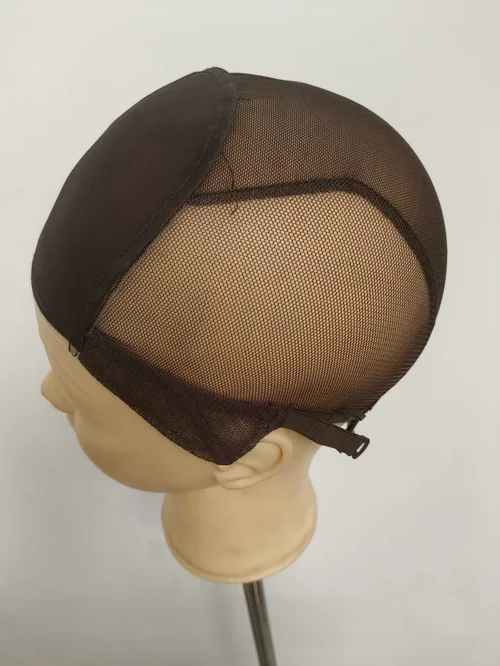 Silk Top plus Front Lace CapConcealed knots at the crown, sheer lace at the hairlineLearn More
Related Reading
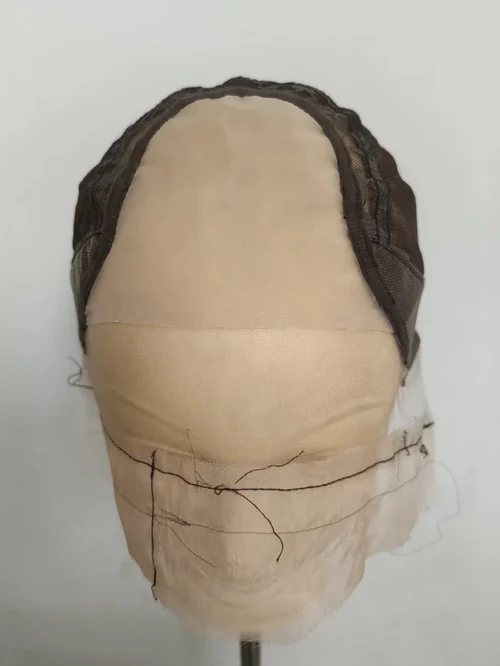 What Makes a Sheitel Kosher-Compliant in ConstructionKnowledgeLearn More
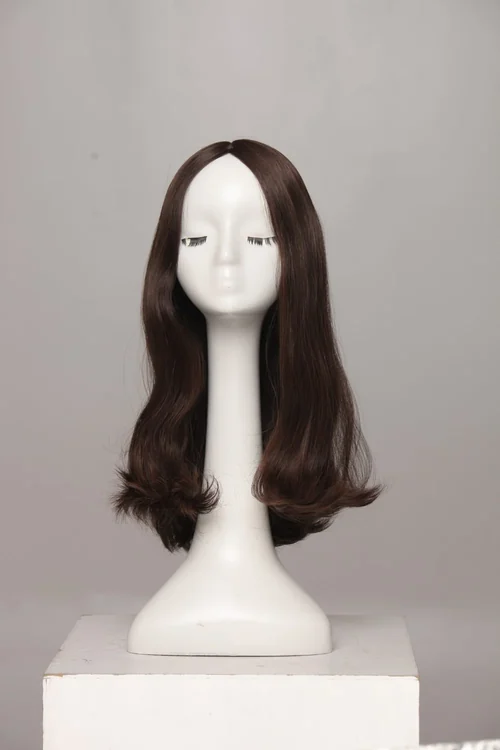 Tzniut and a Natural Look: What Orthodox Clients Ask Factories ForKnowledgeLearn More
 Buying Guide for Salon Owners in Israel and the United StatesKnowledgeLearn More
 A Brooklyn Sheitel SalonAn anonymised process pattern: everyday shelf stock with free parting and local tones, built as a lace top sheitel with side wefts, with a hair sample checked before the colour run.Learn More
 United States Orthodox CommunitiesSheitels and caps exported to Orthodox salons in the United States. Brooklyn, Lakewood and Baltimore are named here as markets we serve, not as invented client stories.Learn More
 Sheitel Salons and MachersWholesale for sheitel salons and machers on two tracks: a raw cap for the macher who ventilates in house, and a finished sheitel for the salon that wants shelf stock.Learn More
Frequently Asked Questions
Is front lace allowed?
That varies by community, and a factory is the wrong address for the answer. Ask the rav, then tell us which pattern to build.
What if a client wants no lace at all?
Order the same topper without the front section, or ask about a fabric band at the forehead instead.
Does the lace show in daylight?
Fine lace recedes best when the tone is matched and the edge lies flat; we check both on a display head before packing.
Where do we discuss fit?
On WhatsApp or by email with a sheitel consultant. No measurement is printed on this page.
Order a Silk Top with Wefts Topper Lace Hairline
Say what the client still has on her own head and what has to be covered, and we will point you at the base that fits.