
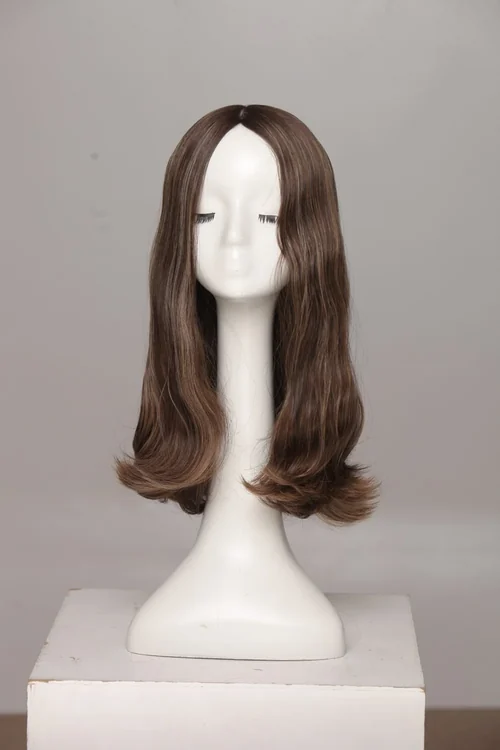

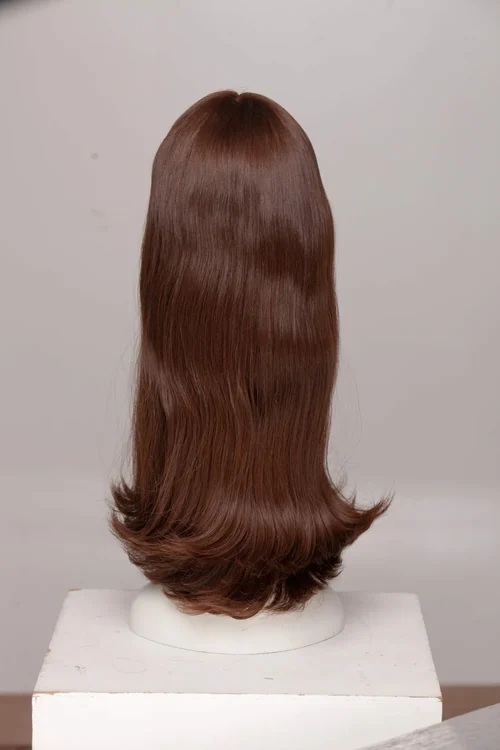
Lace Top Cap
Hand-tied parting crown, wefted sides
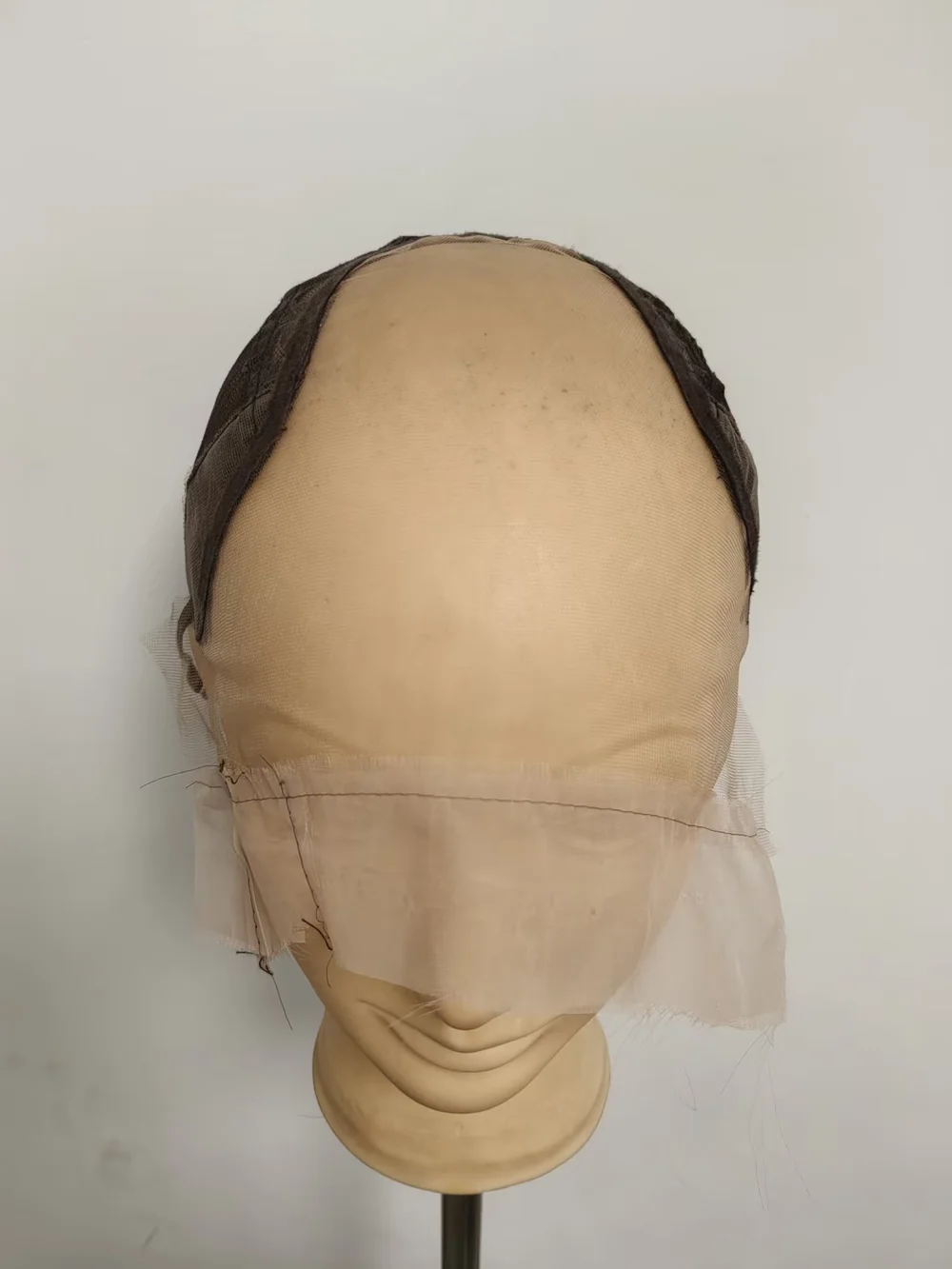
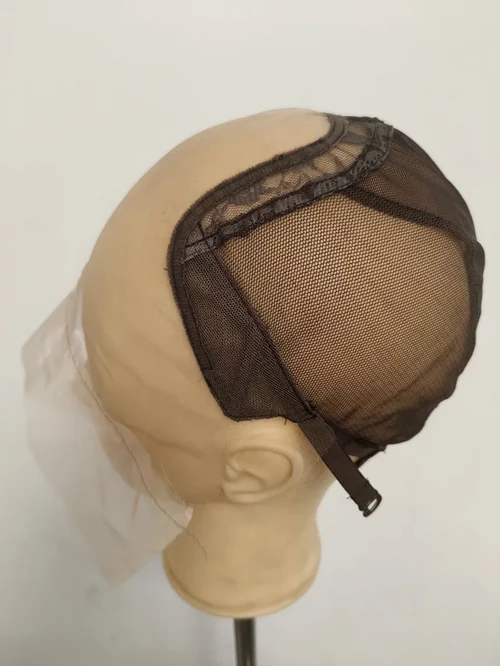
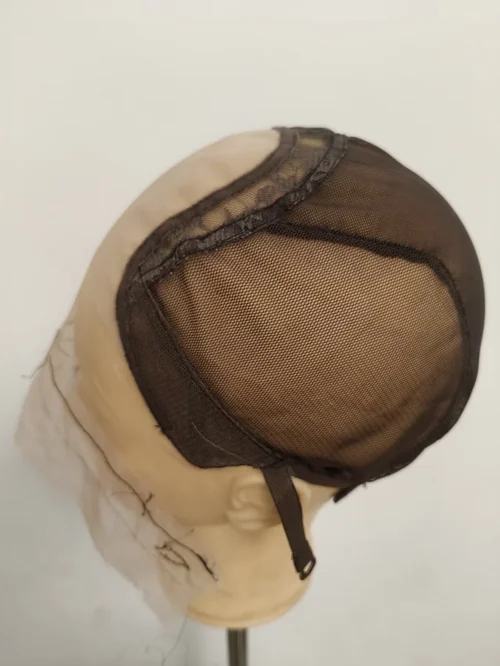
The crown is the parting zone, so that is where the hand work goes. Fine Swiss lace is set into the top of the cap and knotted by hand, which is what lets the part run in more than one direction.
Overview
The crown is the parting zone, so that is where the hand work goes. Fine Swiss lace is set into the top of the cap and knotted by hand, which is what lets the part run in more than one direction.
Everything below the crown stays wefted on mesh. That is a deliberate trade: wefts hold weight down and keep a repeat order behaving the same way from one run to the next.
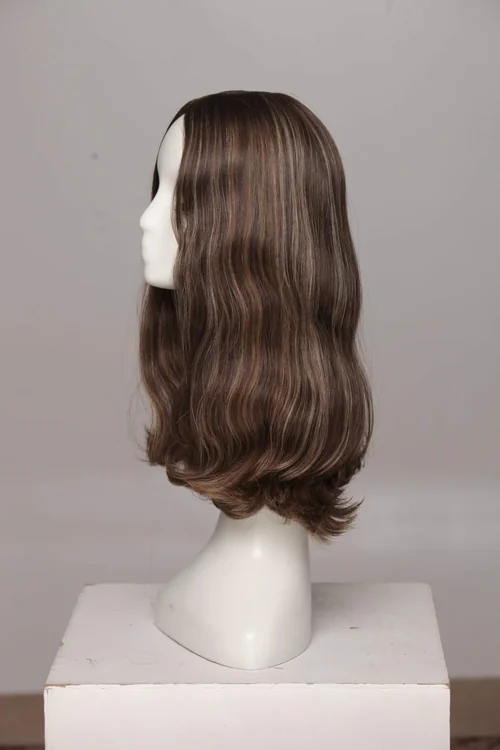
Machers order this pattern raw more often than any other and ventilate the crown themselves. It also ships with hair already tied in if the salon prefers to skip that bench work.
Key Benefits
Multidirectional Parting
Knots go in by hand across the whole lace panel, not along one fixed line, so the part is not decided in the factory.
Low Weight
Lace above and wefts below add up to a cap that is noticeably lighter than an all-hand-tied base.
Available Raw
The cap ships as a bare base for a workshop that ties its own hair, at whatever density that workshop works to.
Repeatable Pattern
The same cut and the same seam placement come back on the next order, which is what a shelf line needs.
Who It Is For
- Machers who ventilate in house and want to buy the base, not the finished piece.
- Salons that want a parting crown without paying for a fully hand-tied cap.
- Wholesalers who keep one workhorse base in stock and finish it several different ways.
Problems It Solves
A Machine Crown in the Part
Hand tying replaces the track that would otherwise sit exactly where the hair opens.
Paying for Hand Work You Do Not Need
Hand tying is limited to the panel that shows; the rest of the cap is built the faster way.
Waiting on a Finished Wig
A workshop that ties its own hair can take the bare base and start the same week.
Technical Features
Swiss Lace Panel
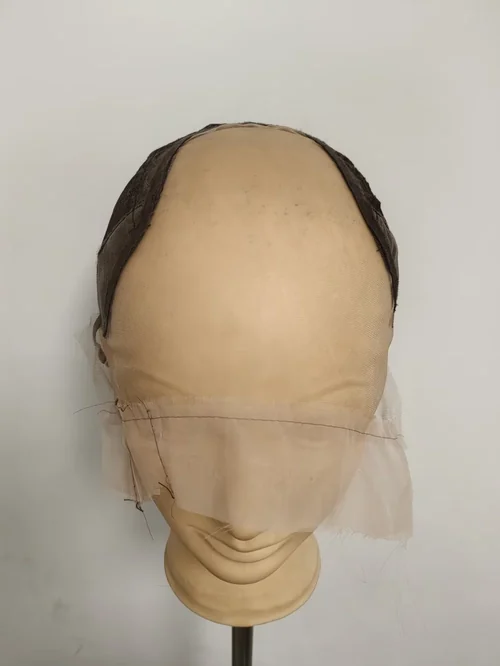
Fine lace across the top, bordered by a stitched edging that holds its shape.
Wefts on Stretch Mesh
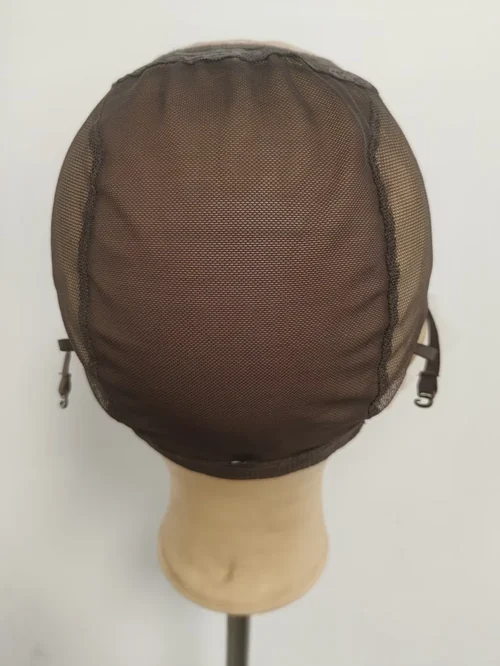
Sides and back carry machine wefts, which is also where the airflow comes from.
Adjustable Nape
A strap and slider at the back close the fit. The site does not publish a size chart.
Specifications
| Crown | Fine Swiss lace, hand tied |
|---|---|
| Sides and back | Machine wefts |
| Parting | Multidirectional |
| Perimeter | Stretch mesh with nape strap |
| Supplied | Raw, or ventilated to order |
| Hair when attached | Virgin or Remy human hair |
| Sizes | None published here |
| Medical wigs | Outside this line |
Materials
Fine Swiss lace for the crown panel, stretch mesh for the body of the cap, machine wefts at the sides and back, and a fabric strap at the nape. When hair is ordered on the cap it is virgin or Remy human hair, coloured to the salon swatch.
Customization Options
Crown panel placement, wefted or partly hand-tied sides, clip positions, nape strap style, and hair colour when the cap is ordered with hair. Head and base measurements stay in the consulting conversation.
Manufacturing Process
Crown Cut
The lace panel is cut to the pattern and set into the top of the cap.
Ventilating
Knots are drawn by hand through the lace in the growth direction.
Wefting
Wefts are run onto the mesh at the sides and around the back.
Perimeter Close
Edging, strap and slider are attached last.
Quality Control
On the display head we look at the lace panel first: whether the knots run evenly across it, whether the edging is stitched flat, and whether the wefts start cleanly where the lace ends.
Kosher-Compliant Construction Notes
A lace crown on its own does not always block natural hair through the holes. A community that requires that block should ask for lining underneath, or take the ribbon-band pattern instead. This describes how the cap is sewn; the ruling belongs to the community rav.
This page describes construction. It is not a rabbinic ruling.
How It Compares
| Lace Top Cap | Fully Hand-Tied Base | |
|---|---|---|
| Hand work | Crown panel only | Whole cap |
| Weight | Kept down by the wefts | Heavier per unit |
| Raw supply | Ordered raw routinely | Ordered mainly with hair |
Neither column is more kosher than the other. The difference here is bench time and weight.
Gallery
Use and Care
Keep the lace panel off tension while it is damp, since wet lace stretches and does not come back. Dry the cap on a display head rather than flat, and work a comb from the ends toward the crown.
No base measurements are published on this site. Fit is closed in consulting.
Related Products
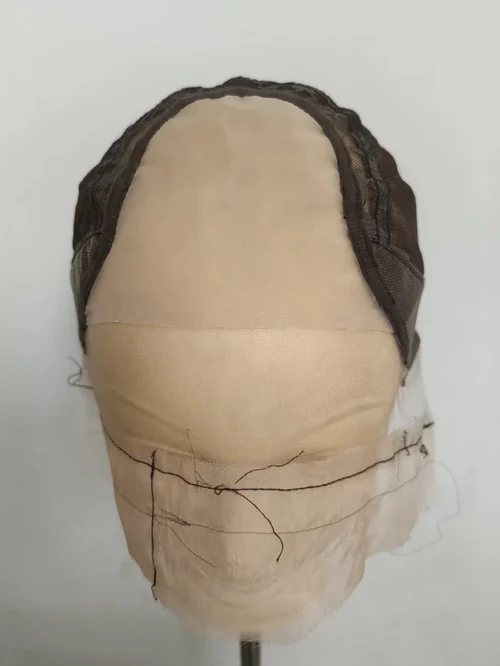 Lined LaceTop Clip-in TopperSolid lining under the lace, clips at the perimeterLearn More
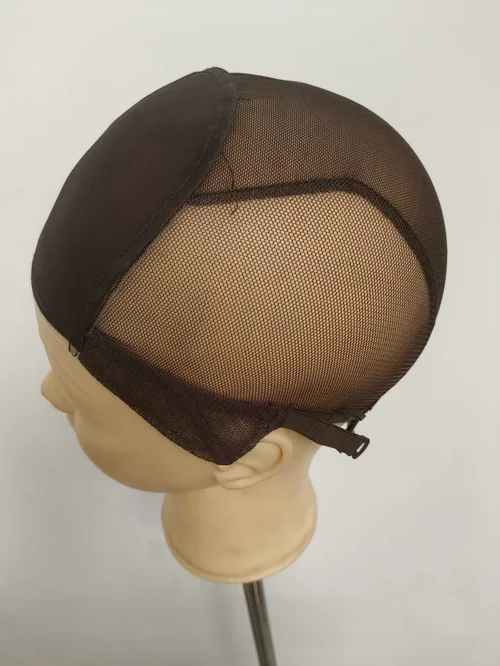 Silk Top plus Front Lace CapConcealed knots at the crown, sheer lace at the hairlineLearn More
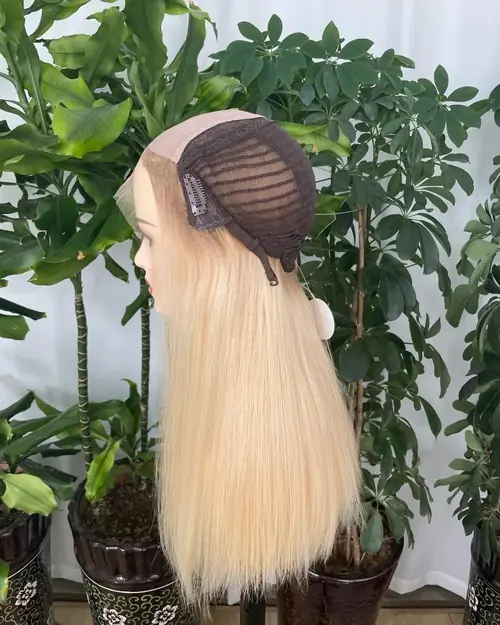 Lace Top SheitelSwiss lace crown and free partingLearn More
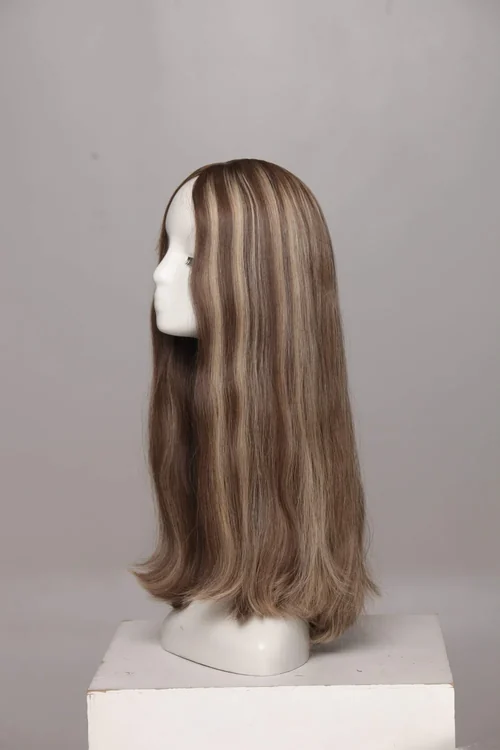 Lace Top with Wefts TopperHand-tied lace at the top, wefts around the edgeLearn More
Related Reading
Lace Top vs Silk Top vs MonoKnowledgeLearn More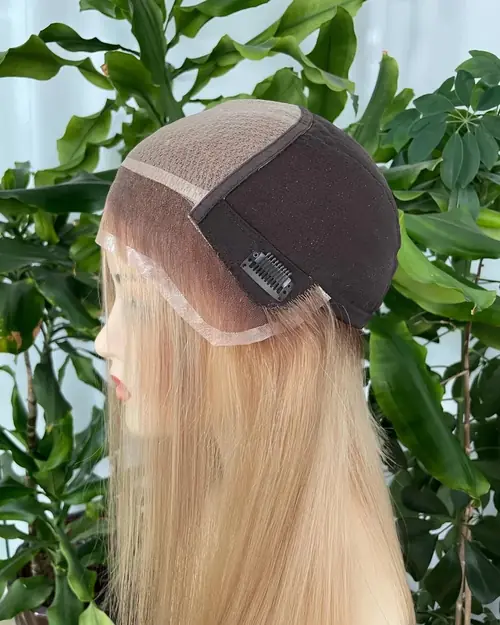 How a Fully Hand-Tied Sheitel Is MadeKnowledgeLearn More
 Buying Guide for Salon Owners in Israel and the United StatesKnowledgeLearn More
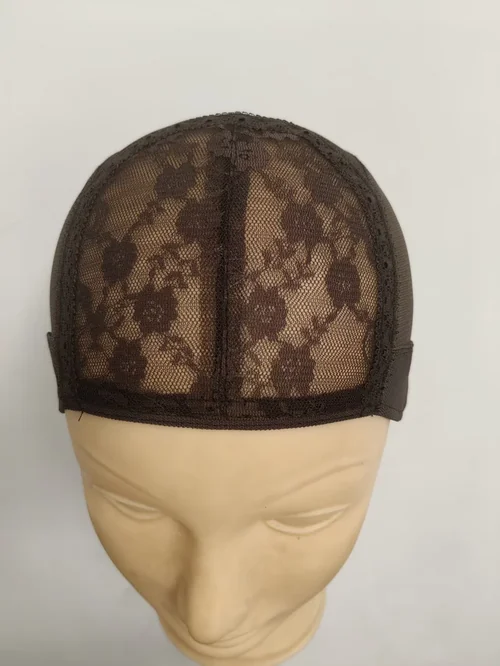 An Israeli WholesalerAn anonymised process pattern: front fabric-ribbon band caps for communities that keep lace off the forehead, some raw for machers and some with hair, on a repeating wholesale construction.Learn More
 Sheitel Salons and MachersWholesale for sheitel salons and machers on two tracks: a raw cap for the macher who ventilates in house, and a finished sheitel for the salon that wants shelf stock.Learn More
 Israel Orthodox CommunitiesSheitels and kosher wig caps for wholesalers and salons serving Haredi and dati communities in Israel: a front fabric-ribbon band or lining, conservative browns, and hair a stylist can cut.Learn More
Frequently Asked Questions
Can we buy it raw?
Yes. That is how most machers take this pattern — a bare base, no hair, tied in their own workshop.
Why are the sides not hand tied too?
Because nobody parts the hair there. Keeping wefts below the crown holds the weight and the price of the base down.
Can lining be added under the lace?
It can, to order. A cap that is meant to be lined from the start is the lined clip-in pattern.
Which sizes do you stock?
Fit is handled on WhatsApp or by email with the salon, not through a chart on this page.
Order a Lace Top Cap
Raw for the macher, or finished with hair ventilated to order. Tell us which of the two you need and for which market.