
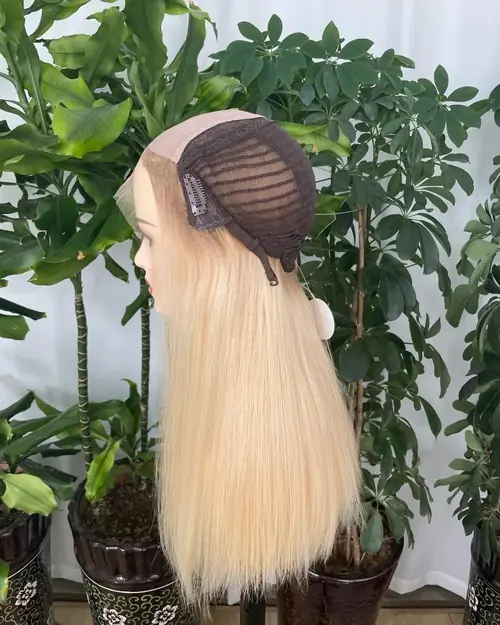
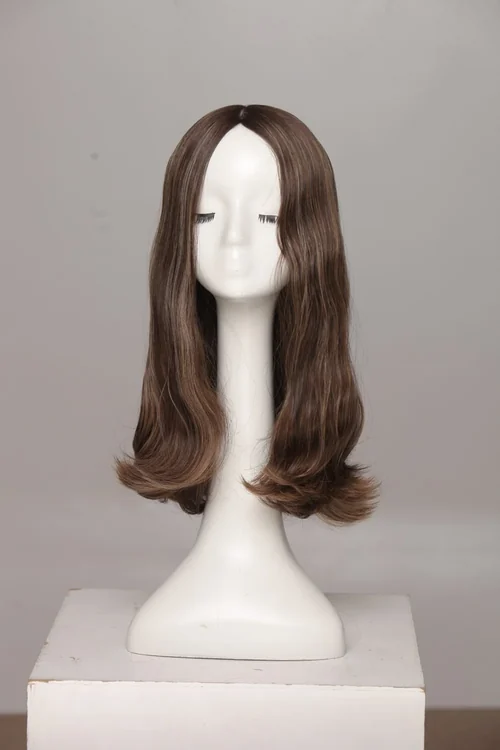
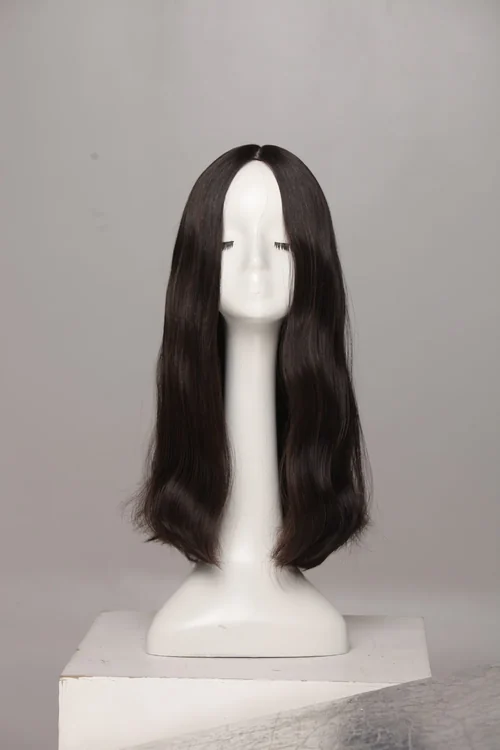
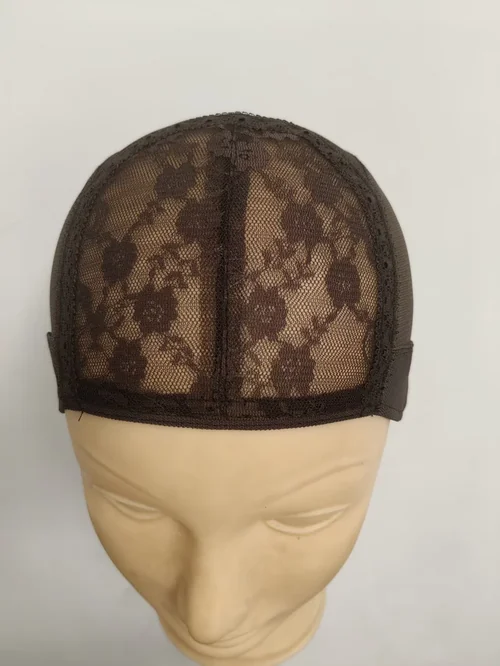
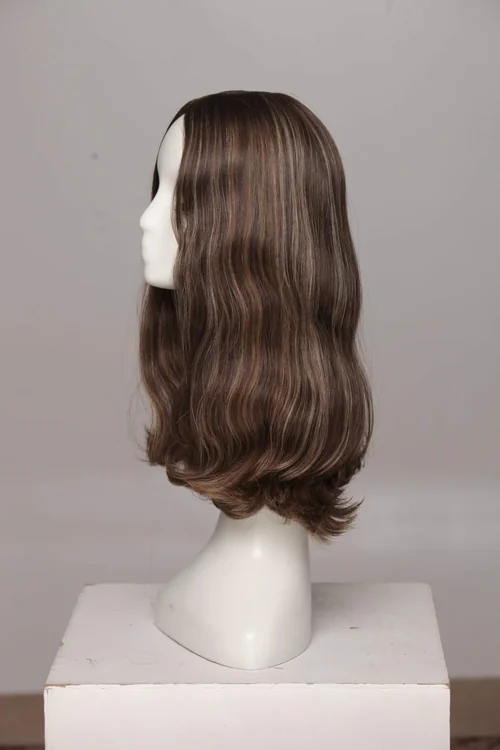
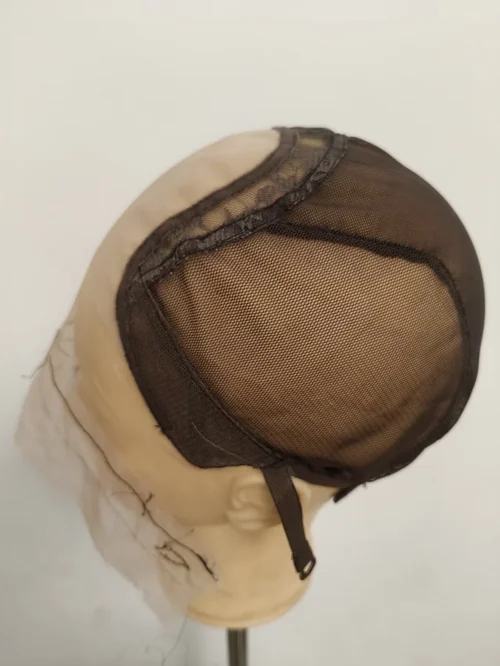
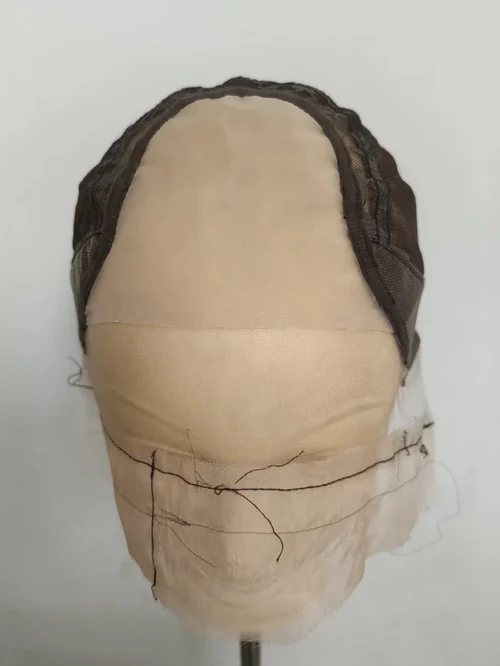
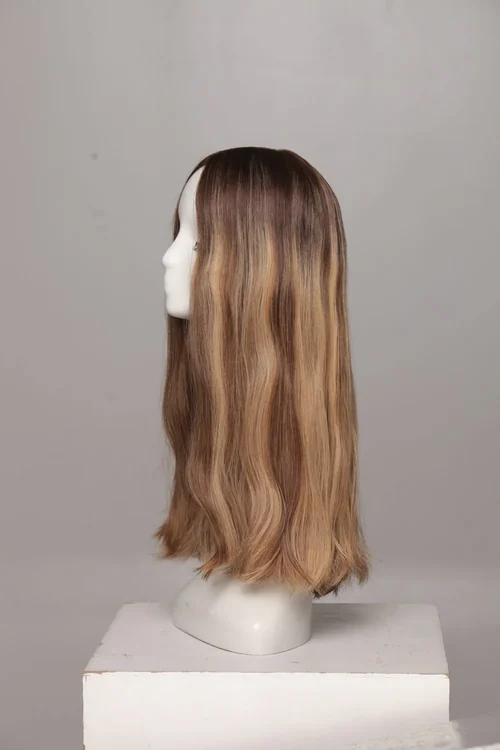
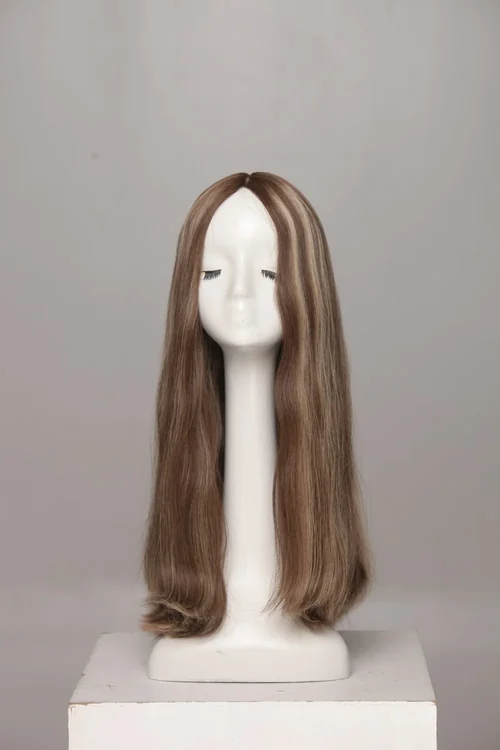
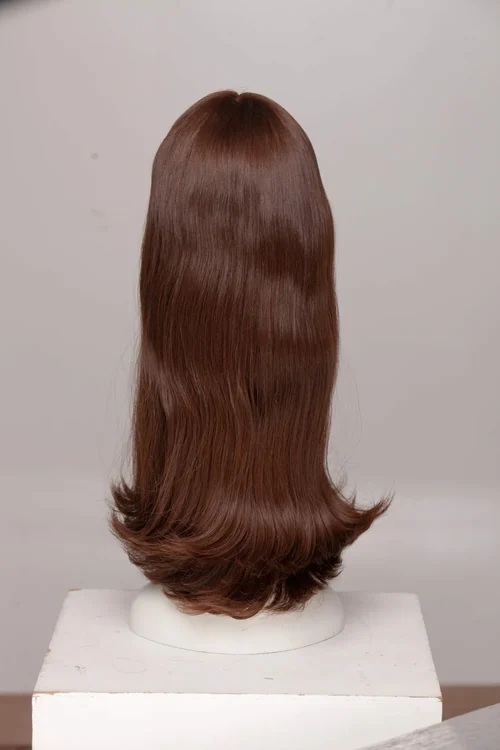
Full Hand Tied Silk Base Topper
Every strand knotted, no weft anywhere
Here the silk carries knots across its entire surface. Nobody stops at the crown and switches to a faster method, which is the whole point of ordering this pattern rather than the wefted one.
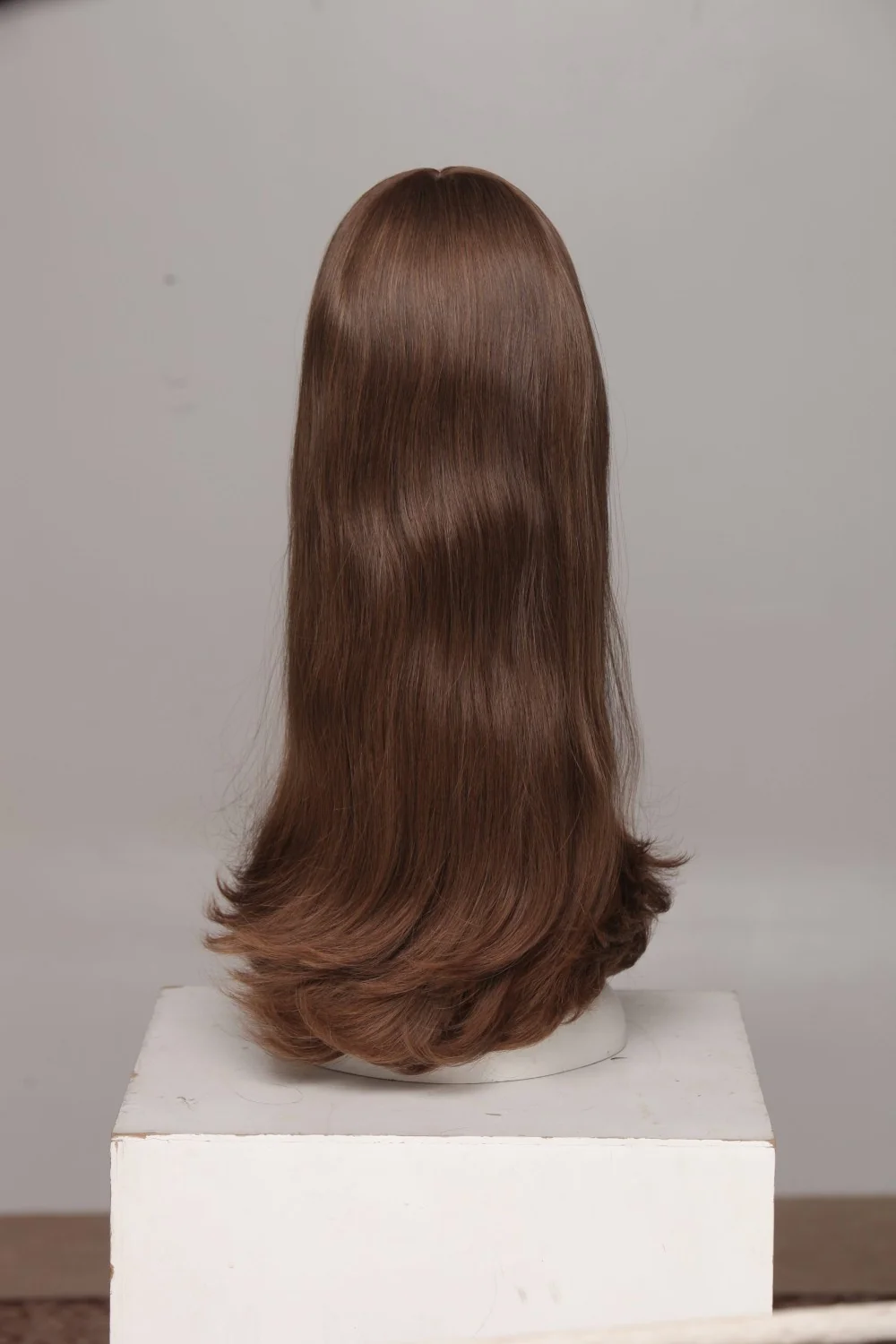
Overview
Here the silk carries knots across its entire surface. Nobody stops at the crown and switches to a faster method, which is the whole point of ordering this pattern rather than the wefted one.
Because no weft row exists, there is no line at which a parting has to stop. A stylist can set the part off-centre, sweep it sideways, or change it again on a later visit.
The other difference is felt with the fingers: a fully knotted base has no sewn ridge under it, so it lies flatter against hair the client already has.
Key Benefits
Parting Across the Base
No track interrupts the surface, so the direction is a styling decision rather than a limit of the build.
No Weft Bulk
Nothing sewn sits between the silk and the client's own hair underneath it.
Hair That Moves Singly
Strands knotted one at a time fall apart from each other instead of moving as a sewn row.
Knot Points Kept Under Silk
Hand work does not give up the concealment the silk layer was chosen for.
Who It Is For
- Salons whose clients notice a sewn row when they run a hand over the top of the head.
- Private-label brands placing this at the head of a topper range rather than in the middle of it.
- Buyers who plan lead time around bench work and accept that it is the slowest item in the group.
Problems It Solves
A Part That Meets a Border
With the whole base knotted there is no border for the part to reach.
Something Felt Under the Fingers
Removing the sewn rows removes what the client was feeling.
A Range With No Top Tier
This is the pattern a buyer puts above the wefted ones when a range needs a ceiling.
Technical Features
Knotting Edge to Edge
Row after row by hand, with the growth direction held through the whole surface.
Zero Machine Work
No weft is used at any stage, so no hidden track can turn up later.
Clips on a Hand-Finished Edge
The perimeter is closed by hand before the clips are positioned.
Specifications
| Base type | Partial topper on silk |
|---|---|
| Knotting | Hand tied over the complete base |
| Wefts | None |
| Parting | Any direction on the base |
| Attachment | Perimeter clips, no adhesive |
| Hair | Virgin or Remy, chosen with the buyer |
| Sizes | Kept off the site by request |
Materials
Silk for the base, hand knotting through all of it, and clips at the closed edge. Hair is virgin or Remy, ordered against the buyer's own colour reference. Where a community wants the hair underneath blocked, fabric lining is built in rather than added afterwards.
Customization Options
Hair colour and root depth, lining under the base, clip count and where each one sits, and an optional nape strap. Everything about fit is settled in a consulting conversation.
Manufacturing Process
Base Preparation
Silk is cut and closed to the partial pattern agreed with the buyer.
Full Ventilating
A needle passes the base and each strand is tied, row by row, until nothing is left bare.
Direction Setting
Growth direction is held so a part can later be placed anywhere.
Edge and Clips
The perimeter is hand finished and the clips are attached to it.
Track Hunt
A final pass looks for any machine row that should not exist on this pattern.
Quality Control
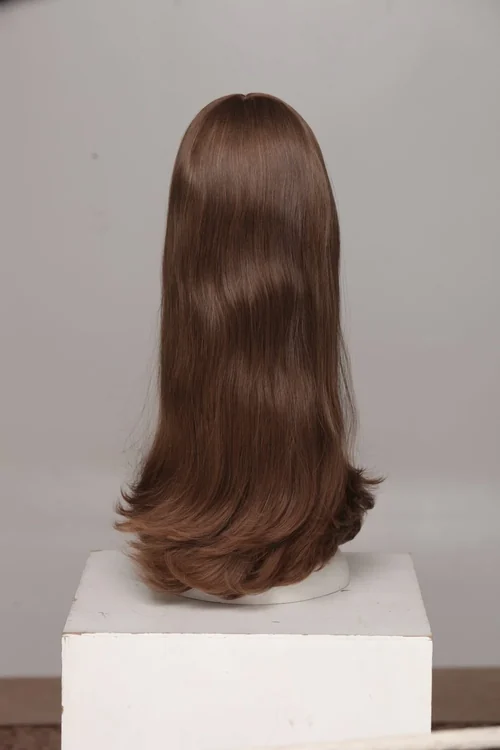
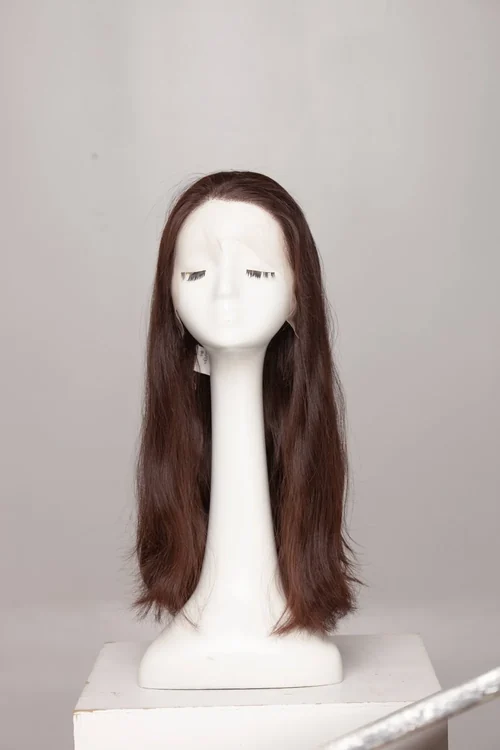
We turn the piece over on a display head and hunt for a machine row that does not belong, then check that the knotting stays even where the base curves and that the hand-closed edge holds its shape.
Kosher-Compliant Construction Notes
Hand tying changes how the piece parts and how it sits; it says nothing about halachic status. Since a topper leaves the client's own hair beneath it, communities that require that hair to be blocked should order the lined version. We describe construction and leave the ruling with the rav. Medical wigs are outside this range.
This page describes construction. It is not a rabbinic ruling.
How It Compares
| Hand Tied Throughout | Crown Knotted, Perimeter Wefted | |
|---|---|---|
| Part placement | Anywhere on the base | Mainly the crown area |
| Feel underneath | No sewn ridge | Rows can be felt |
| Bench time | The longest in the group | Shorter |
Custom and budget decide between them. Nothing in this table carries halachic weight.
Gallery
Use and Care
Support the base with one hand while you brush with the other, and keep tension off the knots when the hair is damp. Dry it flat or on a stand, away from a heat source.
No base measurements are published on this site. Fit is closed in consulting.
Related Products
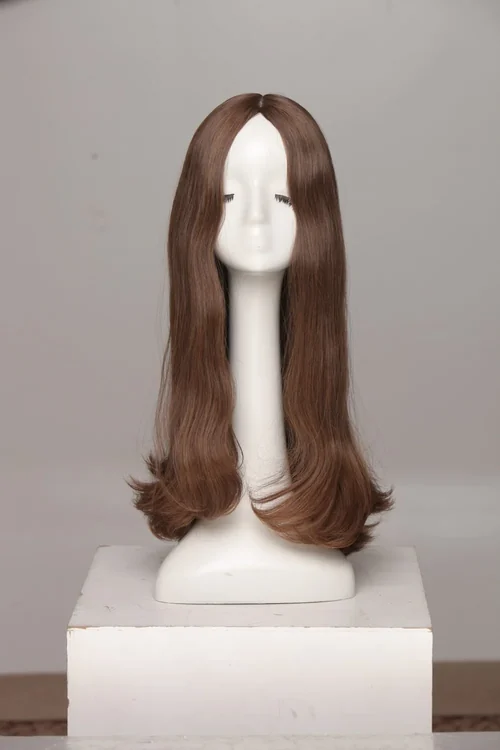 Silk Top with Wefts TopperA silk crown over the client's own hairLearn More
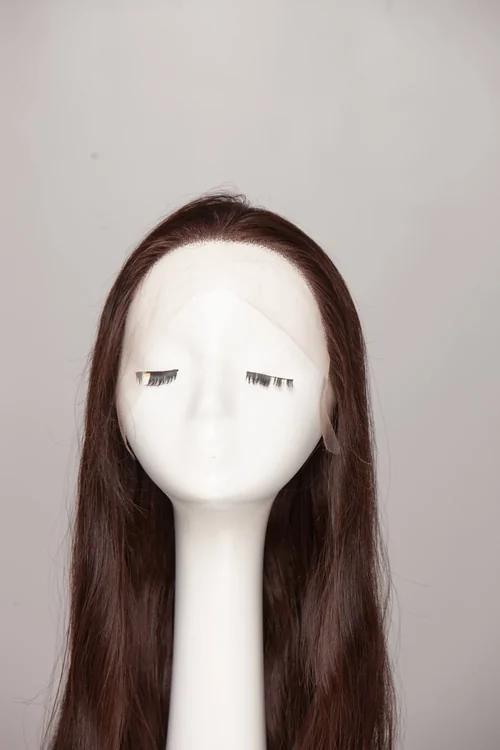 Full Hand Tied Mono Base TopperKorean mono knotted by hand, no wefts anywhereLearn More
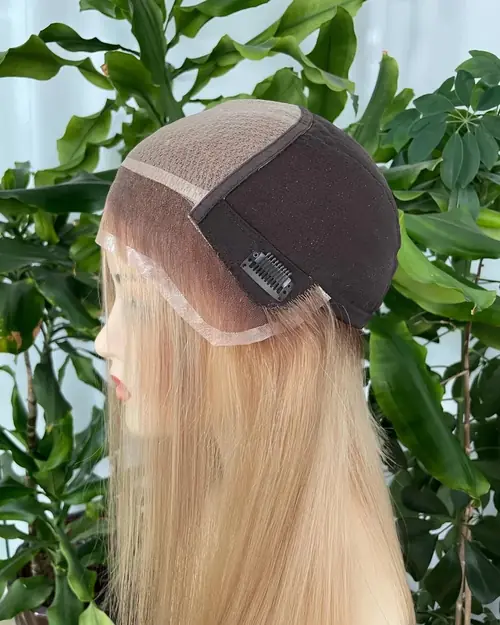 Fully Hand-Tied SheitelEvery strand knotted by hand, zero machine weftsLearn More
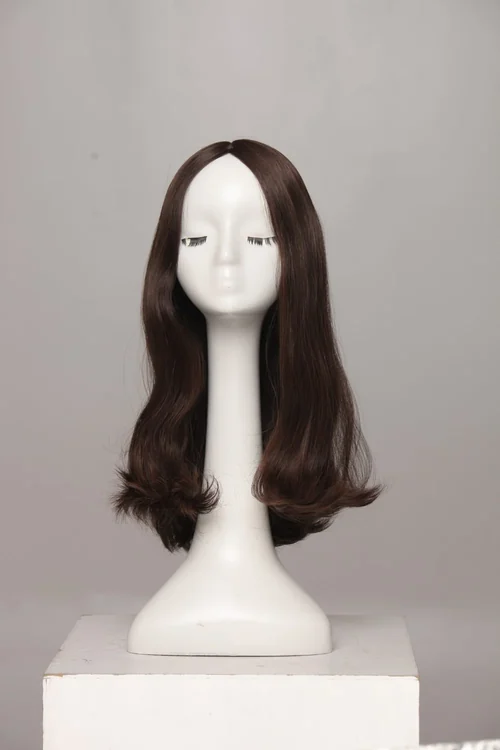 Full Hand Tied Fine Net TopperThe lightest and sheerest base on the topper lineLearn More
Related Reading
How a Fully Hand-Tied Sheitel Is MadeKnowledgeLearn More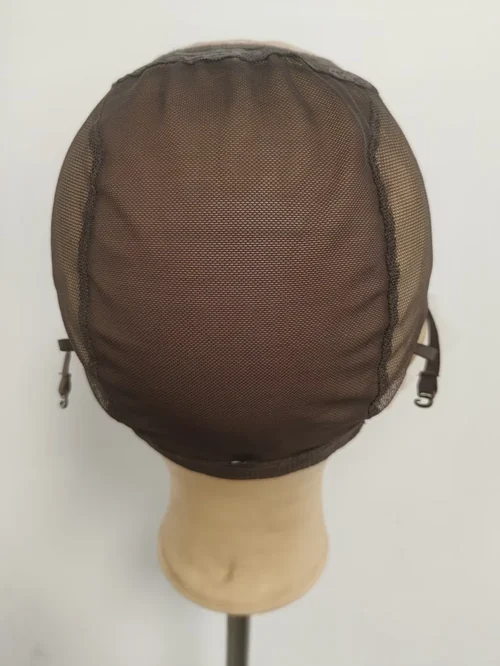 Lace Top vs Silk Top vs MonoKnowledgeLearn More
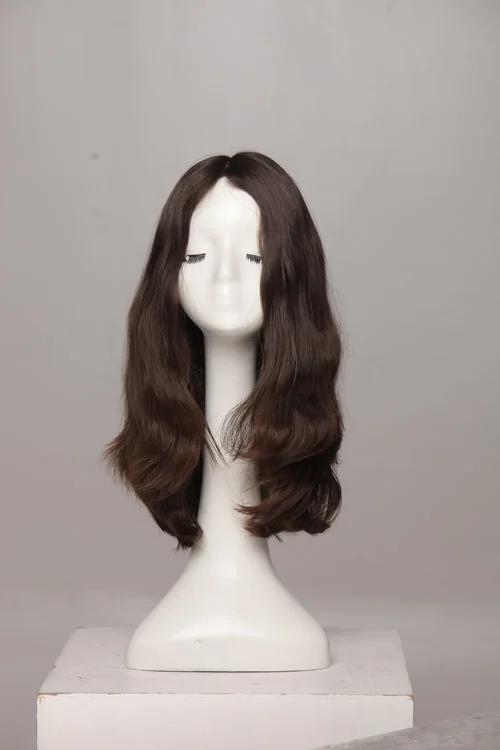 Caring for a Human Hair SheitelKnowledgeLearn More
 A US Private-Label BrandAn anonymised process pattern: a salon brand that wanted its own name on the cap without building a factory, served as OEM on a silk top construction with private packing and a hair sample first.Learn More
 Private Label and Brand OEMPrivate label and brand OEM: hair sample, colour approval, cap, QC and packing under your own name. We will not invent a factory story that does not exist.Learn More
 United States Orthodox CommunitiesSheitels and caps exported to Orthodox salons in the United States. Brooklyn, Lakewood and Baltimore are named here as markets we serve, not as invented client stories.Learn More
Frequently Asked Questions
Why does this take longer to make?
Because every strand is tied at the bench and there is no machine step at the perimeter to shorten the work.
Can the same hand tie be built on mono instead?
Yes, a fully knotted mono pattern exists in the range; the choice of base is separate from the choice of method.
How is it held on?
By clips at the perimeter that close onto the client's own hair, without any adhesive.
Are measurements available on request?
Fit is handled by a sheitel consultant on WhatsApp or by email; nothing about it is printed on the site.
Order a Full Hand Tied Silk Base Topper
Say what the client still has on her own head and what has to be covered, and we will point you at the base that fits.