
![Y type Strainer[Cast Iron Body & SS304 Mesh] — YS006](../assets/img/products/ys006.webp)
![Angle Globe Valve DIN PN16 [Cast Iron] — J44W131](../assets/img/products/j44w131.webp)
![Globe Valve DIN3202 F1 PN16 [Cast Iron] — J41W101](../assets/img/products/j41w101.webp)
Check Valves
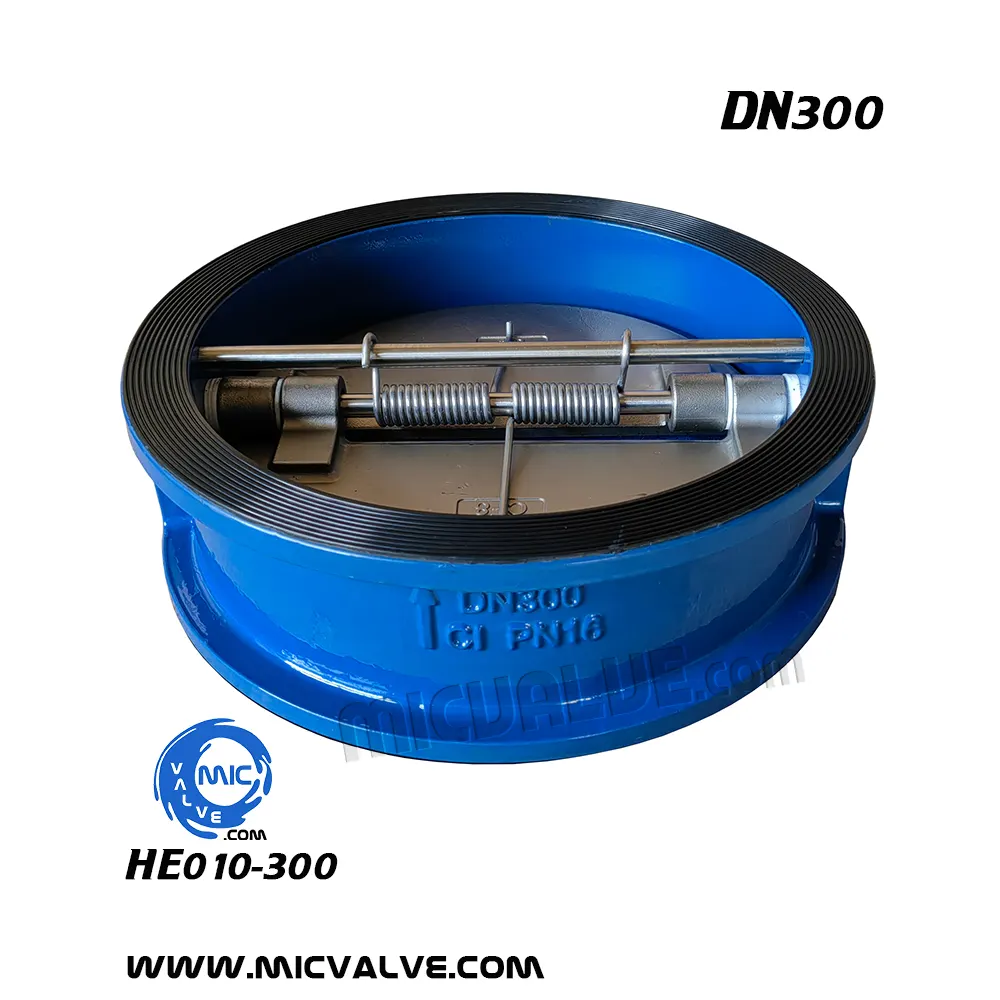
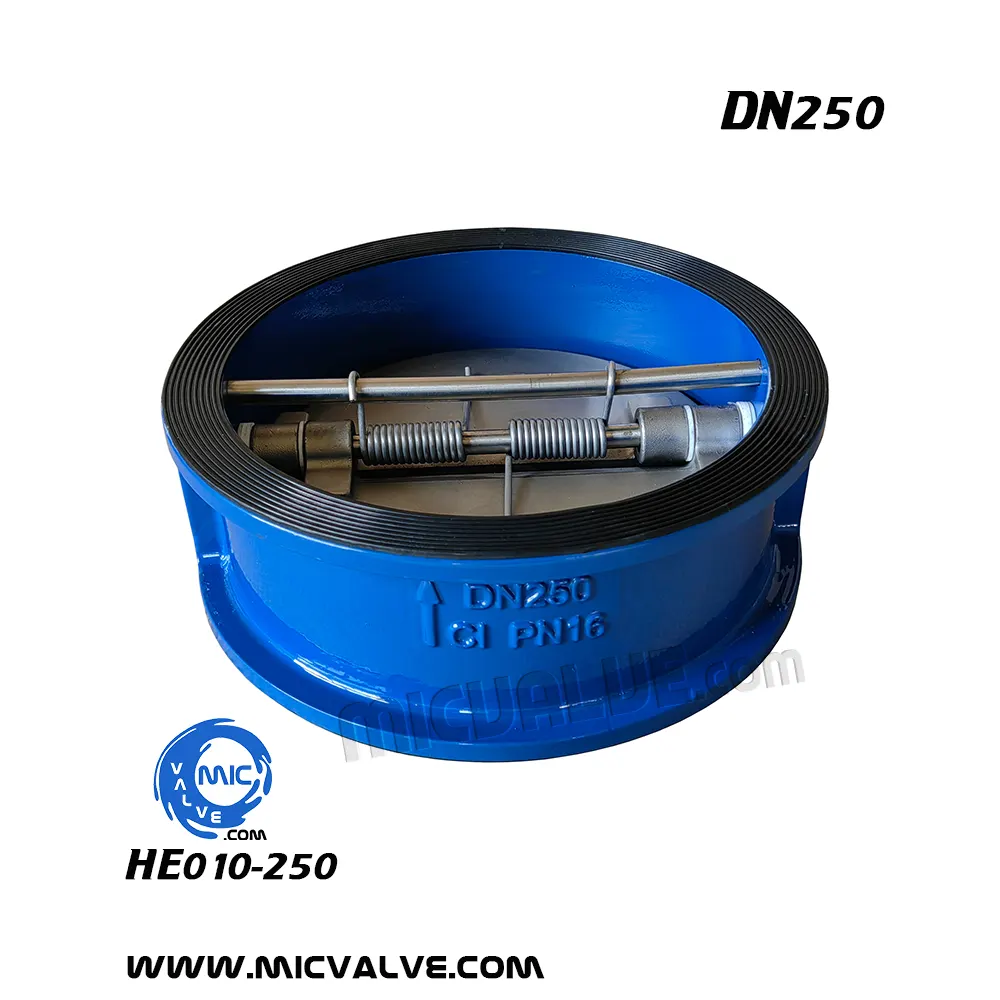
Wafer Dual-Plate Check Valves: What They Do and Where They Fit
Explain the dual-plate wafer check against swing and silent checks using only catalog family names.
- A check valve allows flow in one direction and closes when flow reverses, protecting pumps and preventing back-drainage.
- A dual-plate wafer check uses two spring-assisted half-discs on a central hinge. The wafer body fits between flanges, so it takes less face-to-face length than a swing check of the same DN.
- Swing checks and ball checks (including some flanged listings) use a different closing element. Silent / spring-assisted designs close faster and can reduce slam on pump stop; swing checks are simple but need more length.
- MIC Valve groups check valves as wafer type dual-plate, flanged type, and foot valves. Foot valves sit on a suction line inlet and usually include a strainer. They are not interchangeable with an in-line wafer check.
- When requesting a check valve, send DN, flange standard, cracking-direction, and whether the duty is pump discharge, pump suction (foot valve), or a long gravity main. Materials such as CF8, WCB, or cast iron appear on some catalog photos and descriptions—only repeat a material if it is printed on that model.