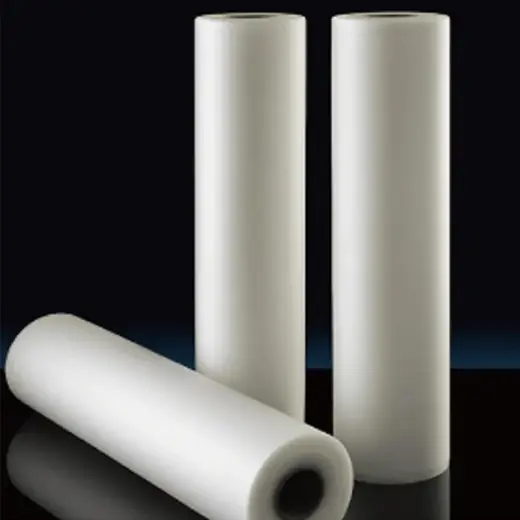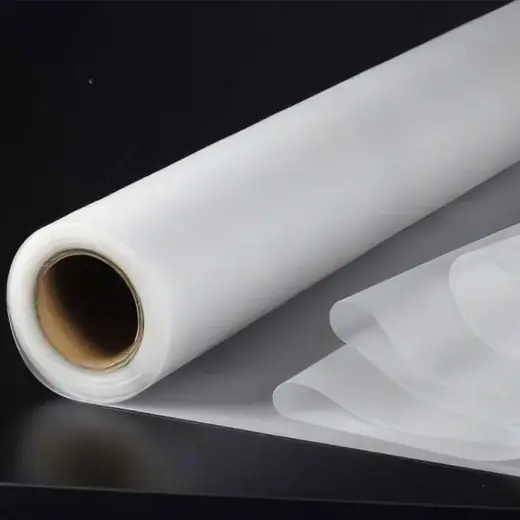
What EVA is still good at
Cost, and a lamination window every line in the world already knows. The failure modes that gave EVA its reputation — slipping, additive exudation, trapped gas, yellowing — are formulation problems rather than chemistry problems, and the HEVA series is specified against each of them, with PID and polarisation resistance and an additive-free formula.
Where POE earns its premium
POE does not generate acetic acid as it ages, which is the mechanism that mobilises sodium ions from the glass toward the cell and produces potential-induced degradation. Combine that with a genuinely lower water vapour transmission rate and POE becomes the defensible specification for HJT, for double-glass, and for any module heading to a hot, humid site.
Why EPE usually wins the argument
An EVA / POE / EVA co-extrusion keeps EVA's cost position and lamination behaviour while taking POE's moisture barrier and PID resistance into the core. For mainstream TOPCon production that is normally enough reliability at a bill-of-materials number that survives the cost review.
High transmittance or high cut-off?
All three families are published in both grades. High transmittance passes more short-wavelength light to the cell; high cut-off blocks more UV to protect the cell and the backsheet behind it. Sites with heavy UV load and cell technologies sensitive to UV-induced degradation point toward cut-off.
A note on shelf life
All three carry a six-month warranty period under cool, dry storage — shorter than the one-year period the backsheets carry, because a curable film ages in the warehouse. Plan the delivery schedule against the production schedule rather than stockpiling.