Spec spoke · Forged construction
Forged Brass Ball Valve Specs Buyers Actually Need (China Factory Catalog)
Searchers for forged brass ball valve are usually comparing body integrity, machining consistency, and supplier honesty about process. This article sticks to forge-labeled SKUs and factory process claims from General Ball Valve Factory — no invented PSI charts and no fake case studies.
What forged should mean on a brass ball valve RFQ
In brass valve procurement, forged typically means the pressure-containing body (and often end pieces) start as hot-forged blanks before CNC threading and seat machining. Buyers prefer forging for denser grain structure and fewer porosity risks than some sand-cast bodies — especially on repeated open/close service in plumbing and light commercial lines.
General Ball Valve’s public positioning names hot forging alongside sand casting and CNC machining. Individual ball-valve product pages repeatedly open with “Forged brass ball valve…” — that is the language you should mirror on purchase orders so quality disputes have a shared definition between purchasing, engineering, and the supplier’s sales desk.
Industry-typical framing (not a customer pressure rating): forged threaded brass ball valves for plumbing are often discussed in PN16 or 600 WOG neighborhoods depending on market norms — but this factory’s sampled ball-valve intros do not print a universal PN or WOG number. Request the rating per SKU in writing. The one clear working-pressure example among valves sampled for this content wave is gas SKU 1201 at 5 bar.
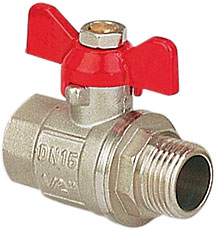
Forge-labeled SKUs on the live catalog
| SKU | Forge callout and features (from product pages) | Size | Ends / thread |
|---|---|---|---|
| 1101 | Forged brass ball valve; red steel butterfly handle | 1/2"~1" | FxM · ISO228 |
| 1102 | Forged; red steel butterfly handle | 1/2"~1" | FxM · ISO228 |
| 1105 | Forged; green steel handle | 1/2"~2" | FxM |
| 1108 | Forged; green butterfly handle | 1/2"~1" | FxM |
| 1118 | Forged; chrome-plated; heavy duty; steel flat handle | 1/2"~1" | FxF · ISO228 |
| 1120 | Forged; long stem | 1/2"~2" | FxF · ISO228 |
Category hub: Brass Ball Valves (approximately 30 standard items in planning counts). Use item numbers on emails so engineering and purchasing argue about the same geometry instead of a vague “half-inch brass valve” description that can map to multiple tooling sets.
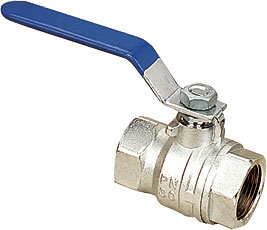
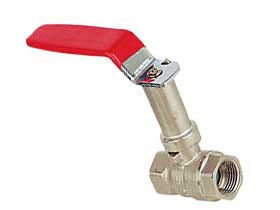
Forged vs cast — practical buyer framing
The same factory lists sand casting in its process toolkit. That is normal in Yuhuan brass plants: forged blanks for many valve bodies, cast routes for certain geometries or cost tiers. Your job as buyer:
- Require the quotation to state forged body when that is what you are selling downstream.
- Ask for process photos or route cards on first article — forge die number if available.
- Do not assume every SKU in every family is forged — read the product introduction. Mini and gas pages sampled also use “forged”; some angle valve intros emphasize C.P. brass without repeating “forged” in the short text.
- If price looks too low versus forge peers, ask whether the body is cast or forged before you celebrate the margin.
Threads, ends, stems, and finishes to lock
Threads
ISO228 appears on multiple forged ball and mini valve pages. ISO7/1 appears on the full-flow gas example. If cartons for your market must say BSPP, BSPT, or NPT, put that labeling requirement in the RFQ and verify with ring and plug gauges on samples. Thread standard mismatches are one of the top reasons containers get stuck in receiving inspection.
Ends
FxM versus FxF changes bill of materials and wrench clearance. Heavy-duty chrome FxF (1118) and long-stem FxF (1120) solve different install problems than butterfly-handle FxM utility valves. Count SKUs carefully: each end configuration is inventory that must forecast separately.
Stems and handles
Long-stem forged valves help when insulation thickness or wall depth hides a standard handle. Butterfly versus flat versus lever affects torque feel and retail perception. Color (red, green, yellow) is often a gas-versus-water visual code in some markets — confirm local conventions. Yellow on gas SKU 1201 matches common gas-handle color practice but is not a substitute for product approval certificates.
Finish
Chrome-plated and C.P. callouts support showroom SKUs. Natural brass may suit industrial cartons. Plating adhesion should be part of incoming QC if you sell chrome as a premium feature. Contract for any salt-spray or adhesion test you need — those methods are not published as standard claims on the pages reviewed for this article.
Related forged lines: gas, mini, bibcock
Gas 1201: forged brass full-flow gas ball valve; yellow flat handle; FxF; working pressure 5 bar (page-stated); ISO7/1; 1/2"~2".
Mini 1501 / 1504: C.P. forged mini ball valves; FxF; ISO228; 1/8"~3/4"; red or black handles.
Bibcock 2001: C.P. forged brass Germany bibcock with plastic hose connector; 1/2" and 3/4".
These reinforce that “forged brass” is a cross-family theme in the catalog, not a single orphan SKU. Buyers who only RFQ one ball-valve size leave margin on the table when customers also need mini isolation or outdoor bibcocks from the same brand story.
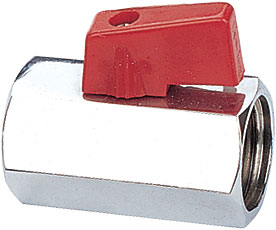
Factory process stack (forging + CNC)
Published capabilities relevant to forged ball valves:
- Hot forging, sand casting, and CNC / precision machining
- OEM and ODM with AutoCAD, Pro-E, and SolidWorks; new moulds to drawings
- In-house QC: material analysis, process control, finished measure and test including packing, logos, and approval marks
- Main brass chemistry: Cu 57–59%, Pb ≤3%, Fe ≤0.8%, Ni ≤1% (other brass or bronze available)
- ISO 9001:2000 authorization wording on site — verify current revision during audit
- Export about 95% to Europe, North America, and other developed countries
- Samples usually free; lead time about 15 days for smaller quantity and about one month for large; 24-hour response claimed
Location and contact: Chumen, Yuhuan, Zhejiang; telephone +86-576-8742 2259; [email protected]; contact page. Factory story: about. FAQ detail: faq.
Common failure modes buyers should test
- Thread gauge fail: wrong standard labeled on carton versus actual pitch.
- Stem leak after cycles: ask for packing and seal material, then cycle-test samples in your lab.
- Handle looseness: check nut torque and anti-loosening features on first article.
- Plating peel on chrome SKUs: inspect edges and wrench contact faces.
- Material mismatch: compare mill report to FAQ chemistry band; investigate if far outside Cu 57–59% without agreement.
None of these require fabricating factory defect rates — they are ordinary importer disciplines that protect your brand when you resell forged brass ball valves under your label.
OEM notes for forged private-label valves
When you need a unique handle, stem length, or logo pad, the factory’s FAQ states engineers design custom samples with AutoCAD, Pro-E, and SolidWorks, and that new moulds can be made fully according to client requirement. Agree mould ownership, amortization quantity, and first-article photo approval before you pay tooling. Include packing marks and approval marks in the QC checklist, matching the finished-goods inspection language on their FAQ.
Specification sheet template for a forged brass ball valve
- Body process: hot forged brass (state explicitly).
- SKU reference or drawing number (for example 1101, 1118, 1120).
- Size mix and annual quantity by size.
- End configuration: FxF, FxM, or other.
- Thread standard and gauge plan (ISO228, ISO7/1, NPT, or other).
- Port type: full or reduced (ask; gas 1201 states full flow).
- Stem: standard or long; handle type and color.
- Finish: natural or chrome-plated.
- Seat and seal materials (request bill of materials — not always on short web intros).
- Working and test pressure — require written values per SKU.
- Material certificate versus FAQ composition; alloy upgrades if needed.
- Marking: brand, size, heat or lot as required.
- Packing: individual bag, barcode, master carton count.
- First article: dimensional report plus open/close cycle sample test in your lab.
RFQ forged brass ball valves
Bottom line
A forged brass ball valve purchase should start from forge-labeled SKUs, explicit thread, end, and finish choices, and written pressure data — not from stock photography. General Ball Valve Factory repeatedly marks ball, mini, gas, and bibcock items as forged and backs them with a named hot-forging and CNC process story in Yuhuan. Use that catalog language on your purchase order, verify gauges and pressure tests on samples, and keep compliance claims limited to certificates you actually hold.