Start from the lengths the layout needs
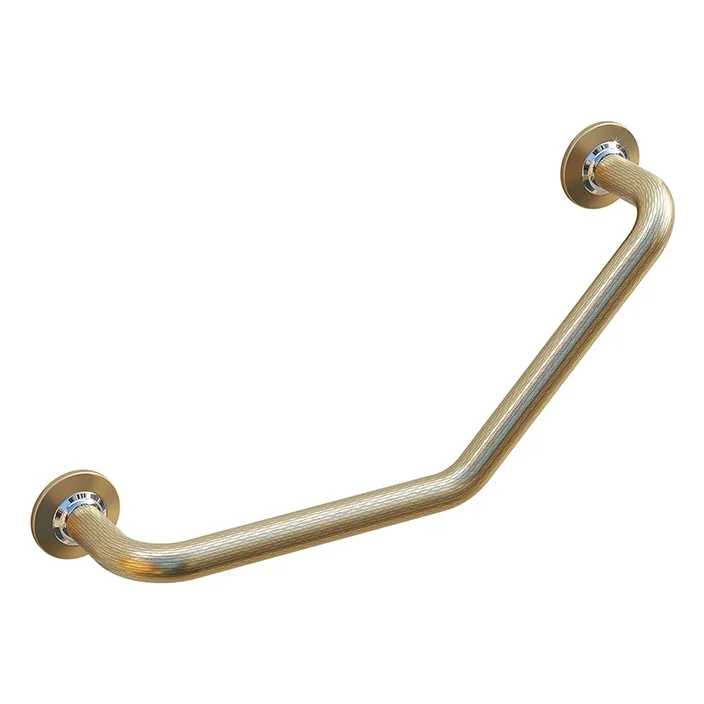
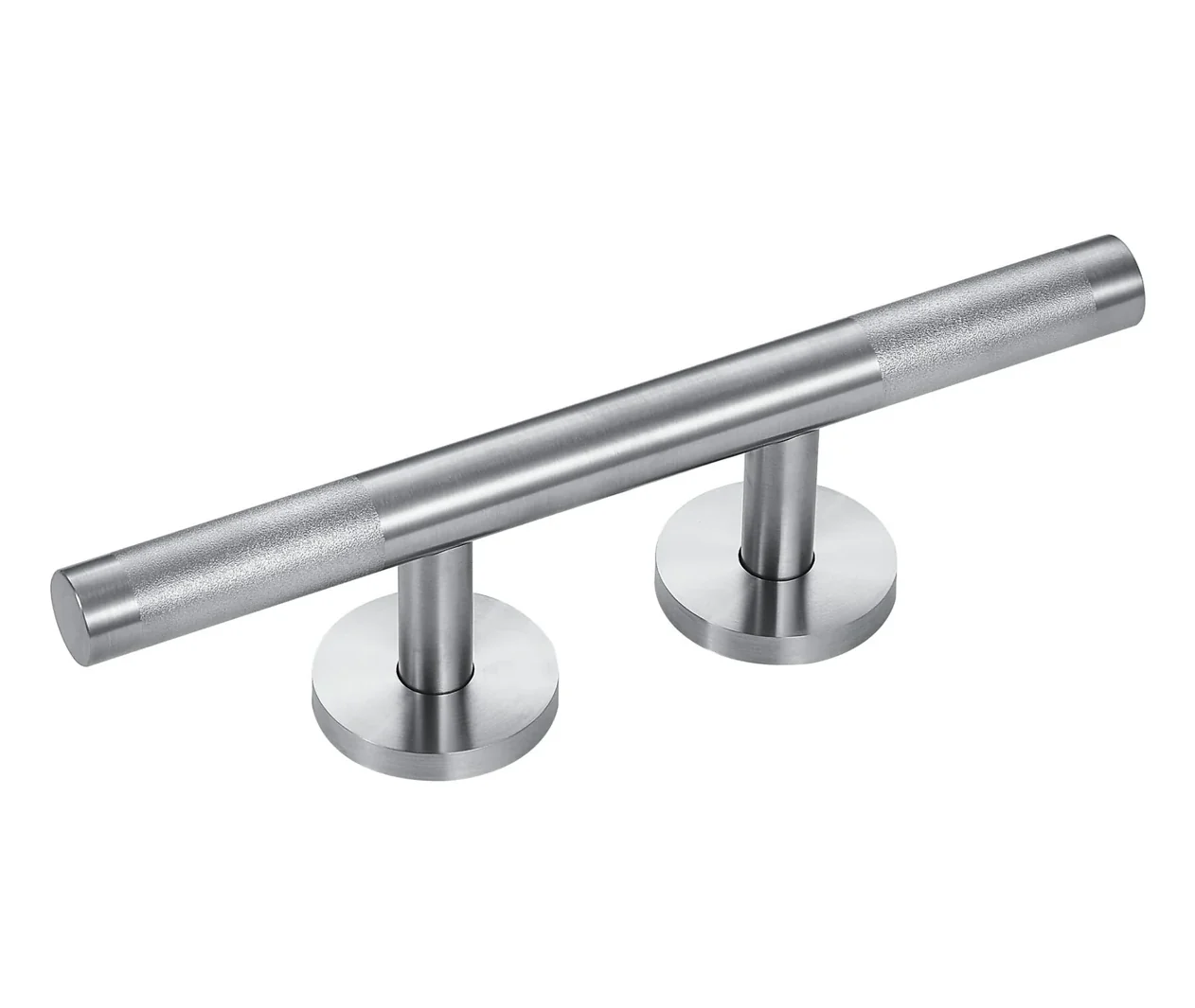
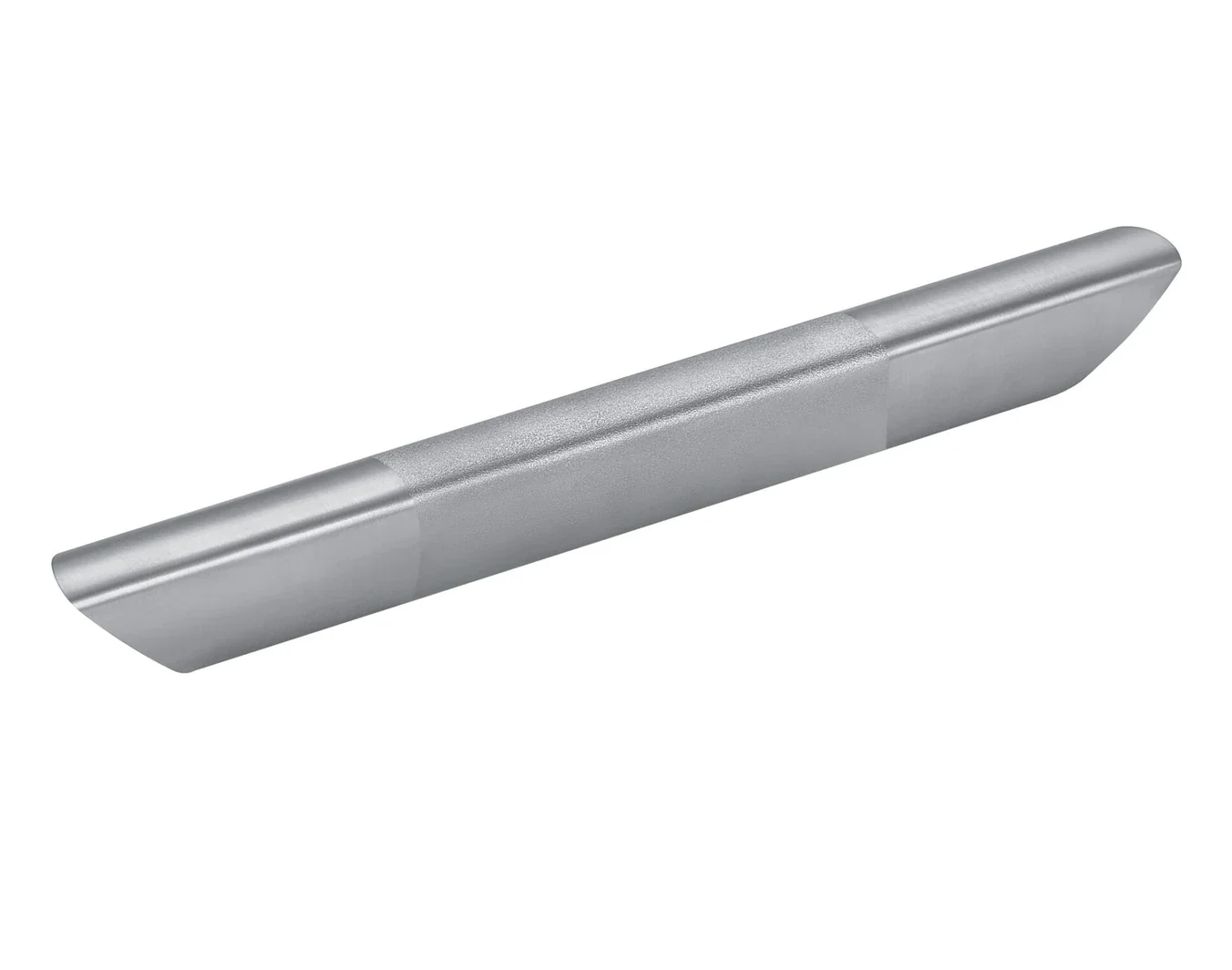
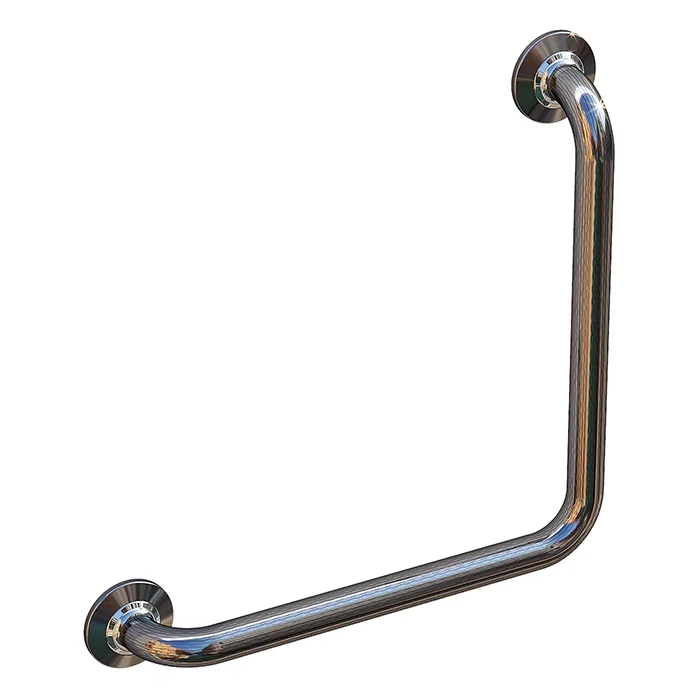
Accessible layouts call for a small set of recurring bar lengths and angles. If the supplier's range does not include the one your drawing specifies, the cubicle gets redesigned around the product, which is the wrong way round. Our range covers 300, 450 and 600 mm straight bars, a 900 mm long bar, and angled bars at 250x250 and 400x400 mm.
The flange is the part that fails
Attention usually goes to the tube, but the flange and fixing plate are where a grab bar fails. Water sits at the wall junction, and cleaning product concentrates there. A bar with a stainless tube and a plated steel flange will corrode at the flange first, and that is also the part carrying the load into the wall. Specify stainless through the flange and the fixing plate, not only the visible tube.
Ask about load rating in writing
This is the single most important question, and the one most often answered with a number nobody can trace. Load ratings depend on the test basis, and test bases differ between standards and between wall constructions. We do not publish a blanket load figure on this site because it would be meaningless without that context. Tell us the standard your project is certified against and we will confirm in writing before you specify.
The wall is half the assembly
A grab bar is only as strong as what it is fixed to. A bar rated against a standard when fixed into solid blockwork does not carry the same load when fixed into a stud partition without noggins. Coordinate the bar positions with the framing before the wall is closed up — this is the most common and most expensive accessible bathroom mistake.
Do not let the room look clinical
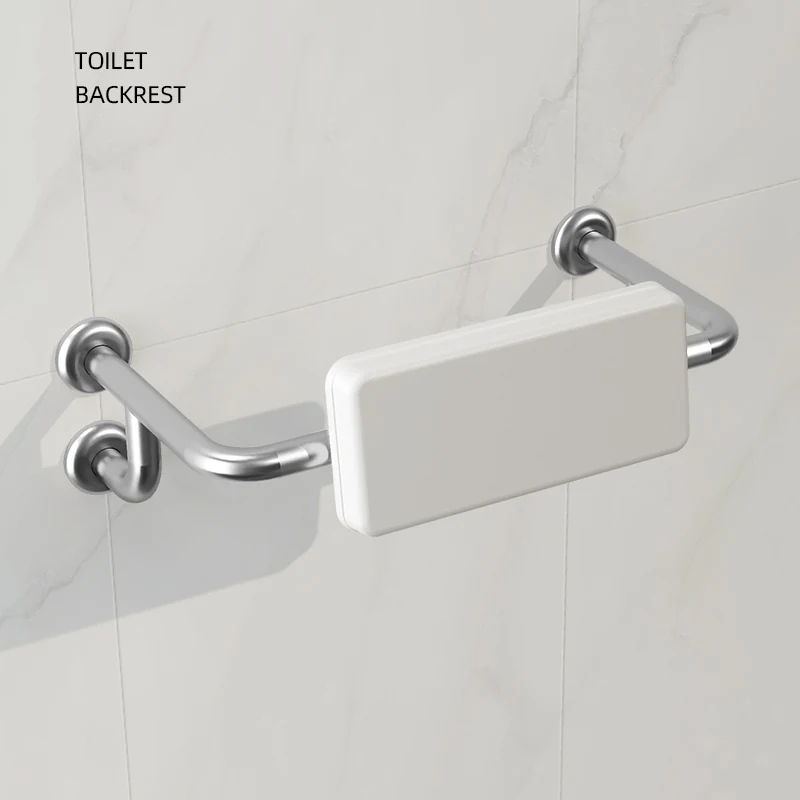
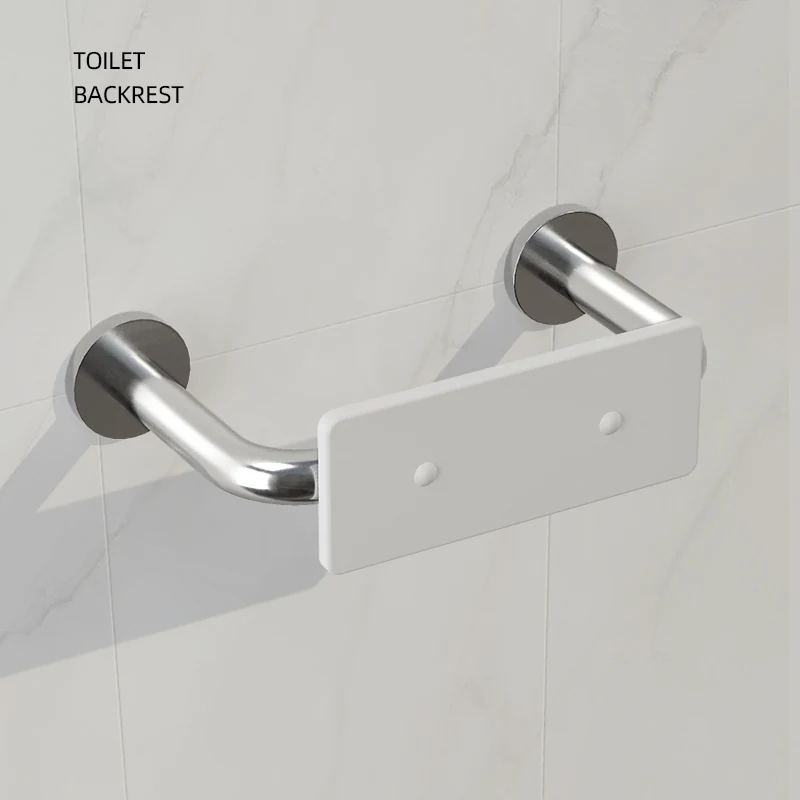
An accessible room specified from a medical catalogue announces itself, and in a hotel that is a commercial problem as well as a design one. Our grab bars, backrests, seats and foot rests are produced in the same finishes as the standard accessory range, so the accessible room can match the rooms either side of it.
Protect the turning circle
Fold-flat seats, backrests and foot rests return floor area to the room when they are not in use. In a tight accessible layout that is often the difference between a compliant turning circle and a non-compliant one.