What Is
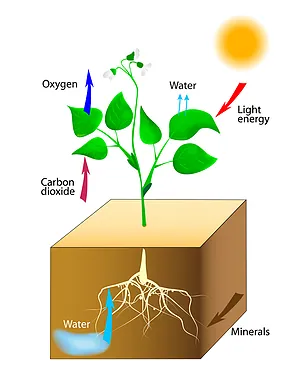
Photosynthesis
Photosynthesis Is the Process by Which Plants Convert Light Into Chemical Energy for Growth. Light Provides the Power Source (like a Battery) for Plants to Convert Water/nutrients and CO2 Into Carbohydrate Molecules (such As Sugar), Which Are Then Stored by the Plant to Be Used for Growth
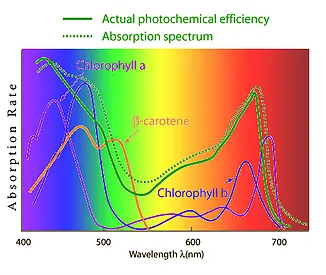
Specialized Pigments Called Chlorophyll and Carotenoids Are Responsible for Harvesting Light Energy Used for Photosynthesis. About 90% of Light Harvested Is by Chlorophyll Pigments, with 10% Left to Carotenoids
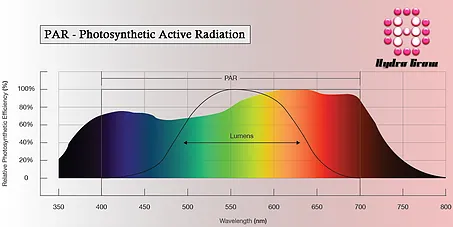
Chlorophyll Comes in Two Primary Forms, a and B. These Pigments Are Able to Absorb Many Colors of Light; However Specific Wavelengths (measured in Nanometers) Are More Efficiently Absorbed Than Others
Light
Conversion Efficiency
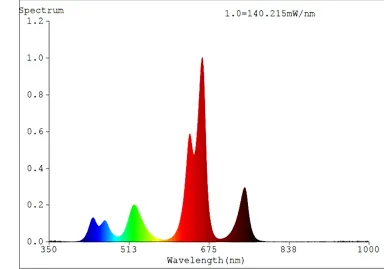
The Specific Wavelengths of Light That Have the Highest Rate of Absorption Are Referred to As Absorption “peaks”. the Graph to the Left Demonstrates That While Chlorophyll and Carotenoids Absorb a Wide Spectrum of Light, the Wavelengths They Convert Most Efficiently Into Energy Are Found at 439nm and 667nm for Chlorophyll A, 469nm and 642nm for Chlorophyll B, and 450nm and 525nm for Carotenoids