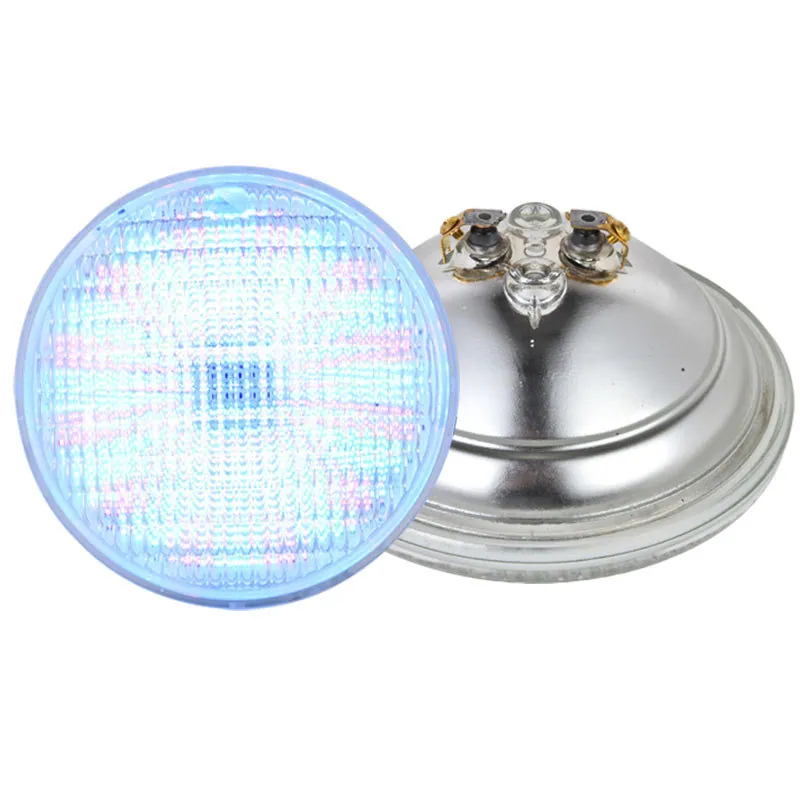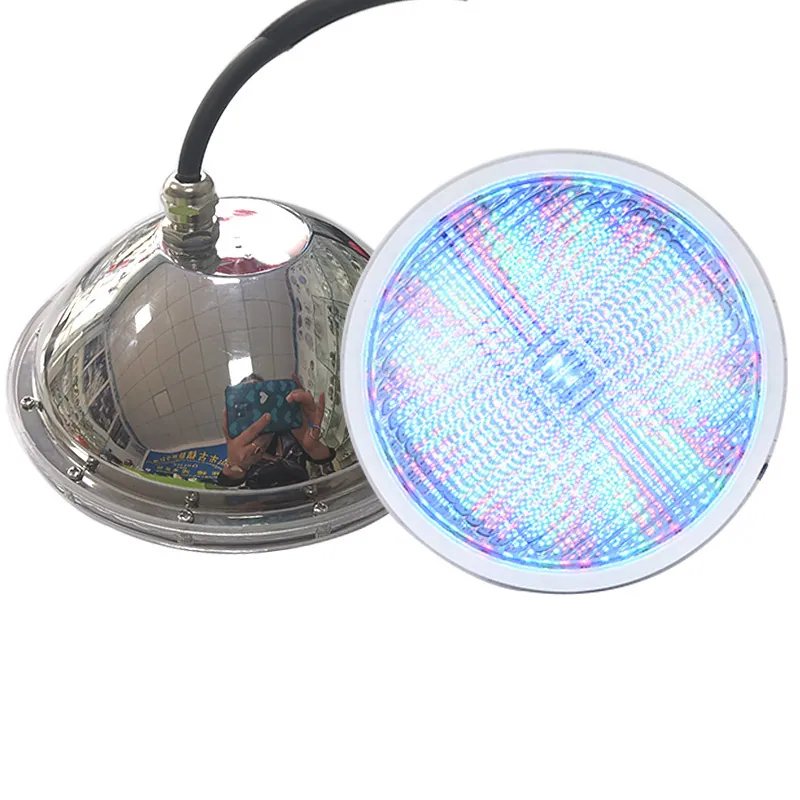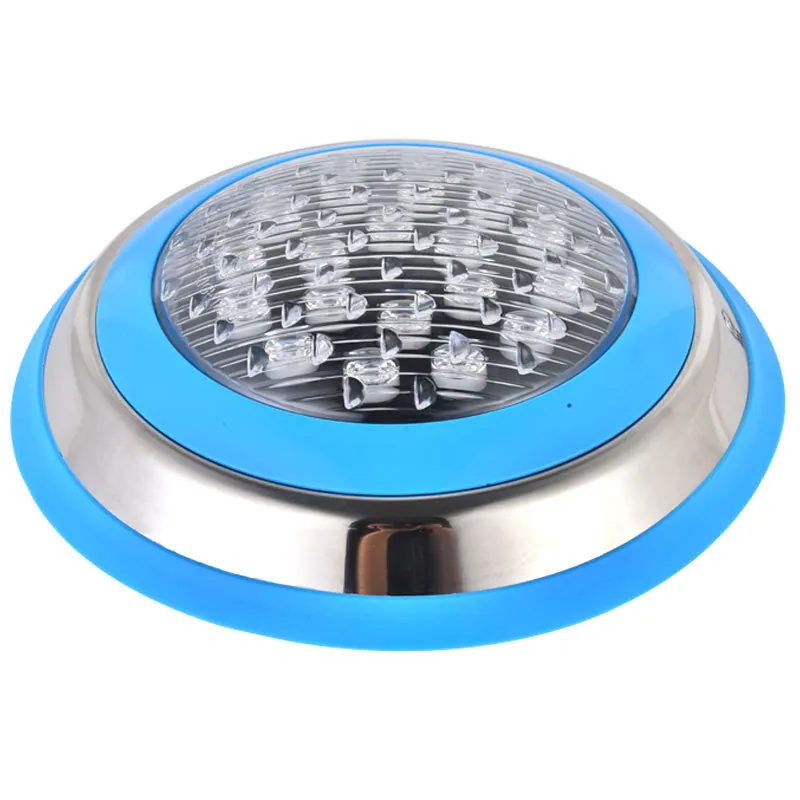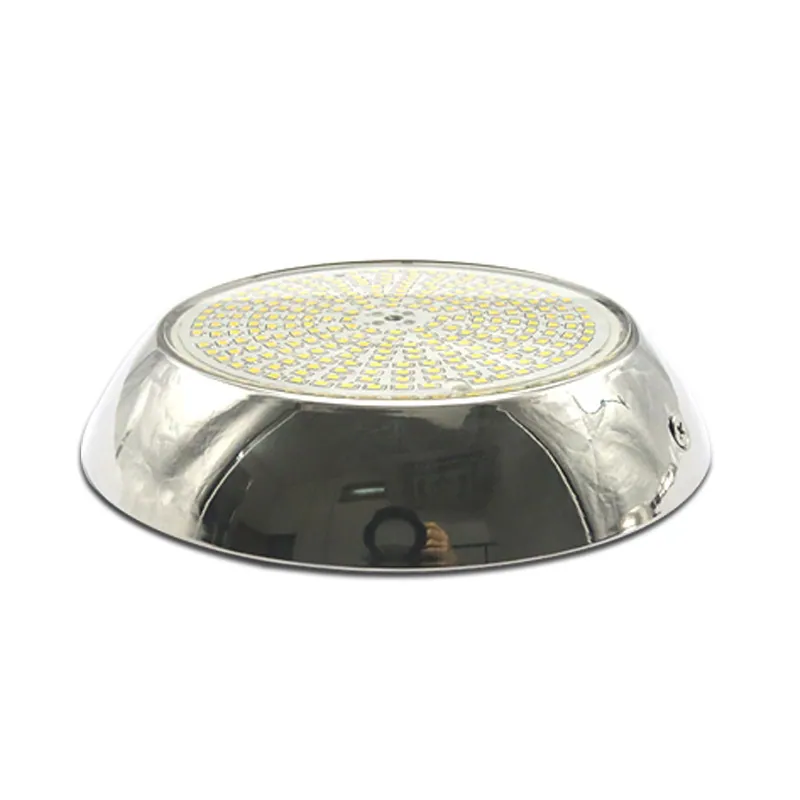
- Industry Insight: Replacing A Pool Light
- Technical Specifications
- Application Scenarios
- Why Choose Seven Colors Lighting
The Engineering Advantages of Modern LED Pool Light Replacement: Why Technical Specifications Matter
The foundation of any durable pool light is its ingress protection rating. While many competitors claim “waterproof,” true reliability requires certified IP68 compliance. Our lights undergo rigorous testing per IEC 60529 standards, including continuous submersion at 10 meters depth for 30 days. This isn’t just about resisting splash or brief immersion—it ensures complete protection against hydrostatic pressure and chemical penetration during extended operation. Crucially, IP68-rated housings maintain integrity even when temperature fluctuations cause internal pressure changes, preventing condensation that degrades electronics over time. This level of certification eliminates the common failure point of water ingress leading to short circuits or corrosion.
The housing material is equally critical. Standard pool lights often use 304 stainless steel, which fails rapidly in chloride-rich environments like saltwater pools or coastal installations. Our lights feature marine-grade 316 stainless steel, which contains molybdenum for superior resistance to pitting and crevice corrosion. Field data from projects in high-salinity regions shows 316 stainless steel housings maintain structural integrity for over 10 years, whereas 304 variants typically develop micro-cracks within 18-24 months. This material choice directly translates to reduced maintenance cycles and avoids the safety risks of compromised housings.
Internally, the resin-filled construction is where many competitors fall short. Instead of air-filled designs prone to thermal stress and moisture migration, our lights use a vacuum-poured thermally conductive resin that fully encapsulates the circuit board and LED components. This process eliminates air pockets that cause condensation, while the resin itself acts as a heat sink—dissipating heat 40% more efficiently than traditional designs. The monolithic structure also provides exceptional shock resistance, protecting against impacts during installation or from pool debris. This engineering choice ensures stable performance across extreme temperature swings, from freezing winters to intense summer sun exposure.
For our B2B partners, these technical specifications are just the starting point. We understand that every pool project has unique constraints, which is why we offer flexible minimum order quantities starting at just 10 units. This allows contractors to test custom configurations for specific installations without inventory risk—whether it’s a small luxury residential retrofit or a prototype for a high-end resort. Our customization capabilities extend beyond basic color temperatures; we can adjust beam angles for shallow vs. deep pools, integrate dimming protocols for smart systems, or modify mounting hardware for retrofitting legacy fixtures. Recent projects have included bespoke color-matching for branded resort lagoons and specialized UV-resistant coatings for commercial aquatic centers.
The true value of these technical choices becomes clear in total cost of ownership. A light with inferior materials or inadequate sealing may seem cheaper upfront, but repeated replacements, warranty claims, and service calls quickly erode savings. Our IP68-rated, 316 stainless steel, resin-filled designs have demonstrated 3-5x longer service life in real-world deployments, with over 90% fewer maintenance callbacks according to our partner feedback. For contractors and distributors, this means higher project margins, stronger client trust, and reduced logistical burden. When specifying pool lighting, technical precision isn’t an option—it’s the foundation of reliable performance. At Seven Colors Lighting, we engineer every detail to ensure your projects succeed long after installation.
Replacing a pool light is rarely a “like-for-like” swap. In commercial properties the decision is tied to code cycles, brand standards, energy audits and, increasingly, guest-experience KPIs. The fixtures that were state-of-the-art when the pool was built are now end-of-life, yet the envelope—concrete shell, conduit runs, junction niches—must remain intact. Below is a field-tested map of where and why a relight makes business sense, the compliance checkpoints that vary by vertical, and the specification shortcuts that keep the project off the critical path.
- Destination resort & casino pools
- Guest-facing bodies of water run 18-20 hours a day. A 300 W PAR56 halogen array can burn 2 200 kWh per season per niche; an equivalent 40 W RGBW LED drops that to 290 kWh and adds DMX scene control for nightly shows. When the original stainless-steel niches show rust creep (common in salt-chlorinated vessels), the move is to a composite “universal” niche and a 10 mm thick borosilicate lens rated for 1 500 kg point load—enough for a maintenance cart to roll over the deck without cracking the lens. Most casino operators stage the cut-over between 02:00 and 05:00 when bather load is zero; a two-person dive crew can swap eight niches in four hours if the new lights are pre-addressed on the DMX table back-of-house.
- Rooftop infinity pools on 5-star hotels
- Structural slabs have zero tolerance for extra conduit, so the replacement fixture has to reuse the existing 3/4-in. PVC chase. The winning SKU is a 24 VDC micro-niche only 85 mm deep that delivers 2 500 lm on 45 W—enough to meet IES RP-6 underwater illuminance of 22 lm/ft² for nighttime swimming. The driver goes in a weatherproof enclosure two floors below, keeping heat off the concrete. Because the pool edge is a glass shear wall, the rebated detail must be vibration-isolated; a silicone compression gasket prevents micro-cracks that would leak chlorinated water onto the ballroom ceiling.
- Corporate campus wellness centers
- HR departments track “wellness minutes” as an ESG metric. A dated 120 V incandescent system that cycles on at full blast is replaced with 0–10 V tunable white LEDs (2 700–6 500 K) synchronized to circadian curves. The lights pull <40 W, allowing the facility to stay under the 50 VA low-voltage threshold so the pool shell no longer requires bonding to the building’s lightning-protection ring—saving roughly $8 k in copper alone. The retrofit is classified as “maintenance” rather than “alteration,” so no new permit is triggered if the niche footprint is unchanged.
- Olympic-length municipal pools
- For FINA-compliant venues, the target is 600 lx on the lane markers and <20 % glare index (GR). Older metal-halide floodlights mounted on the ceiling create veiling reflections; replacing them with underwater LED bars at 1.2 m depth cuts installed power from 24 kW to 7 kW and improves TV uniformity to 0.7 (U1). The key is to specify lights with a CRI >90 and a custom 5600 K phosphor mix that matches broadcast white balance. Because the pool hosts meets only six weekends a year, the control system defaults to 200 lx training mode, saving the city an additional 28 MWh per annum.
- Medical rehabilitation hydrotherapy tanks
- Stainless-steel tanks at VA hospitals require IP68 lights that can survive 24-hour 40 °C saline cycles. The legacy 12 V AC halogen lamps fail every 700 hours; a solid-state 24 VDC version with parylene-coated PCB lasts 50 000 h and eliminates the need for a low-voltage transformer inside the therapy room—critical in a space that must meet NFPA 99 “wet procedure location” rules. A single 15 W fixture delivers 1 000 lm, enough for physiotherapists to observe joint movement without raising room ambient above 300 lx, which would wash out the patient’s visual feedback.
- Cruise ship lido decks
- Shipboard pools are essentially steel boxes with flexible couplings; vibration from engines loosens traditional cord seals. The fix is a molded rubber “through-hull” LED cartridge that threads into the existing 63 mm bore and locks with a tri-clamp—no wet welding. The fixture runs on 110 V ship power but includes an integrated galvanic-isolation transformer so hull corrosion potential stays below 50 mV. The entire light can be changed by one crew member in port, using only a gasket kit and a torque wrench set to 18 Nm.
- High-rise condo reflecting ponds
- These 18-in. deep architectural water features were originally lit with 120 V line-voltage spotlights in dry niches. After a recent UL 676 revision, any fixture <1 m from the water edge must be <15 VAC or <30 VDC. The solution is a 24 VDC linear bar that sits in a 1-in. schedule-80 PVC pipe, ballasted with river rock so it disappears during the day. The bar is factory-sealed; if it fails, maintenance pulls the entire length from the concealed vault and swaps it in five minutes—no scuba gear, no drain-down.
- Data-center cooling reservoirs
- Not every “pool” is for swimming. Hyperscale facilities use 2 MW evaporative reservoirs to reject heat. At night, submerged 470 nm blue LEDs inhibit algae growth, cutting biocide consumption by 30 %. The lights are 48 VDC so they can run directly off the facility’s DC bus, eliminating rectifier losses. A built-in turbidity sensor modulates output: when TSS >4 NTU, the controller ramps intensity to 120 % until clarity returns, providing closed-loop chemical savings.
Specification checklist that crosses all verticals
Niche compatibility: Measure throat diameter, depth, and bolt-circle before shortlisting; the most common retrofit sizes are 8 in. (PAR56) and 10 in. (PAR64).
Voltage path: Moving from 120 V to low-voltage may allow deletion of GFCI breakers per NEC 680.23(C), but only if the new driver is listed for pool use.
Lens material: Borosilicate for concrete pools, PMMA for stainless vessels, polycarbonate for impact-prone cruise decks.
Cable length: Factory-terminated 30 m leads eliminate field potting; verify that the existing conduit ID can handle the new OD (often 9 mm vs. legacy 6 mm).
Control protocol: DMX for color-changing resorts, 0–10 V for wellness circadian, ON/OFF relay for municipal training mode.
Service interval: Aim for >35 000 h at 45 °C water temp; anything less will not amortize before the next renovation cycle.
By mapping the application scenario first—bather load, operating hours, code vintage, and guest expectation—the correct replacement emerges quickly. The common denominator is an LED engine that fits the old hole, sips energy, and outlasts the next renovation cycle, turning what used to be a recurring maintenance headache into a set-and-forget asset.
In today’s competitive lighting industry, project success hinges on three critical factors: cost efficiency, supply chain reliability, and timely delivery. At Seven Colors Lighting, we’ve engineered a unique operational model designed to address these challenges head-on. Our approach isn’t just about supplying products—it’s about building a partnership that transforms your procurement process from a potential bottleneck into a strategic advantage.
Our global network of over 1,000 coordinating factories is the backbone of this model. This extensive ecosystem isn’t merely about scale; it’s about resilience and adaptability. Whether you’re managing a regional retail rollout or a multinational infrastructure project, our factories are pre-vetted for quality, compliance, and specialized capabilities. This means you can confidently handle complex requirements—like adapting to regional safety standards or scaling production for seasonal demand—without the risk of delays from single-point failures. If one facility faces unforeseen disruptions, others within the network seamlessly step in to maintain your project timeline, ensuring continuity even in volatile markets.
The factory-direct pricing model we employ eliminates intermediary markups while maintaining rigorous quality control. Every factory in our network operates under strict, standardized protocols that align with international certifications like UL, CE, and RoHS. This direct relationship means you receive products at a lower total cost of ownership—often up to 30% less than traditional distribution channels—without sacrificing performance or safety. For procurement teams, this translates to predictable budgets, higher profit margins, and the confidence that every unit meets the same high bar, regardless of where it’s manufactured.
Speed is equally critical in project-based industries. Our integrated logistics infrastructure, combined with strategically located production hubs, enables us to deliver faster than industry averages. Orders are processed within 24 hours of confirmation, and we optimize shipping routes to ensure global delivery within 7–10 business days for most regions. This isn’t just about meeting deadlines—it’s about reducing your overall project timeline, minimizing downtime, and avoiding the costly ripple effects of delays. Whether you’re working on a tight construction schedule or responding to urgent market demands, our system ensures your lighting solutions arrive when you need them, not weeks later.
At Seven Colors Lighting, we understand that your success depends on more than just products—it’s about reliability, cost control, and agility. By partnering with us, you gain access to a supply chain built for the real-world demands of modern business. Ready to streamline your lighting procurement and turn operational challenges into competitive wins? Contact our team today to explore how our factory-direct model can support your next project with unmatched efficiency and precision.
Ready to start your project? Contact
today.
- Tel/Fax:
- Address: